
As blockchain adoption expands into regulated financial markets, environmental impact is becoming a critical consideration. Institutions, regulators, and enterprises are no longer evaluating networks only on performance or security, but also on how efficiently they use resources. This is an area where Dusk Network takes a deliberate and measured approach.
Dusk is designed as a privacy-first blockchain for regulated finance, but its architecture also reflects a strong focus on energy efficiency. By using a proof-of-stake based consensus mechanism and advanced cryptographic techniques, the network avoids the high energy costs typically associated with proof-of-work systems. Transactions achieve fast finality without requiring excessive computation or wasteful resource consumption.
Another key factor is Dusk’s modular design. By separating execution, settlement, and data handling, the network ensures that each component uses only the resources it truly needs. This allows Dusk to maintain security and compliance guarantees while minimizing unnecessary network overhead. Privacy through zero-knowledge proofs is implemented efficiently, ensuring confidentiality without significantly increasing computational load.
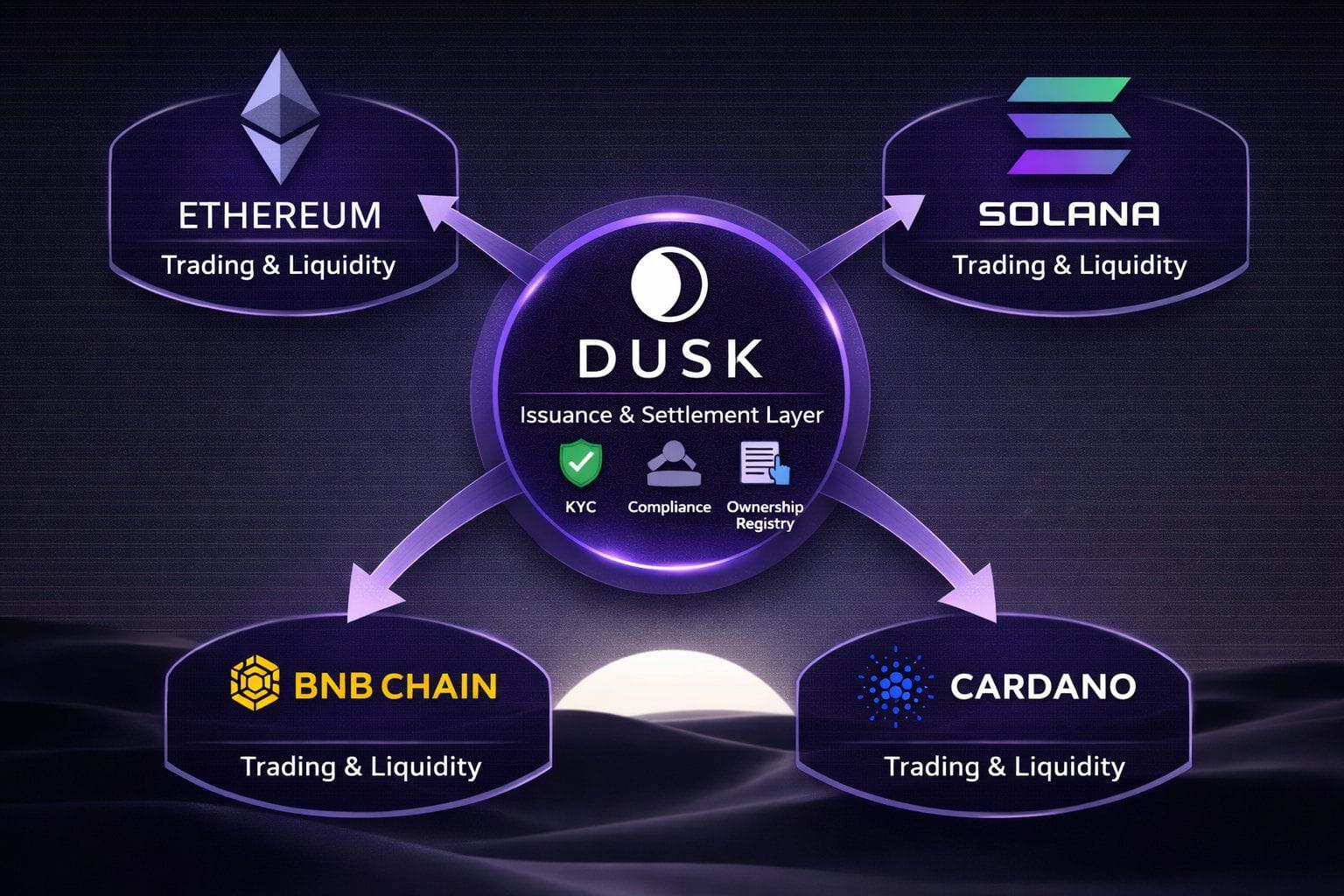
For regulated financial markets, sustainability is not optional. Systems must be secure, compliant, and environmentally responsible at the same time. Dusk’s design shows that privacy, regulation, and efficiency can coexist on-chain without compromise.
As capital markets increasingly explore blockchain-based infrastructure, networks that balance performance with environmental responsibility are more likely to see long-term adoption. Dusk positions itself within this future by aligning technological innovation with practical, sustainable design choices.
