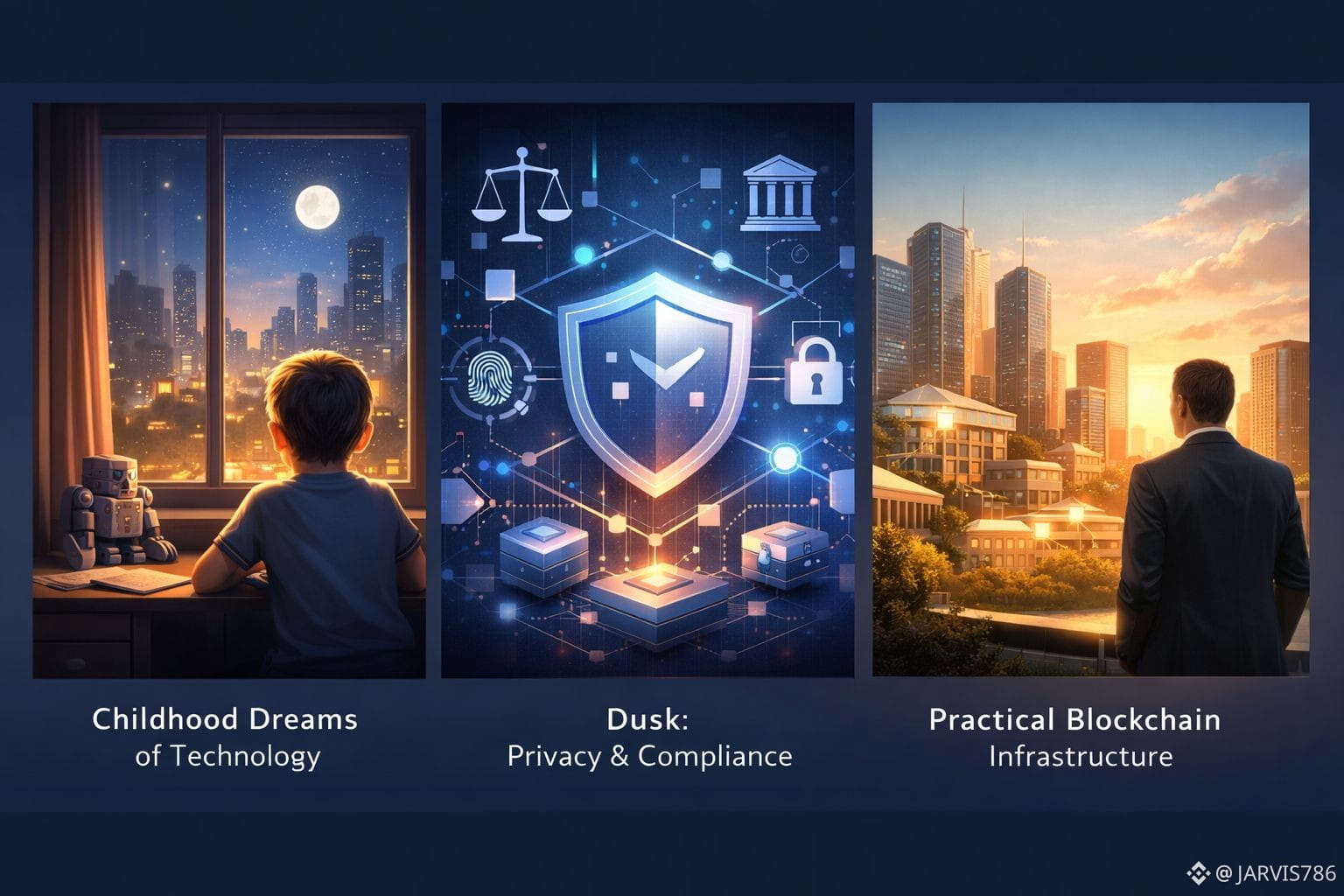
When I look at Dusk, it unexpectedly takes me back to My childhood. Back then, I imagined a Future where technology could protect people instead of exposing them, where systems were Fair, Private, and trustworthy by design. Those ideas felt distant at The Time — More like dreams than realistic outcomes.
Revisiting Dusk today feels like seeing those Early ideas take a practical shape. Not as a fantasy, but as Infrastructure built for real-world constraints. Dusk does not treat privacy as secrecy or escape from rules. Instead, it treats privacy as controlled disclosure, where sensitive information is protected While verification, auditability, and compliance remain intact.
From an educational perspective, this distinction matters. In real financial systems, privacy does not mean hiding everything. It means Sharing The right information with The right parties at The right Time. Dusk’s use of zero-knowledge proofs shows how trust can be maintained without unnecessary exposure.
What stands out is The maturity of The approach. Dusk is not trying to disrupt regulation; it is trying to work within reality. By embedding privacy at The protocol level, it shows how Blockchain can evolve from experimentation into systems that institutions and users can actually rely on.
In that sense, Dusk turns Early dreams into something More meaningful — not promises, but practical design. It reminds me that real progress in Blockchain is not loud. It is thoughtful, deliberate, and built to last.