
As Web3 applications continue to scale, one challenge remains persistent: reliable, decentralized data storage. Blockchains are excellent for computation and consensus, but storing large volumes of data on-chain is expensive and inefficient. This is where decentralized storage protocols step in — and Walrus Protocol is emerging as a serious new contender in this space.
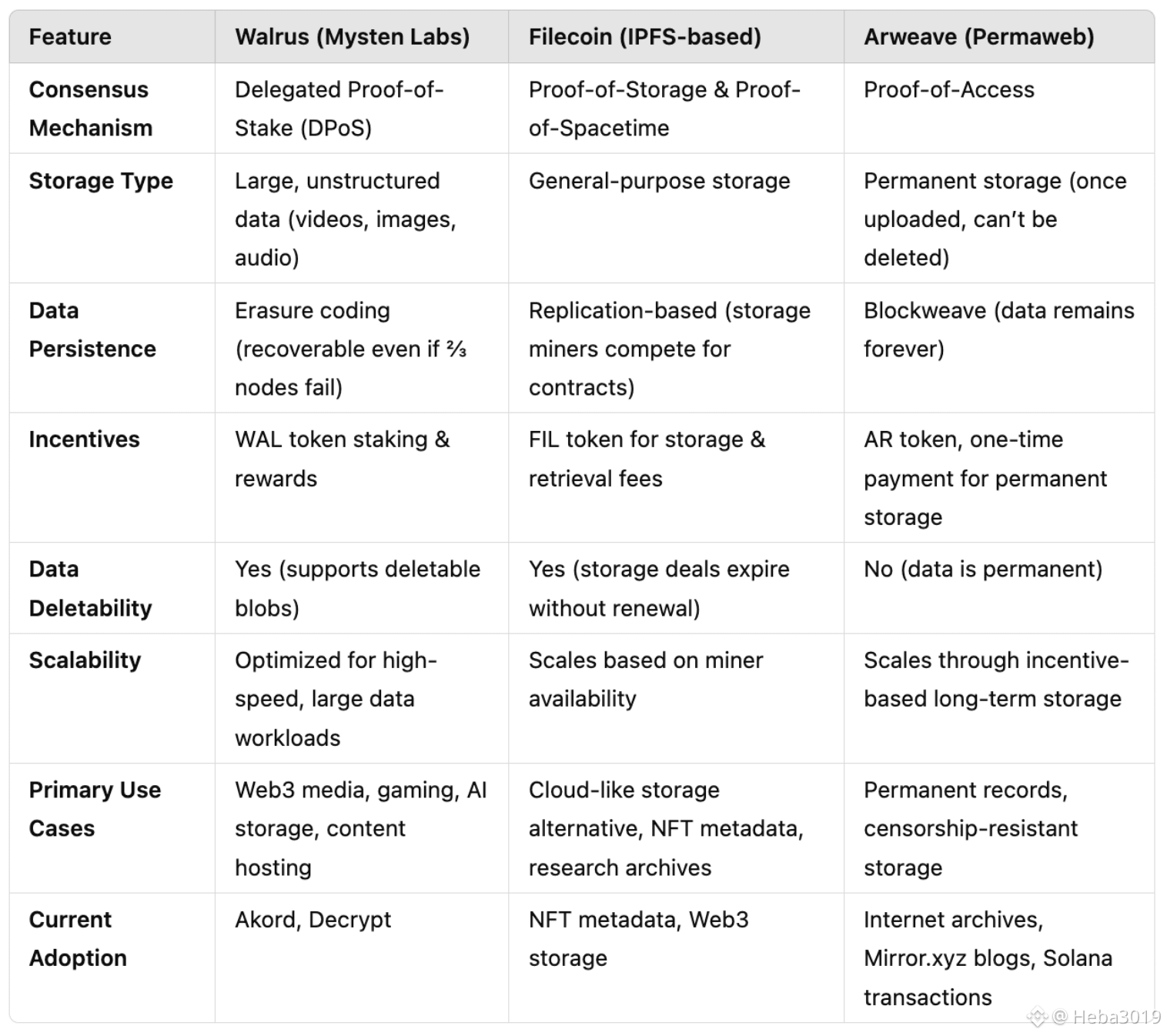
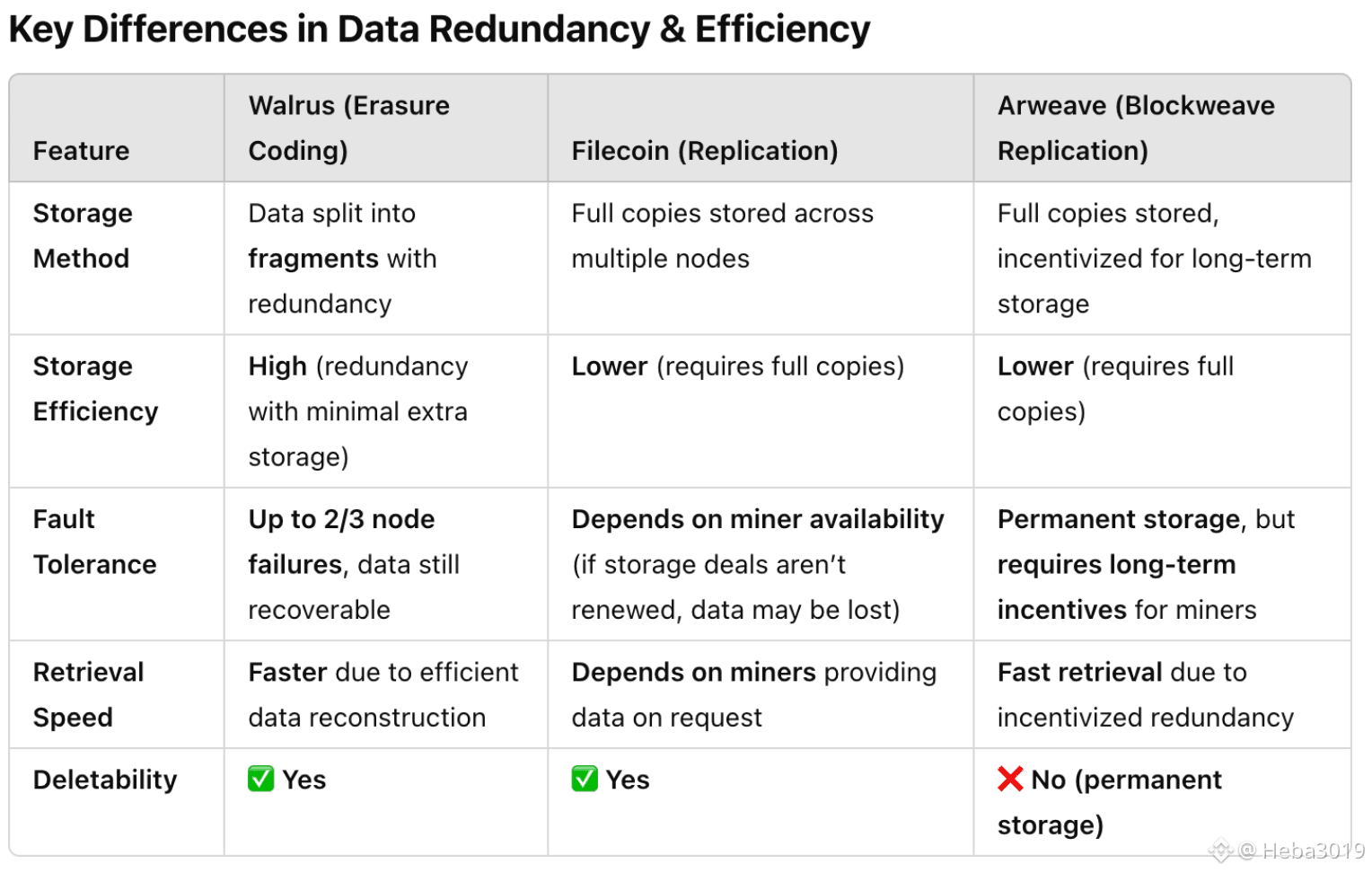
Walrus Protocol is a decentralized storage network built to provide scalable, cost-efficient, and censorship-resistant data availability for modern Web3 ecosystems. Designed with performance and composability in mind, Walrus focuses on storing large blobs of data off-chain while maintaining strong guarantees around availability, integrity, and decentralization.
At its core, Walrus is optimized for high-throughput data storage rather than general-purpose file hosting. This makes it particularly well-suited for blockchain use cases such as rollups, modular blockchains, NFTs, gaming assets, social data, and AI-related workloads. Instead of forcing all data onto Layer-1 chains, Walrus allows applications to store data efficiently while still anchoring trust back to the blockchain.
One of Walrus Protocol’s defining features is its data availability-first design. Data is split, encoded, and distributed across a decentralized network of storage providers. Even if some nodes go offline or act maliciously, the system can still reconstruct the original data. This redundancy ensures high availability without relying on centralized infrastructure or single points of failure.
Walrus also introduces economic incentives that align storage providers with network reliability. Nodes are rewarded for correctly storing and serving data, while penalties discourage downtime or dishonest behavior. This creates a self-sustaining marketplace where storage capacity scales naturally with demand.
From a developer perspective, Walrus is built to be chain-agnostic and modular. It integrates smoothly with existing blockchain ecosystems and is particularly aligned with modular blockchain architectures, where execution, consensus, and data availability are handled by separate layers. This flexibility allows developers to plug Walrus into their applications without redesigning core infrastructure.
Security is another key pillar of the protocol. Walrus uses cryptographic proofs to ensure that stored data has not been tampered with and remains accessible when requested. Users and applications can verify data integrity without trusting individual storage providers — a critical requirement for decentralized systems.
Beyond infrastructure, Walrus is positioning itself as a foundation for next-generation Web3 applications. Decentralized social networks, on-chain media platforms, gaming worlds, and AI models all generate massive datasets that cannot live entirely on-chain. Walrus enables these applications to remain decentralized without compromising on user experience or performance.
In a landscape dominated by established players like IPFS-based networks and newer modular data layers, Walrus stands out by focusing on practical scalability and real-world adoption. Its design reflects a growing understanding that decentralized storage must be fast, affordable, and developer-friendly to support the next wave of blockchain innovation.
As Web3 matures, decentralized storage will be just as critical as consensus and execution. Walrus Protocol enters this arena with a clear mission: to make decentralized data availability efficient, reliable, and ready for mass adoption.