
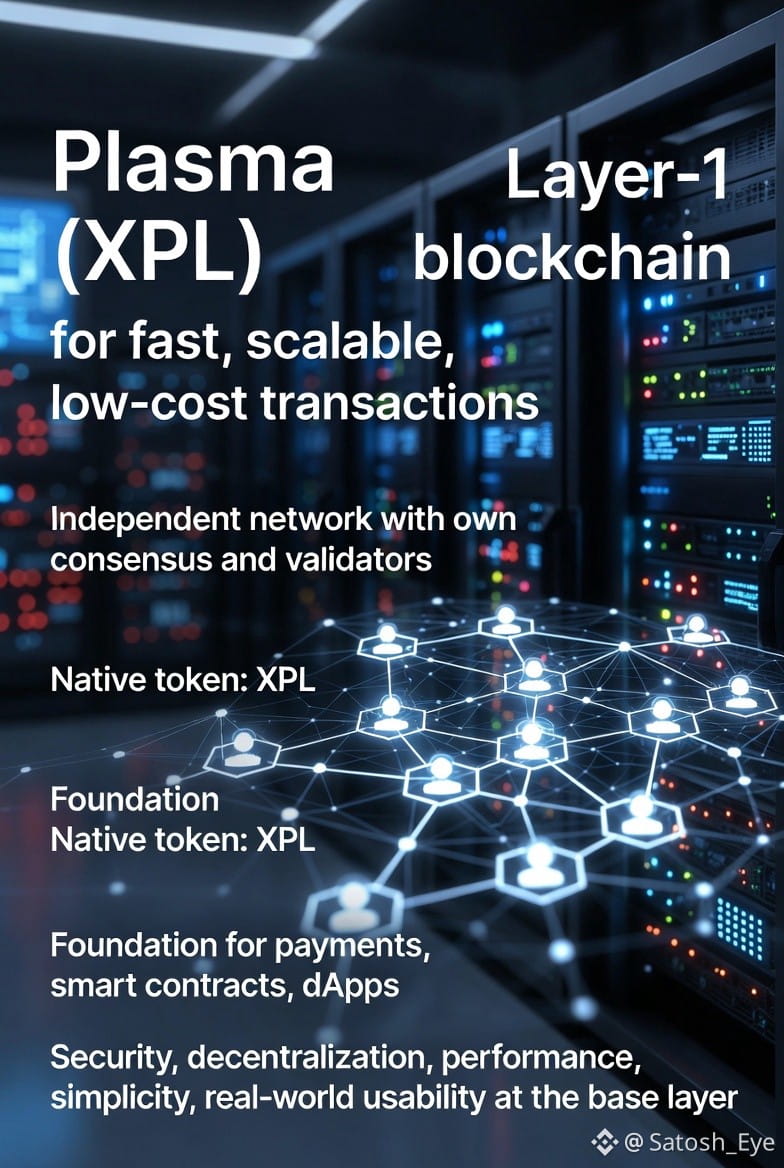
 Plasma XPL's technical architecture faces a unique challenge that exposes fundamental tensions in blockchain design: how to maintain robust security and validator participation when transaction fees are denominated in stablecoins rather than native protocol tokens. This economic-technical intersection reveals sophisticated mechanism design that distinguishes Plasma XPL from conventional blockchain architectures where native tokens serve simultaneously as security collateral, operational currency, and fee payment medium.
The Native Token Paradox
Most blockchains enforce native token usage for transaction fees, creating circular economic demand—network usage requires token acquisition, driving token value, which secures the network through staking or mining economics. Plasma XPL breaks this circularity by accepting stablecoin fee payments, introducing complex questions: What role does a native token serve? How do validators earn sustainable revenue? What ensures sufficient validator participation for network security?
The technical implementation likely employs a dual-token model where validators stake native tokens as security collateral while earning transaction fees in stablecoins. This separation of security bonding from operational revenue requires careful economic engineering. Validators must find stablecoin fee revenue sufficient to justify capital lockup in staked native tokens that may lack independent value drivers beyond governance rights or potential fee conversion mechanisms.
Fee Market Mechanics in Stablecoin Economics
Traditional blockchain fee markets operate through native token auctions where users bid for block space using the same asset validators receive as compensation. Plasma XPL's stablecoin-denominated fees require different market mechanisms. The protocol must convert user fee bids in USDT or USDC into validator incentives, potentially involving automated market makers, fee pools, or direct stablecoin distribution to validators.
This introduces technical complexity around fee volatility and validator income predictability. While stablecoin fees provide users with predictable transaction costs—a major advantage over volatile native token fees—validators face exchange rate risk if any portion of their compensation involves native tokens whose value fluctuates against the stablecoins they earn.
The fee market architecture must also prevent economic attacks where users exploit stablecoin fee payments to manipulate validator behavior. Unlike native token fee markets where attacking the fee mechanism directly impacts token value and thus attacker holdings, stablecoin fees create potential misalignment between user incentives and network security.
Validator Selection and Rotation
PlasmaBFT's validator set mechanics become critical when validator economics differ from traditional proof-of-stake models. The protocol likely implements validator selection based on native token staking amounts, ensuring security proportional to bonded capital. However, validator profitability depends on stablecoin transaction fees, creating potential scenarios where validators with maximum security stake earn insufficient revenue to justify participation.
Technical solutions might include minimum fee guarantees, validator rotation mechanisms ensuring equitable fee distribution, or dynamic validator set sizing that adjusts to transaction volume. The consensus protocol must balance security requirements—maintaining sufficient validators for Byzantine fault tolerance—against economic sustainability where each validator receives adequate fee revenue.
Cross-Chain Bridge Security
Stablecoin-optimized infrastructure inherently involves cross-chain dynamics since major stablecoins originate on Ethereum. Plasma XPL must implement secure bridge mechanisms for USDT and USDC transfers between chains. The technical architecture likely employs validator-secured bridges where the same validator set securing consensus also validates cross-chain messages.
This design creates security synergies—validators already bonded for consensus security extend that economic stake to bridge security—but introduces additional slashing conditions. Validators face penalties not only for consensus misbehavior but also for fraudulent bridge attestations, compounding their risk exposure.
The bridge architecture must handle edge cases like stablecoin depegging events or source chain reorganizations. Technical mechanisms likely include delayed finality for bridge transfers, multi-signature requirements exceeding simple consensus thresholds, and potentially external oracle integration for price feed verification.
Governance and Protocol Upgrades
Stablecoin-centric economics complicate governance where decision-making power traditionally correlates with native token holdings. If validators earn primarily in stablecoins while staking relatively less valuable native tokens, governance power may not align with actual network stakeholders—users and service providers operating in stablecoins.
The technical implementation must balance governance rights between native token stakers providing security and stablecoin users driving actual network utility, potentially through novel voting mechanisms weighting both constituencies or requiring dual approvals for protocol changes. #plasma @Plasma #Plasma $XPL

