
Blockchains used to secure only themselves.
In 2026, Restaking 2.0 is changing that model — allowing staked assets to secure multiple networks, apps, and services at the same time.
This is security becoming reusable infrastructure.
⚙️ What Is Restaking 2.0?
Restaking lets users reuse their existing stake to provide security beyond the base chain.
Instead of locking capital once, stakers can:
• secure middleware, bridges, oracles, and rollups,
• earn additional rewards without unstaking,
• allocate security to services they trust,
• help new protocols bootstrap faster.
Smart contracts enforce slashing rules, ensuring accountability across every service being secured.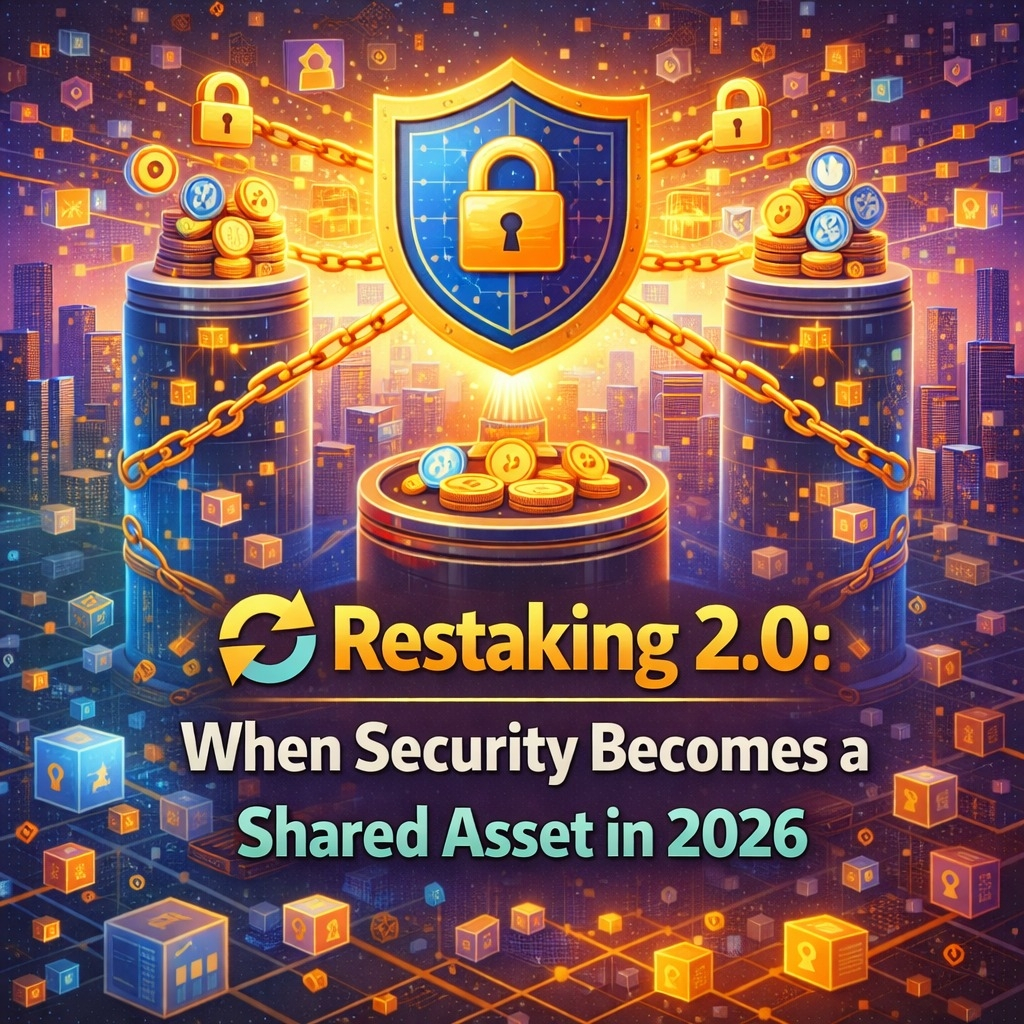
🚀 Why It’s Trending in 2026
• New networks need security without inflating token supply.
• Capital efficiency matters as markets mature.
• Stakers want higher yield without extra risk layers.
• Modular blockchains rely on shared security models.
Security is no longer siloed — it’s composable.
💡 Final Takeaway
Restaking 2.0 is redefining how trust is distributed in Web3.
In 2026, security won’t belong to a single chain — it will flow where it’s needed most, creating stronger ecosystems while making staked capital work harder than ever.
#CryptoTrends2026 #Restaking #Web3Security #BlockchainInfrastructure #ModularBlockchain #BinanceSquare #Write2Earn