THE UTOPIA OF AN ETHICAL TOMORROW
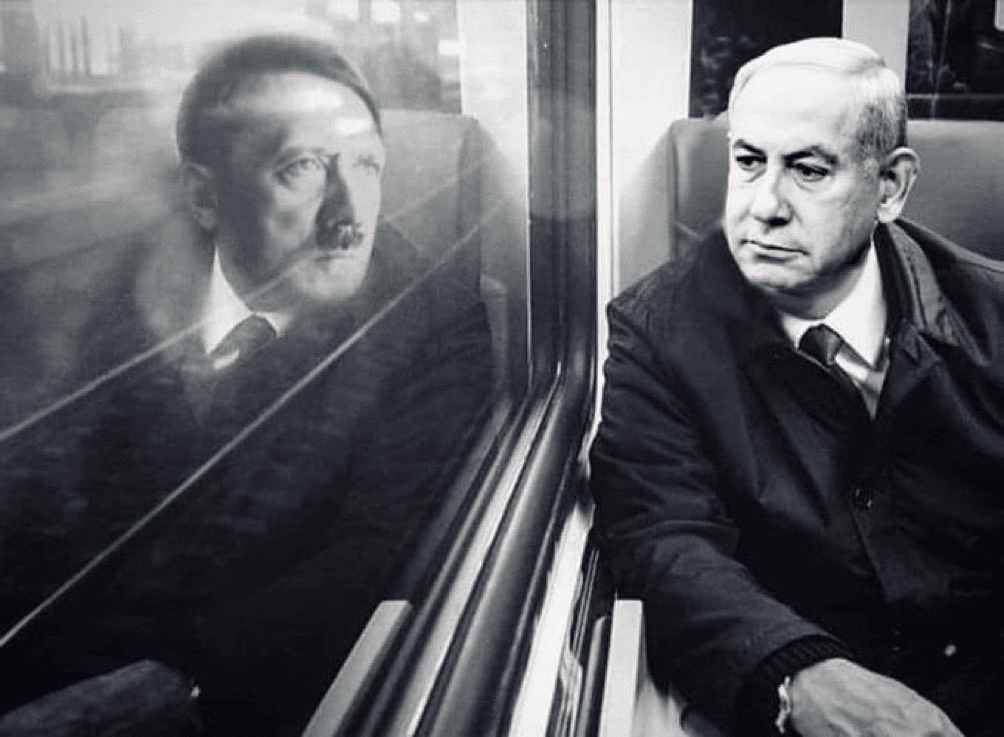
Just as Netanyahu has become the main promoter of anti-Semitism, various Christian churches have transformed into the largest factories of atheism and hatred towards the religious phenomenon. The institutionalization of spirituality has only served to transform religion into an instrument at the service of political and economic power. Absurd and cruel inventions such as the idea of hell, virgin birth, or the doctrine of original sin have caused the idea of God to be associated with cruelty, vengeance, and oppression. The not exemplary history of the churches, which have accumulated wealth, promoted massacres, and abused the innocent, has only strengthened that phenomenon.
Despite everything, I harbor a deep spiritual concern. I do not believe in dogmas or catechisms, but in the hope of an ethical tomorrow. Eternity can be interpreted as that "kingdom of ends" that Kant spoke of. It is the place where victims are rescued from oblivion and history overcomes all its failures. We will never be able to prove the existence of that ethical tomorrow through experience, but if we eliminate its possibility, if we radically deny its existence, Auschwitz, Gaza, My Lai, the Katyn pits, the Rwandan genocide, or Hiroshima - to name just a few examples from a sadly endless list - will not only be the most tragic hours of human becoming, but the end of history for the innocents sacrificed by hatred and the ambition for power.
By positing an ethical tomorrow, the underlying intention is not simply to deny finitude through a metaphysical pirouette, but to open the horizon to a utopian future. That said, this utopian future begins here and now. It is not about promising a paradise to the unfortunate, but about fighting against the grievances suffered by the most humble and vulnerable. Therefore, spirituality cannot be a political experience, but a historical, real, and concrete commitment to the creation of a more just and supportive world. As Ignacio Ellacuría, philosopher and Jesuit priest assassinated by the Salvadoran army, stated, "no one has the right to the superfluous until everyone enjoys the essential."
Today, the main enemy of a just and peaceful world is the savage capitalism sustained by neoliberal theories. Neoliberalism is a form of materialism. It worships material goods and justifies the exploitation of people to ensure the well-being of a privileged minority. It disguises itself as democracy to appease protests, but its essence is inequality, abuse, and, at times, the destruction of peoples, under the pretext of a just war.
What we now call democracies are merely business oligarchies. "The highest authority on the planet is the authority of those who suffer, without any court of appeal" - writes Jon Sobrino, a liberation theologian. The true cultural battle is not a battle against that diversity which irritates the fundamentalists, but "the battle of language, created and controlled by the powerful. One must not let oneself be imposed the definition of what is terrorism and peace, international community and civilization. More fundamentally, one must not allow the definition of what is 'the human' to be imposed on us. Accepting that there is a so-called 'politically correct' way of speaking facilitates many things for the empire. Christians should be, viscerally if you will, anti-empire and pro-kingdom. The kingdom of God is the kingdom where the poor save us and redeem us from selfishness and lack of solidarity. In this struggle against imperialism, Christians stake our essence.
In the face of the inhumanity promoted by capitalism, there is an urgent need for a spirituality or political theology that restores the dignity of the human being and helps us understand that true wealth is not associated with accumulation, but with the joy of sharing. "Atheists - pointed out Ernesto Cardenal - say the same thing that primitive Christians said, who were also atheists." The worship of the golden calf is the paganism of our time. Love for the human being, especially for the pariah, exploited and marginalized, is the spirituality of the present, and I firmly believe that this is the path of truth and life.