

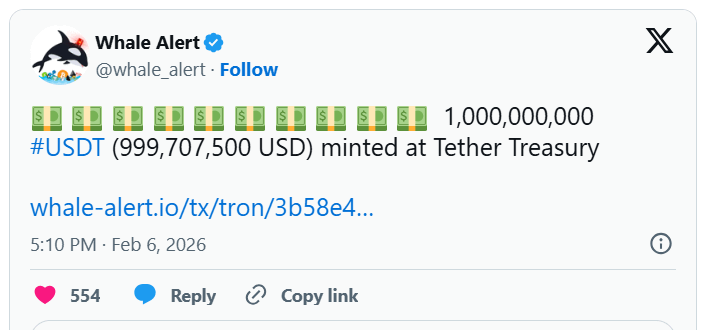
#Tether has printed another $1 billion in USDT, pushing total stablecoin issuance to dramatic levels at a time when Bitcoin and crypto markets are under pressure.
On-chain trackers flagged the latest mint at the Tether Treasury, adding to a series of large issuances seen over the past week. Earlier this week, two separate $1 billion USDT mints were recorded, bringing Tether’s February total to $3 billion.
Key Points
Tether minted another $1B USDT as crypto markets slid, pushing February issuance to $3B.
Circle joined the surge, adding $500M USDC, bringing weekly stablecoin mints to $4.75B.
Bitcoin fell over 10% to $60K, triggering $2B+ in liquidations amid heavy market pressure.
Analysts warn stablecoin mints signal liquidity prep, not automatic bullish momentum.
$4.75B in Stablecoins Minted in One Week
Meanwhile, the activity hasn’t been limited to Tether. Circle has also increased issuance, with $500 million in USDC minted across two recent transactions. Combined, Tether and Circle have added roughly $4.75 billion in new stablecoins to the market in just seven days.
This surge in supply comes as Bitcoin trades below recent highs. Specifically, Bitcoin’s price crashed more than 10% in the last 24 hours to hit $60,000, triggering over $2 billion in liquidations. The flagship asset last traded in this range in October 2024.
Now, this new issuance has raised questions about whether the fresh liquidity signals incoming dip-buying or something more structural.
Why Stablecoin Mints Aren’t Automatically Bullish
Meanwhile, market commentators caution against treating stablecoin issuance as a direct buy signal. Analysts say that large issuances often imply trading desks restocking liquidity after sell-offs, rather than fresh confidence that prices will rise soon.
Stablecoins are usually minted to keep capital ready, not because traders are eager to take risks. What matters more is where that money goes next: onto exchanges to trade, or into wallets to sit on the sidelines.
Even though stablecoin supply is near record highs, past cycles show that supply growth alone doesn’t drive prices. High issuance has occurred during rallies, flat markets, and downturns alike.
What Analysts Are Watching Next
In his commentary, widely followed analyst Milk Road said headline mint numbers matter less than what happens next. The real signals come from follow-through data, including whether net issuance outweighs redemptions, stablecoins are moving onto exchanges, and transaction activity is picking up.
He added that investors should also watch how stablecoin flows align with macro trends, ETF inflows, and derivatives funding rates. Until these indicators line up, he noted, new stablecoin mints do not necessarily mean the market is turning bullish.