

There’s a detail in payment systems that almost never gets discussed, even though everyone feels it: how often the system speaks to you.
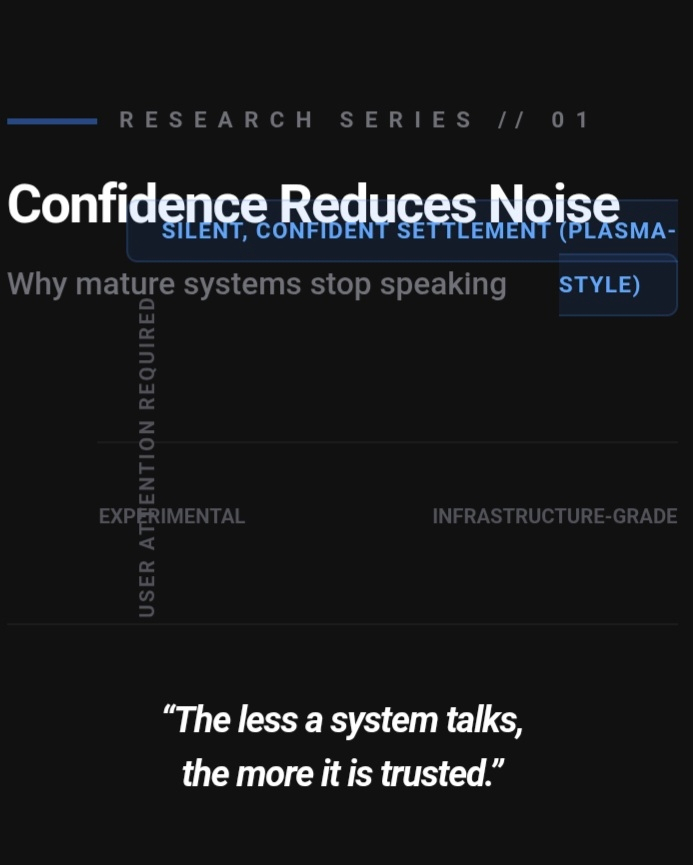
Pop-ups. Status messages. Warnings. “Pending.” “Confirming.” “Finalizing.” None of these are errors, but they interrupt. They ask for attention. They remind you that something delicate is happening behind the scenes. Over time, they train users to hover.
What keeps striking me about Plasma is how much it seems designed around not speaking unless absolutely necessary.
Most crypto systems narrate every step. They show progress as reassurance, but that reassurance comes at a cost. Each message subtly implies that the outcome isn’t settled yet. The user learns to stay present until the system declares itself finished.
Plasma feels like it’s pushing against that instinct.
Instead of narrating the journey, it seems more focused on delivering an ending that doesn’t require commentary. The payment happens, and the system steps back. No prolonged suspense. No need to translate system language into human confidence.
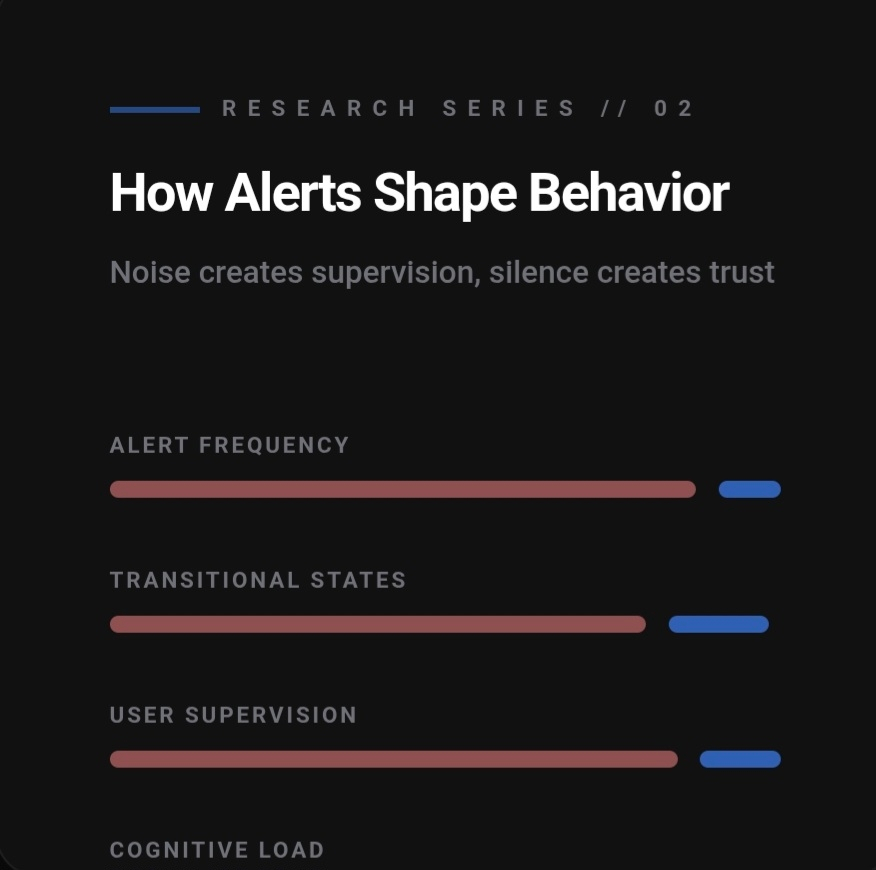
That restraint matters because alerts shape behavior more than features do.
When systems constantly update you, you learn to wait for permission to move on. When systems stay quiet, you learn that moving on is expected. That difference determines whether payments become interruptions or background actions.
In many crypto wallets and apps, the interface becomes a kind of emotional guide. It tells you when to worry, when to relax, when to check again. Even if everything works perfectly, the experience keeps users psychologically engaged longer than necessary.
Plasma feels like it’s trying to end that engagement loop.
Not by hiding state, but by designing state transitions that don’t require supervision. The system takes responsibility for knowing when something is done, instead of asking the user to interpret signals.
This is a subtle but powerful shift.
People don’t want to be operators of payment systems. They want to be users. The more interpretation a system demands, the more it turns users into part-time operators — watching, translating, deciding when it’s safe to proceed.
Silence removes that burden.
What’s interesting is how this design choice mirrors mature infrastructure outside crypto. Electricity doesn’t tell you it’s flowing. Internet packets don’t announce their arrival. Silence is the default when systems are confident in their own operation.
Crypto often confuses verbosity with transparency. Plasma seems more interested in confidence than commentary.
There’s also a psychological layer here that compounds over time. When users aren’t repeatedly exposed to transitional states, they stop internalizing uncertainty. They don’t associate payments with waiting. They don’t develop rituals around “just in case” moments.
Those rituals are hard to undo once learned.
Plasma feels like it’s trying to prevent them from forming at all.
This approach also affects organizations. Alerts trigger processes. Processes trigger approvals. Approvals slow things down. A system that minimizes alert-worthy moments reduces internal noise as well. Fewer Slack messages. Fewer “is this done?” pings. Fewer follow-ups to interpret what the system already knows.
Quiet systems scale better because they don’t require coordination around every action.
There’s a risk in this philosophy, of course. Silence can feel uncomfortable to users trained to expect constant feedback. Crypto has conditioned people to equate noise with safety. A quiet system can initially feel unsettling.
But that discomfort fades with repetition.
Once users experience that silence consistently leads to correct outcomes, the absence of alerts stops feeling like a lack of information and starts feeling like trust. The system doesn’t need to reassure you because it has earned the right not to.
That’s a high bar.
What I find compelling about Plasma is that it seems willing to aim for that bar instead of optimizing for immediate comfort. It doesn’t rely on constant feedback to build confidence. It relies on behavior repeating without incident.
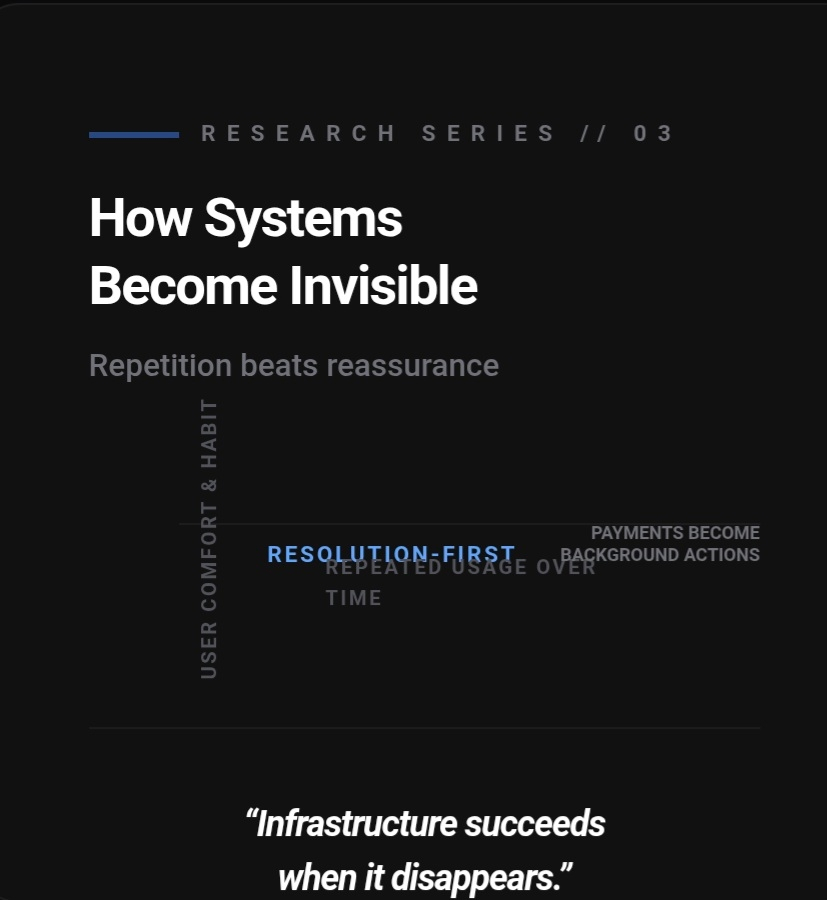
Repetition beats reassurance.
Over time, users stop expecting messages. They stop waiting for signals. The payment becomes just another completed task, like closing a document or sending an email. The system disappears, and the action remains.
Crypto systems often struggle to disappear because they’re designed to be seen. Plasma feels like it’s designed to step back.
This isn’t about minimal interfaces or aesthetic choices. It’s about deciding when the system should speak and when it should stay silent. In payments, speaking too often is a sign of insecurity. Silence is what confidence sounds like.
Plasma’s quiet posture suggests it understands that money doesn’t need narration. It needs resolution.
If payment rails are going to mature, they’ll need to unlearn the habit of explaining themselves at every step. The most trusted systems don’t constantly ask for attention. They assume they’ve earned enough trust to be left alone.
Plasma doesn’t feel like it’s trying to comfort users with words.
It feels like it’s trying to comfort them by removing the need for words altogether.
And in payments, that kind of silence isn’t empty.
It’s earned.