

Over the past few months, I’ve found myself drifting away from headlines and price alerts and spending more time looking at something far less exciting on the surface: how blockchain networks are actually structured behind the scenes.
When you strip away marketing narratives, most networks reveal the same pattern. Flashy announcements up top, fragmented tooling underneath, and an ecosystem that exists more in theory than in real user behavior. That contrast is what made Vanar Chain ($VANRY ) stand out during my exploration of different stacks.
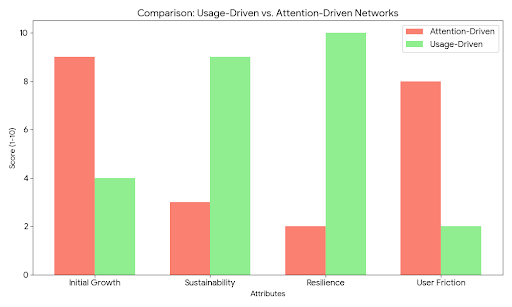
#vanar doesn’t feel like a chain built to win attention cycles. It feels like a system designed around flows — how users move, how apps interact, and how value is consumed rather than advertised.
Infrastructure That Starts From Usage, Not Hype
One of the clearest signals is how the ecosystem is organized. Instead of forcing developers and users to stitch together external tools, Vanar’s stack feels intentionally aligned around real-world usage paths: identity, digital ownership, content delivery, gaming, and consumer-facing applications.
This matters more than it sounds. Most adoption failures don’t happen because blockchains are slow or expensive they happen because users hit friction the moment they try to do something. Vanar’s approach reduces that friction by treating the network less like a laboratory and more like a product environment.
The Quiet Role of the Token
In many ecosystems, the token is the headline. Everything bends around it incentives, narratives, speculation. In Vanar’s case, $VANRY behaves differently.
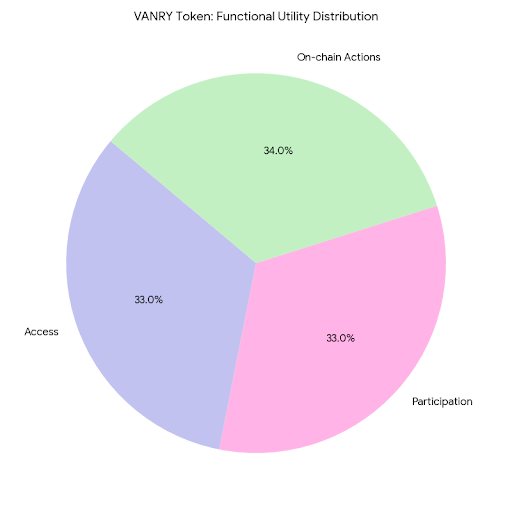
@Vanarchain feels less like an attention magnet and more like a functional layer within the system. It facilitates access, participation, and on-chain actions without demanding to be the story itself. That’s a subtle but powerful distinction. Tokens that are designed primarily for visibility often struggle to retain relevance when market sentiment shifts. Utility-first tokens tend to age better because they’re embedded into actual activity.
Built for the Consumer Layer
Another underappreciated aspect is Vanar’s focus on consumer-grade experiences. Most blockchains still assume users are technically curious, wallet-savvy, and willing to tolerate complexity. Vanar seems to assume the opposite — that the next wave of users won’t care about consensus models or gas mechanics at all.
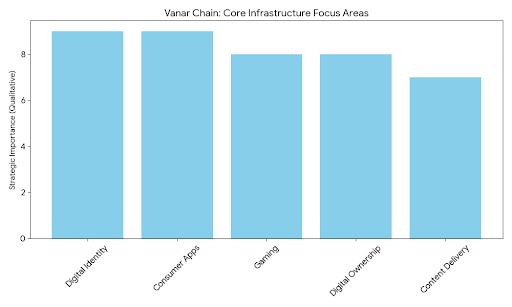
By optimizing for entertainment, digital identity, and interactive media, the network positions itself closer to how people already behave online. That alignment between infrastructure and human behavior is rare, and it’s often the difference between theoretical adoption and real usage.
Resilience Over Narratives
Market downturns have a way of exposing structural weaknesses. Liquidity dries up, speculative volume disappears, and what’s left is the core architecture. Networks that are held together by incentives alone tend to feel hollow in those moments.
#vanar ’s design appears more resilient because it isn’t dependent on constant excitement. Its value proposition isn’t “look at us,” but “use this.” That’s not a loud strategy, but it’s a durable one.
Why This Matters Long Term
Attention-driven ecosystems can grow fast, but they also decay fast. Usage-driven systems grow slower, but they compound. Vanar seems to be betting on the second path — building infrastructure that quietly integrates into real products, real workflows, and real user behavior.
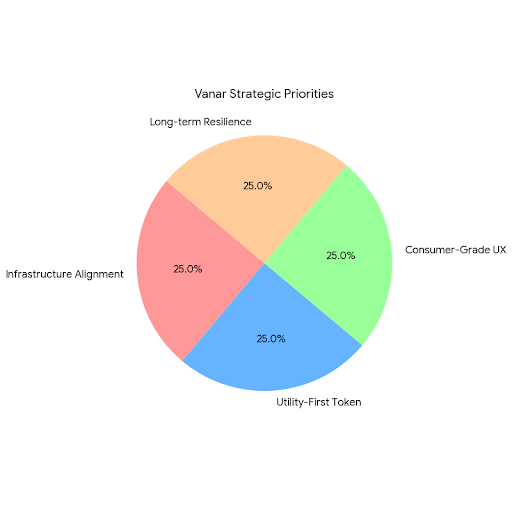
In a market that often rewards noise, it’s easy to overlook networks that are building without spectacle. But historically, those are the ones that matter when the cycle resets.
Sometimes the most important signal isn’t what a network is saying it’s what it’s quietly preparing for.