
Decentralized finance has evolved from simple token swaps to high-frequency, real-time on-chain trading. However, most blockchains still struggle with latency, congestion, and unfair execution order. This is where FOGO enters the picture — a high-performance, SVM-based Layer-1 blockchain engineered specifically for ultra-low-latency DeFi and trading-centric applications.
Built with a pure Firedancer client architecture, FOGO aims for sub-40ms block times, rapid finality, and fair execution primitives designed for traders, not just general-purpose apps. It represents a new era where blockchain performance competes with traditional financial systems.
The Core Problem in DeFi Today
Traditional Layer-1 networks face three major issues:
High Block Latency – 400ms to several seconds per block.
Unfair MEV Practices – Front-running and priority manipulation.
Network Congestion – Slower execution during market volatility.
For traders operating in volatile markets, even milliseconds matter. In real-time arbitrage, derivatives trading, and market making, latency determines profitability.
How FOGO Solves It
FOGO is optimized for performance-first architecture using SVM (Solana Virtual Machine compatibility) and a pure Firedancer client implementation.
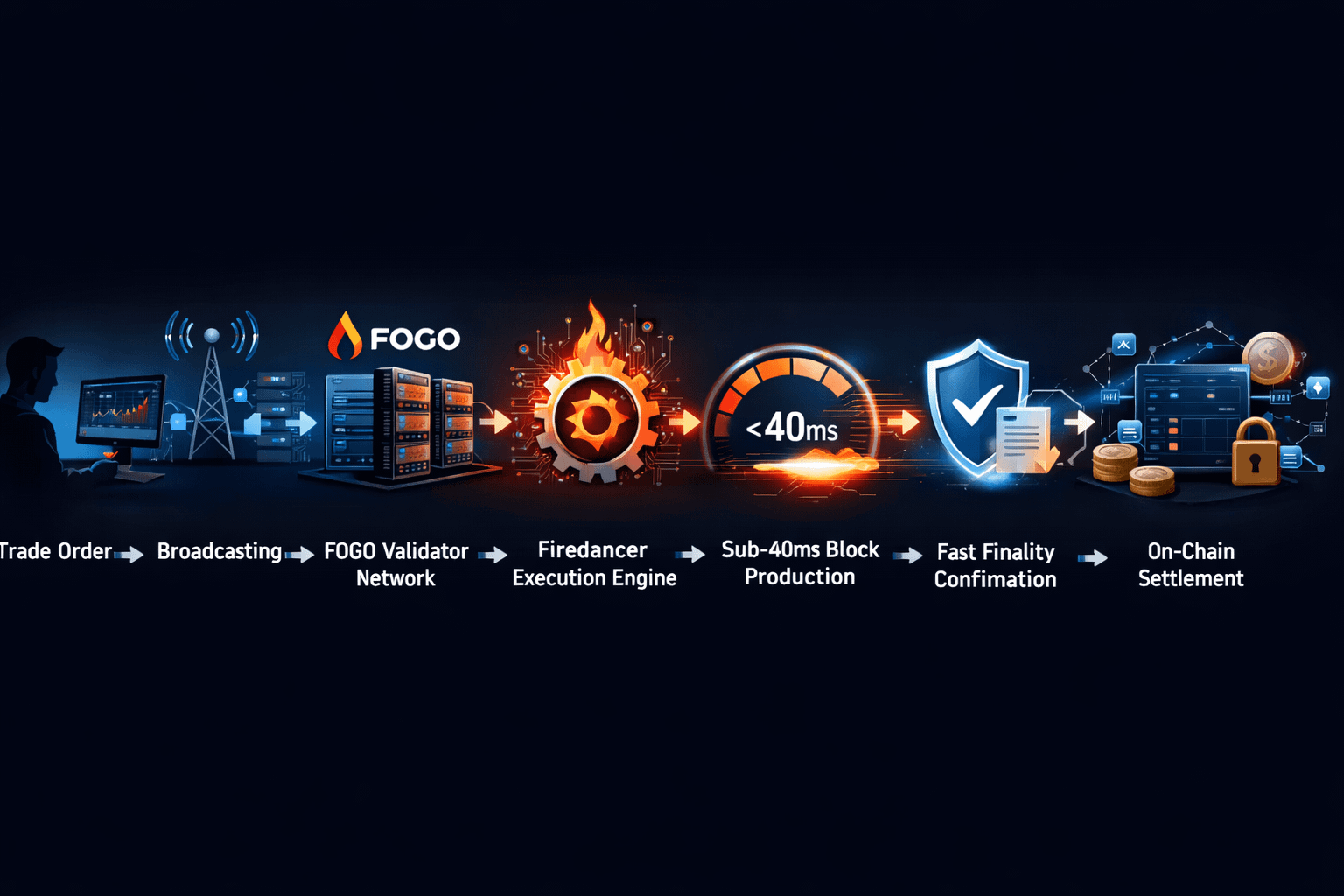
This streamlined process removes unnecessary overhead and prioritizes deterministic execution.
Why Firedancer Matters
Firedancer is a high-performance validator client designed for speed and efficiency. By building around a pure Firedancer architecture, FOGO achieves:
Parallelized transaction processing
Optimized networking stack
Reduced validator bottlenecks
Lower memory overhead
Deterministic execution flow
The result? Near-instant block confirmation designed for trading environments.
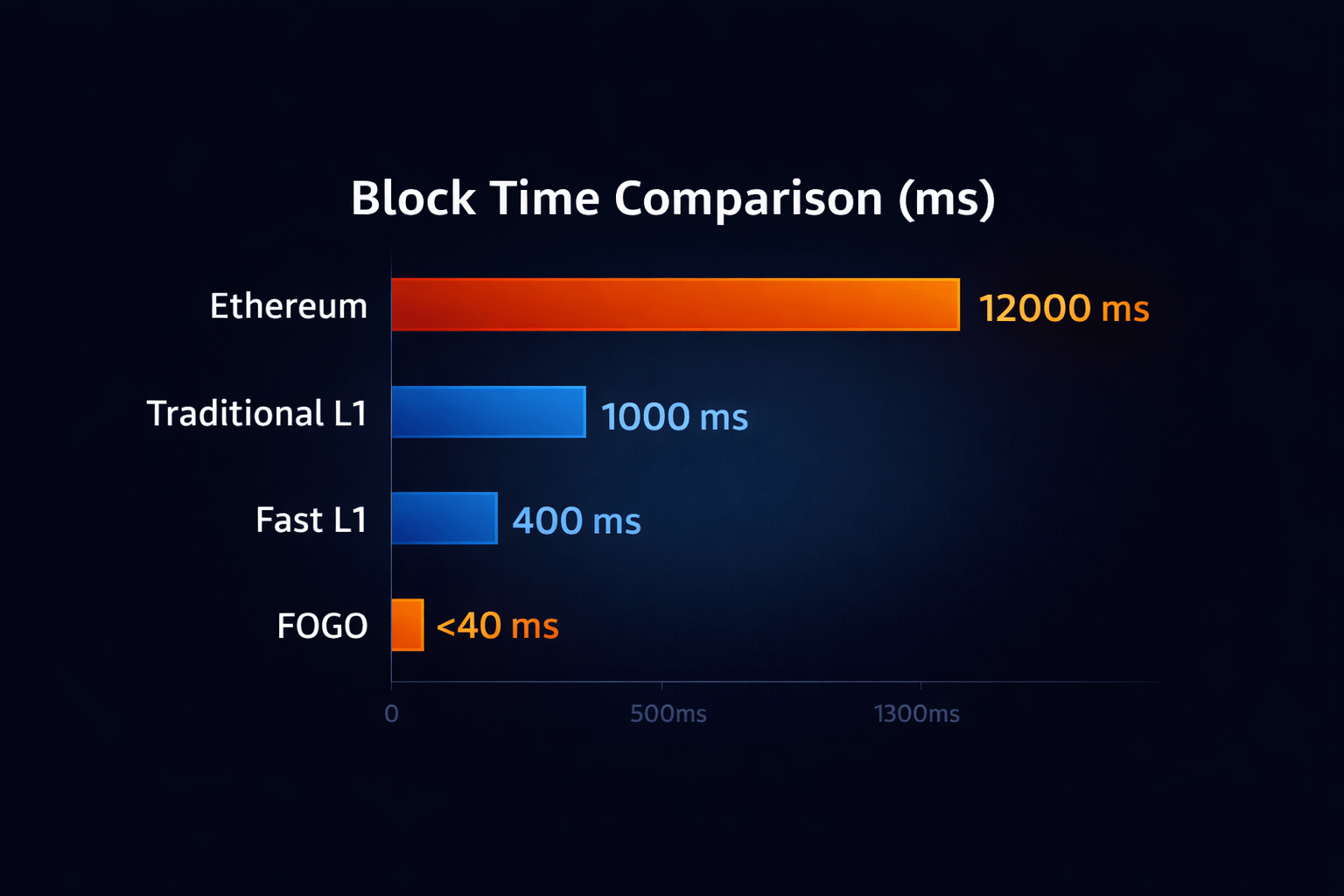
This drastic reduction in latency opens new possibilities for:
High-frequency on-chain trading
Real-time derivatives markets
Decentralized order books
Perpetual futures infrastructure
Institutional-grade liquidity
Fair Execution & Trading-Centric Primitives
Unlike many blockchains that prioritize general dApp flexibility, FOGO is designed with traders in mind.
Key Trading Features:
Fair transaction ordering
Reduced MEV exploitation
Predictable execution windows
Optimized order-matching compatibility
Low-latency oracle integration
This ensures both retail and professional traders operate on a level playing field.
SVM Compatibility Advantage
Because FOGO is SVM-based:
Developers can port Solana-style smart contracts easily
Existing DeFi infrastructure can integrate faster
Tooling and developer ecosystems remain compatible
This lowers entry barriers and accelerates ecosystem growth.
Community-First Tokenomics
FOGO’s tokenomics model reflects long-term sustainability and alignment.
Allocation Philosophy:
Strong airdrop participation for early users
Long-term vesting for core contributors
Ecosystem growth incentives
Validator rewards aligned with network performance

This structure discourages short-term dumping and promotes ecosystem participation.
Real-World Use Cases
FOGO enables:
1️⃣ High-Frequency On-Chain Trading
Near-CEX speed with decentralized transparency.
2️⃣ Decentralized Perpetual Exchanges
Ultra-fast order matching and reduced slippage.
3️⃣ Market Making Infrastructure
Institutional-grade execution speeds.
4️⃣ Real-Time Arbitrage Bots
Latency-sensitive strategies become viable on-chain.
Economic Impact on DeFi
With sub-40ms blocks:
Price discovery improves
Slippage reduces
Liquidity deepens
Volatility management becomes efficient
FOGO could bridge the performance gap between centralized exchanges and decentralized finance.
Why Traders Should Care
In modern markets:
1 second = Lost arbitrage
500ms = Slippage risk
100ms = Execution disadvantage
FOGO reduces this to under 40ms, creating:
✔ Faster entries
✔ Faster exits
✔ More predictable fills
✔ Lower execution risk
Trading FOGO
Traders can access FOGO via spot and futures markets, allowing both long-term investors and short-term traders to participate.
Strategic opportunities include:
Momentum trading
Futures hedging
Ecosystem participation
Early adoption incentives
Future Outlook
FOGO represents a new category of blockchains — Trading-Native Layer-1s.
If blockchain is to compete with traditional financial infrastructure, it must match:
Speed
Fairness
Scalability
Reliability
FOGO’s architecture positions it as a potential leader in this evolution.
Conclusion
FOGO is not just another Layer-1 blockchain. It is a purpose-built trading infrastructure designed for ultra-low latency, fairness, and real-time financial execution.
With:
Sub-40ms block times
Firedancer optimization
SVM compatibility
Community-first tokenomics
Trading-focused primitives
FOGO is engineered for the next generation of decentralized markets.
As DeFi matures, performance will separate experimental chains from production-grade infrastructure. FOGO aims to be firmly in the second category — where speed meets fairness, and decentralization meets real-time trading.
