
There was a time when I only cared about one thing in crypto speed. If a chain claimed higher transactions per second I was interested. If someone said it was cheaper than others I paid attention. But after spending more time in this space I realized something simple. Speed means nothing if the system cannot stay stable when real users arrive. I have seen networks freeze. I have seen fees jump without warning. I have seen projects promise smooth experience and then fail the moment traffic increased. That is when my mindset changed.
Crypto does not need another fast demo. It needs reliable digital roads. Because if thousands of people are using a network for payments gaming tokenized assets or business tools the system must not panic. It must handle pressure calmly. For me this is where Vanar started to look interesting.
When I looked deeper into Vanar I noticed it is not shouting the loudest in the market. It is not only posting big theoretical numbers. Instead it talks about infrastructure stability real world usage and long term ecosystem design. That difference matters to me because hype is easy. Building structure is hard.
Most blockchains today focus on marketing speed comparisons. They compete on who is faster cheaper or more scalable on paper. But real performance is different from laboratory performance. Real performance means handling traffic spikes without breaking. It means keeping fees predictable. It means making sure developers do not feel scared launching serious applications.
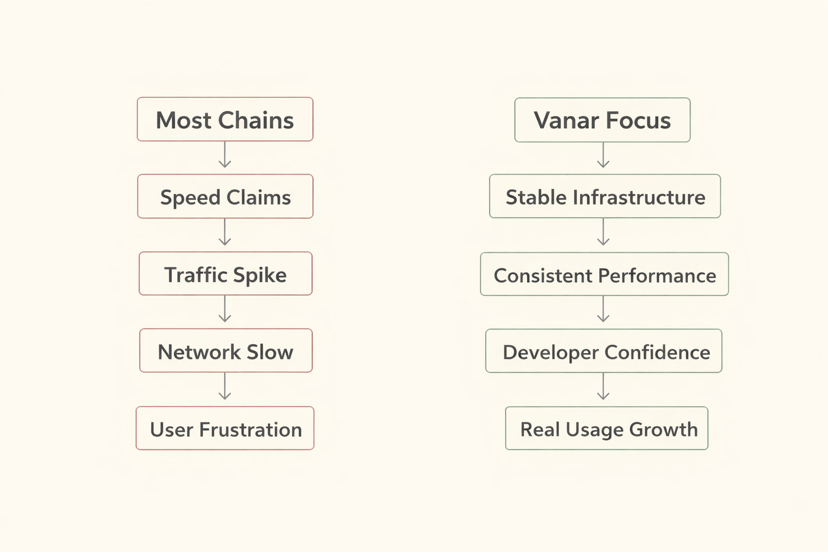
Vanar is built as a layer one blockchain. That means it runs its own base network instead of depending fully on another chain. This gives it control over how it manages validation security and scaling. What I personally find important is how the project talks about building for enterprises developers gamers and asset tokenization together. That is a wider vision than only DeFi trading.
Think about this clearly. If a gaming studio wants to launch an on chain game they need fast confirmation yes. But they also need stability. Imagine a live tournament and the network delays actions. That destroys trust instantly. If a company wants to tokenize assets they need reliability and security. They cannot risk system crashes. Infrastructure must feel professional not experimental.
This is where I feel Vanar is trying to position itself differently. Instead of only saying we are the fastest it is saying we are building strong base layers for real activity. That tone feels more mature to me.
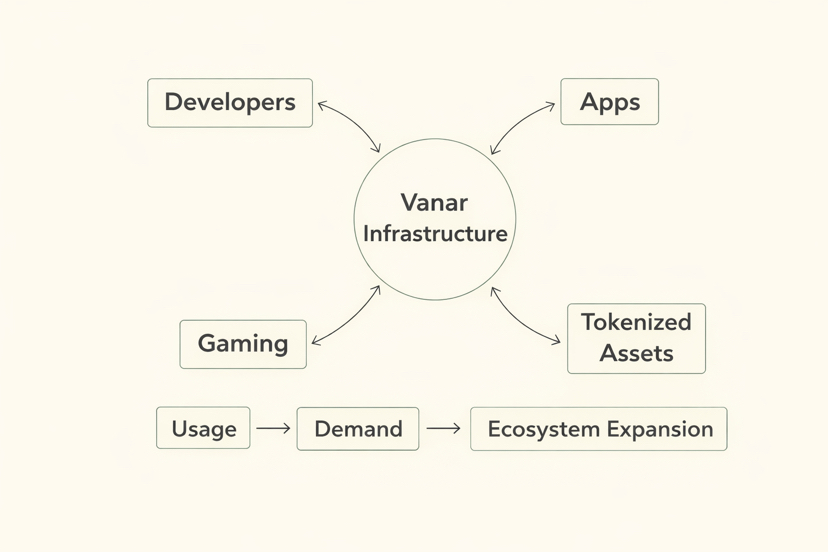
Another thing I noticed is ecosystem loop thinking. A blockchain does not grow only because of its token. It grows because developers build. When developers build applications users join. When users interact activity increases. When activity increases value grows. It is a cycle. If one part is weak the loop breaks.
Vanar seems to understand this cycle. It focuses on developer tools integrations and making the environment friendly for builders. In crypto the real power is not marketing campaigns. It is developers choosing where to build their future.
Security is also a serious topic for me. We have all seen hacks bridge failures and smart contract exploits across the industry. Every time that happens public trust drops. A chain that wants long term adoption must design security seriously from day one. No system is perfect but design philosophy matters. Vanar emphasizes secure infrastructure and validation systems which is important if enterprises are expected to join.
Now let us talk about tokenization because this is bigger than people realize. The world is slowly moving toward digital ownership. Real estate shares gaming items intellectual property rights even physical assets can be represented on chain. But tokenization only works if the base infrastructure is reliable. You cannot build digital ownership on unstable networks. If Vanar manages to support programmable ownership frameworks properly this could become a strong long term narrative.
I also think about AI integration in the future. Artificial intelligence systems generate value but they also need transparent execution records and digital ownership structure. A blockchain that can support AI related data validation and asset ownership may become extremely important in coming years. Vanar mentioning AI compatibility shows it is thinking ahead instead of only focusing on current trend cycles.
Of course we must be realistic. Layer one space is very competitive. There are strong players with huge capital and communities. Vanar will need consistent development updates partnerships and real applications launching on chain to stay relevant. Vision alone does not guarantee success. Execution decides everything.
But what makes me continue watching this project is the direction. It feels like infrastructure first narrative. Not fireworks first. Not temporary hype first. And in my personal experience projects that focus on foundation survive longer.
I also reflect on market psychology. In bull runs attention goes to loud projects. In quieter periods serious builders continue working. When the next expansion cycle arrives foundations built during silence often become valuable. I do not predict price movements. I observe structure. Structure matters more than noise.
If someone asks me why I am paying attention to Vanar my answer is simple. Because crypto adoption will only happen when networks stop feeling fragile. When businesses feel comfortable building. When gamers experience smooth play. When tokenized systems work without drama. Infrastructure that handles pressure calmly wins long term.
I am not saying Vanar will replace every other chain. I am not saying it is perfect. I am saying the approach feels thoughtful. In a market full of speed comparisons stability focus feels refreshing.
For anyone exploring new ecosystems I suggest looking deeper than price charts. Study architecture roadmap developer engagement and application growth. Ask whether the chain can handle real world scale. Ask whether builders trust it. That is where future value usually hides.
Right now Vanar looks like a project trying to solve the core weakness of many blockchains instability under real load. If it successfully proves consistent performance with growing ecosystem activity it could carve its own place in the Web3 infrastructure layer.
For me the journey is not about hype chasing anymore. It is about identifying which digital roads can actually support tomorrow traffic. And at this moment Vanar is one of the networks I am quietly observing with serious interest.
