
Cryptocurrencies and blockchain technology are reshaping finance and technology worldwide. This has led educators and policymakers to debate whether school curricula should include crypto lessons. Proponents argue that early exposure can boost financial and digital literacy and prepare students for new career paths . Critics counter that the subject’s complexity, volatility and legal uncertainties make it unsuitable for young learners . This article examines both sides of the debate.
Benefits of Teaching Crypto

Digital and financial literacy: Supporters say crypto lessons can strengthen students’ understanding of the modern economy. Teaching blockchain concepts helps students see how digital money works in practice, not just in theory. As one analyst notes, “teaching crypto helps students understand how data, networks, security, and algorithms work in real-world systems, improving digital literacy beyond basic app usage” . In other words, instead of only learning about cash and bank accounts, students learn the nuts and bolts of online payments and record‑keeping. Early crypto education can also introduce concepts like transparency and data verification, enriching data literacy and helping students “make good choices in an economy that is becoming more online” .
• Financial literacy: Many financial education programs lag behind the digital age. Traditional curricula focus on savings accounts and interest, rarely covering online scams or digital currencies . Cryptocurrency lessons could fill this gap. For example, one survey found over half of young people leave school without meaningful financial learning, and “curricula still focus on traditional concepts… but rarely address… cryptocurrency” . Incorporating crypto could modernize money lessons. Teaching about digital wallets and blockchain can reinforce core money skills (budgeting, saving) in a relevant context, and highlight issues like fraud prevention and cyber‑security.
• Career opportunities: The crypto and blockchain industry is growing rapidly. Introducing students to this technology can open their eyes to new STEM and finance careers. Schools that teach blockchain lay a foundation for future innovators. For instance, a Korean study argues that exposing children to blockchain “early on, they are more likely to select blockchain-related jobs” later in life . Likewise, advocates suggest crypto classes could “entirely shift how the next generation understands money,” potentially producing “future entrepreneurs and professional investors” in fintech fields . Free educational programs (like Binance’s online “Crypto School”) have even been launched to ensure future users are informed .
• Critical thinking and math skills: Cryptocurrency can be a cross-disciplinary topic. It can sharpen skills in economics (through concepts like supply/demand and money history), computer science (cryptography, networks), and critical thinking (risk assessment). For example, Everfi’s Crypto Foundations program for high schoolers covers blockchain basics and the “risks and benefits of holding cryptocurrencies” , fitting naturally into finance, economics and technology classes . Hands-on crypto projects (like simulated transactions or blockchain games) can make abstract concepts tangible and boost problem‑solving skills .
Challenges and Drawbacks
Despite the hype, there are strong reasons to approach crypto education cautiously:
• Volatility and risk: Cryptocurrencies are notoriously unstable. Their prices can swing wildly, which could confuse or mislead students about real value. Educators warn that crypto is “volatile, complex and sometimes even controversial”, so any lessons must carefully address risks and ethics . For example, Brazil’s Bitcoin program acknowledges critics’ concerns about “the unstable nature of Bitcoin” . Without care, students might see crypto as a get-rich-quick scheme. As one guide puts it, teaching crypto investing requires emphasis on “long-term value… [not] gambling” and clear warnings about volatility and scams .
• Regulatory uncertainty: Laws around crypto are in flux. Educating kids on a legal framework that may change overnight is tricky. Schools would need to update content regularly to keep up with new rules on taxation, securities, and fraud. As one analysis of higher education notes, “the crypto landscape is heavily influenced by shifting regulatory frameworks”, a challenge for any curriculum . This uncertainty can make teachers hesitant, especially when governments have yet to set clear standards for financial education. There’s also debate over whether public funds should promote an industry still grappling with money‑laundering concerns and court cases.
• Complexity and age-appropriateness: Blockchain and crypto involve advanced math and computer science. Concepts like cryptographic hashing or decentralized consensus can be abstract for young students. Critics argue it may be “above the heads” of children learning basic arithmetic. Educators emphasize starting with foundational concepts and building up gradually . There’s also the risk of adding too much content to an already crowded curriculum. Districts will have to decide which subjects (economics? computer science? social studies?) can absorb crypto topics without overwhelming students.
• Encouraging speculation: Some worry that teaching crypto could inadvertently encourage gambling-like behavior. If not handled carefully, classroom discussions of Bitcoin gains might feed into hype. One industry observer cautions that education must avoid “promotional hype” and focus on realistic analysis . Teachers would need to balance lessons with ethics, stressing that crypto investing is not a guaranteed path to wealth and that diversification and skepticism are important .
Real-World Examples of Crypto in Education
Several schools and jurisdictions are already experimenting with crypto education. These case studies reveal both excitement and caution.
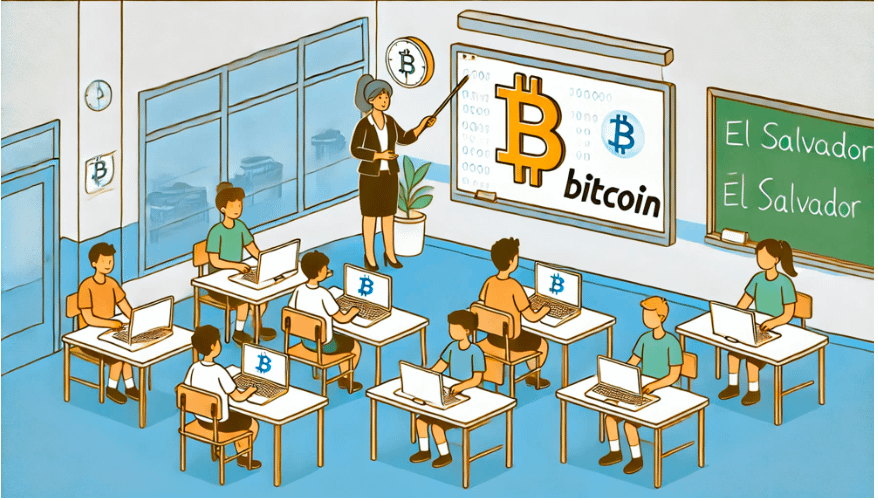
• El Salvador: This country famously made Bitcoin legal tender and has piloted a crypto curriculum in high schools . In that program, students learn about cryptocurrency alongside traditional finance – for example, they set up digital wallets and practice small Bitcoin transactions under supervision . The goal was to boost financial inclusion and tech skills in an unbanked nation . Reports note that El Salvador’s curriculum covers both history of money and practical blockchain use, and even teaches security and privacy . Public reactions were mixed: officials touted improved digital savvy, but critics worried that volatile Bitcoin lessons could distract from core financial education . This case illustrates both the potential and controversy of crypto in schools.
• Japan and Europe: In Japan, some high schools have begun offering blockchain courses as electives. Similarly, parts of Europe (e.g. Estonia and the Netherlands) have included basic cryptocurrencies in broader financial-literacy programs . These initiatives are often modest – perhaps a single lesson on blockchain or a short module – but they show growing interest. For instance, a Coinfomania report notes that private schools and universities worldwide are also adding crypto workshops, even if mainstream public systems have been slower .
• After-school and extracurricular programs: Outside the official curriculum, many schools support crypto clubs or competitions. Organizations like Junior Achievement (JA) have developed blockchain modules, and groups like Code to Inspire teach girls programming through crypto-related projects. Tech camps and university outreach programs offer blockchain bootcamps for teens. For example, Everfi provides a free online Crypto Foundations course for grades 9–12 . This voluntary approach sidesteps some political hurdles – students who opt in can dive into crypto without it displacing mandatory content.
• Higher-education pilot classes: Some universities now partner with high schools on blockchain topics. For example, MIT’s blockchain club and Stanford’s Blockchain Education Initiative have engaged with local schools. Even large universities have launched early-exposure programs: NYU’s high school Summer Program for Science (SPS) created a blockchain and crypto finance course, and MITx offers introductory online courses in blockchain. These initiatives suggest that as crypto penetrates the job market, academic institutions see value in preparing younger students.
Perspectives from Experts
Educational and crypto experts stress a balanced approach. A UNESCO/COL report argues that “schools can and should serve as a point of contact and source of information” about blockchain . In other words, educators have an opportunity to teach students both the risks and benefits of crypto, rather than leaving them to learn from social media. By explaining scams, security, and legal issues alongside blockchain’s potential, schools can give students “a balanced understanding” to engage responsibly .
Economists and crypto advocates note that digital finance is here to stay. An OECD survey found only 29% of adults have basic digital finance skills, highlighting a gap in current education . In response, some experts argue it’s better to educate children now, rather than let misunderstandings spread. As one commentator put it, students already encounter online currencies informally – without guidance, they “can be misled into thinking that hype is knowledge.” Teaching crypto intelligently would instead equip them to ask “What makes digital money valuable? Why do prices change?” .
On the cautionary side, financial experts emphasize teaching responsible habits first. A crypto educator suggests focusing on long-term value, not get-rich-quick schemes, and always warning about volatility and security . This “foundation first” philosophy means covering basic economics, ethics and technology principles before any talk of investment. By doing so, students gain “balanced perspectives” – understanding regulatory issues and sound decision-making alongside the mechanics of crypto .
Overall, thought leaders call for curriculum designers to blend cryptocurrency topics into existing subjects, rather than creating standalone hype. One summary advises that crypto could fit naturally into finance and economics classes (updating personal-finance lessons for digital money), computer science courses (teaching blockchain’s technical aspects), and even civics or social studies (discussing global money systems and regulation). For example, Everfi’s crypto curriculum is explicitly aligned with finance, economics, business and technology standards . In practice, a lesson on Bitcoin might appear in a math class as an example of exponential growth, or in a social-studies unit on the nature of money.
Curriculum Integration and Age Considerations
Deciding how and when to teach crypto is crucial. Many experts suggest starting with high school or late middle school, when students have sufficient math and reasoning skills. However, some K–8 programs introduce the basic concept of digital currency in very simple terms. Interactive methods can help: educators recommend gamified tools and visual simulations to break down blockchain into digestible pieces . For instance, a classroom game might use a pretend “token” currency to illustrate decentralization, or an app that visually shows a block-mining process. Using familiar examples (like how in-game points or gift cards work) can make abstract crypto concepts relatable.
It’s also important to keep content age-appropriate. Primary students could learn the idea of digital money without real investment. Middle-schoolers might explore the history of currency and basic cryptography puzzles. High-school curricula can handle deeper topics: programming smart contracts, analyzing market graphs, and debating regulation. In all cases, curricula should emphasize core financial habits (budgeting, critical thinking) and digital citizenship. One guideline from crypto educators is to teach the fundamentals of money and safety before any talk of price speculation .
Finally, as with any new topic, teacher training is key. A major obstacle is simply finding instructors who understand blockchain well enough to teach it. Professional-development programs and partnerships with tech organizations can help prepare teachers. For example, schools might work with industry or university mentors to develop lesson plans. Over time, as digital currencies become more integrated into daily life, many analysts expect crypto topics to become as standard as personal finance.
Conclusion
The debate over cryptocurrency in schools is still unfolding. On one hand, integrating blockchain into education could make students more financially savvy and technologically literate, giving them a head start in the 21st-century economy . On the other, critics warn of undue risk and complexity, suggesting a cautious, measured approach . In practice, most experts seem to agree on a compromise: include crypto topics sparingly and wisely, embedded in broader lessons on finance, technology and civics. By focusing on foundational knowledge and ethical issues, schools can prepare students to navigate digital money without veering into speculation.
As one report notes, without crypto education “young people… risk stepping into a financial system they don’t fully understand.” Responsible teaching – age-appropriate, balanced, and continuously updated – could turn that risk into an informed opportunity .
Sources: Authoritative reports and articles (UNESCO, UNICEF, OECD, CoinDesk, academic journals) along with educational program descriptions and thought-leader commentary. All insights above are drawn from these sources , providing a comprehensive view of current thinking on crypto education.