

 Most decentralized protocols assume enthusiasm as their default operating condition. Validators want to validate, traders want to trade, and users want to participate. Storage networks don’t have that luxury. They operate under the opposite assumption: data gets abandoned. Users upload large files, datasets, or application state, and then stop thinking about it. The protocol, not the user, inherits responsibility for making sure the data survives.
Walrus takes this reality seriously and builds the WAL token around it. Instead of rewarding short-term activity, WAL structures incentives so that the rational economic behavior for a storage operator is to keep data alive long after the uploader has moved on. In storage, durability is not achieved through motivation it’s achieved through properly priced neglect.
Why Neglect Is the Real Adversary
The biggest threat to decentralized storage is not malicious behavior. It is apathy. In long-lived systems, failures accumulate silently:
nodes churn out
disks fail
datasets become “cold”
interest drops
incentives misalign
migration costs pile up
Traditional cloud providers solve this through capital concentration: build huge data centers, overprovision, and rely on economies of scale. Walrus cannot assume centralized coordination. It must assume operators will behave selfishly unless properly compensated, penalized, or both.
This is where WAL matters.
Pricing Durability into the System Instead of Wishing for It
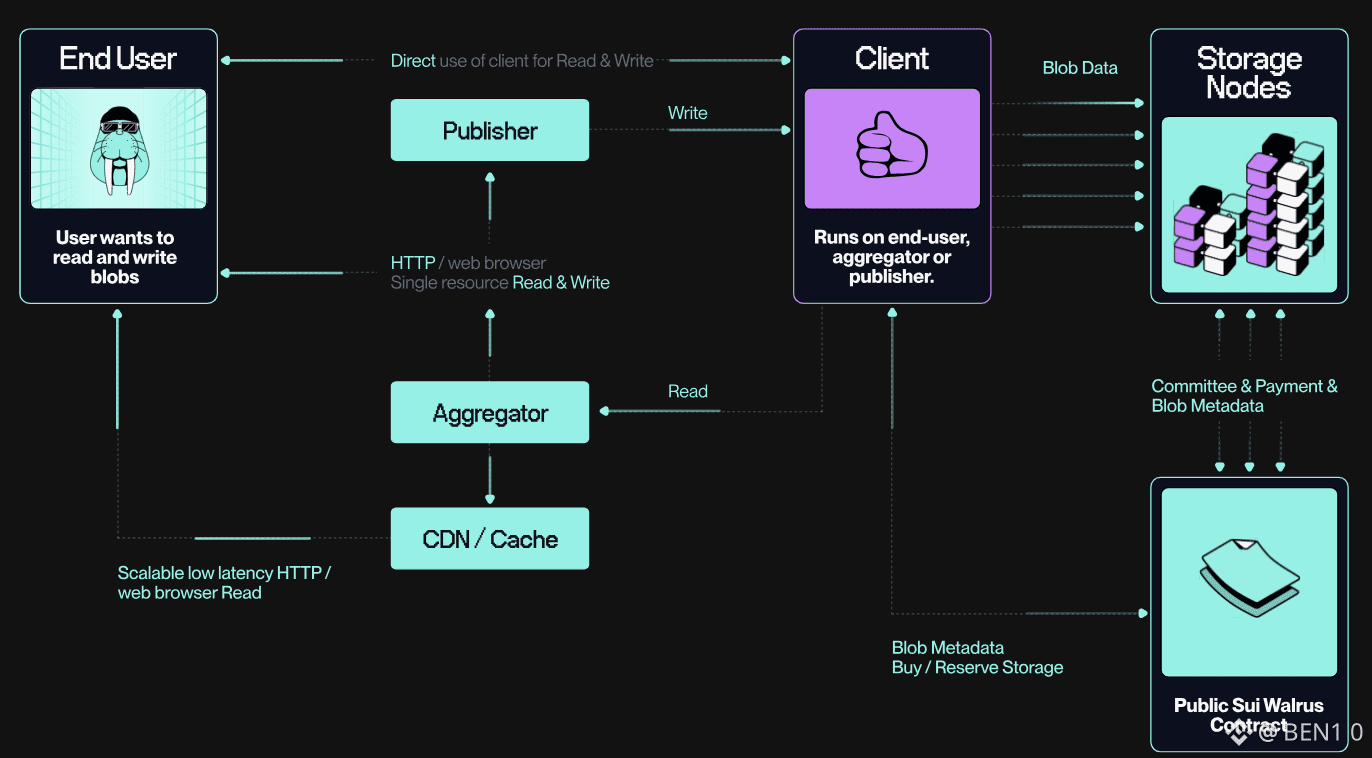
Walrus doesn’t treat durability as an engineering problem alone. It treats it as a budgeting problem. Data must pay for its own survival through time. WAL enables this by tying the lifespan of stored blobs to a prepaid economic commitment. If users want 12 months of storage, they pay 12 months of security and availability upfront. The protocol distributes this value slowly to storage operators so that incentives remain present as time passes.
This structure accomplishes three things simultaneously:
1. Operators get recurring income, not one-time payouts.
2. Users get predictable persistence, not best-effort hosting.
3. The protocol avoids subsidy traps, where incentives depend on hype cycles.
Most storage protocols fail because they subsidize growth and collapse once subsidies dry up. WAL avoids that by pushing cost accountability to the demand side.
Staking Turns Reliability into Financial Exposure
Storage operators must stake WAL before accepting data. That stake is not decorative it is financial skin in the game. If the operator fails availability checks or disappears, the stake is partially eroded through slashing. The mechanism doesn’t need to punish malicious intent. It only needs to make negligence expensive.
This flips the trust model:
Not “trust me to store your data,” but “I am paid to store it and penalized if I don’t.”
Economics becomes the API for reliability.
Why Multi-Year Data Matters
Short-lived systems don’t stress storage economics. NFTs, gaming assets, datasets, and social feeds introduce year-scale horizons. A decentralized network cannot rely on active maintenance from users over those timeframes. WAL therefore acts as a temporal coordination token, aligning incentives across years rather than epochs.
In the real world, durability is measured by how data behaves when nobody touches it. WAL creates that condition on-chain.
Supply Discipline vs. Speculative Reflex
Many tokenized systems use inflation to attract participants. Walrus is more conservative. WAL’s design prioritizes:
slow issuance
storage-driven demand
staking lock-in
governance participation
low-velocity circulation
This creates a token economy that looks more like infrastructure financing than short-term speculation. In fact, WAL’s healthiest use case is when it circulates the least, because staked tokens:
secure the network,
reduce liquid supply,
and anchor storage commitments.
This is the opposite of DeFi tokens that rely on high transaction velocity for narrative legitimacy.
Governance as a Mechanical Lever, Not a Marketing Feature
Governance in storage systems is not about slogans it is about parameter tuning:
redundancy ratios
repair thresholds
renewal pricing
slashing severity
staking requirements
retrieval fees
These parameters determine whether data survives. WAL holders do not govern hype. They govern thermodynamics: how much energy (incentives) must enter the system to keep negentropy (data durability) from collapsing.
If governance fails, data decays. If parameters converge, the system becomes cheaper, safer, and more predictable over time.
Why This Matters for Sui’s Application Layer
Sui has positioned itself as an execution-first chain. But real applications especially AI workloads, media, identity, and enterprise data need both:
execution (compute) and
persistence (memory)
Walrus introduces memory to the ecosystem. WAL coordinates the economics of that memory. Without it, Sui would produce applications that compute but cannot remember. With WAL, Sui can support software that behaves like products, not demos.
The Broader Implication: Storage as an Economy, Not a Feature
The biggest conceptual shift here is simple:
Storage is not a feature. Storage is an economy.
Decentralized networks that ignore this fact eventually degrade into centralized clouds or abandoned archives. Walrus avoids that fate by pricing the cost of attention upfront and letting WAL distribute it gradually through time.
In an environment where neglect is the normal behavior, WAL doesn’t ask operators to care it pays them to care.
Durable systems are built on that kind of honesty.