

Hey Binance Square community.
Over the past few months, I’ve been taking a deeper look at blockchain projects that aim to solve real financial problems, not just chase short-term hype. One name that consistently stands out is Dusk Network. What makes Dusk compelling isn’t marketing—it’s the way it thoughtfully bridges regulation, privacy, and decentralization, three forces that rarely coexist smoothly.
The Core Challenge: Privacy and Compliance
Modern finance runs on sensitive data. Banks, exchanges, and institutions must protect user information while simultaneously meeting strict regulatory requirements. Public blockchains, while transparent and secure, often expose too much information to be viable for regulated financial use. This creates a fundamental mismatch between blockchain ideals and real-world financial needs.
Dusk Network addresses this gap with a privacy-first but compliance-aware design. Instead of choosing between secrecy and transparency, Dusk enables confidential transactions where sensitive data remains protected, yet verifiable when required. Through advanced cryptographic techniques like zero-knowledge proofs and privacy-preserving computation, transactions can be validated without revealing unnecessary details. This approach reframes privacy not as concealment, but as selective disclosure with accountability.
Built for Real-World Assets (RWAs)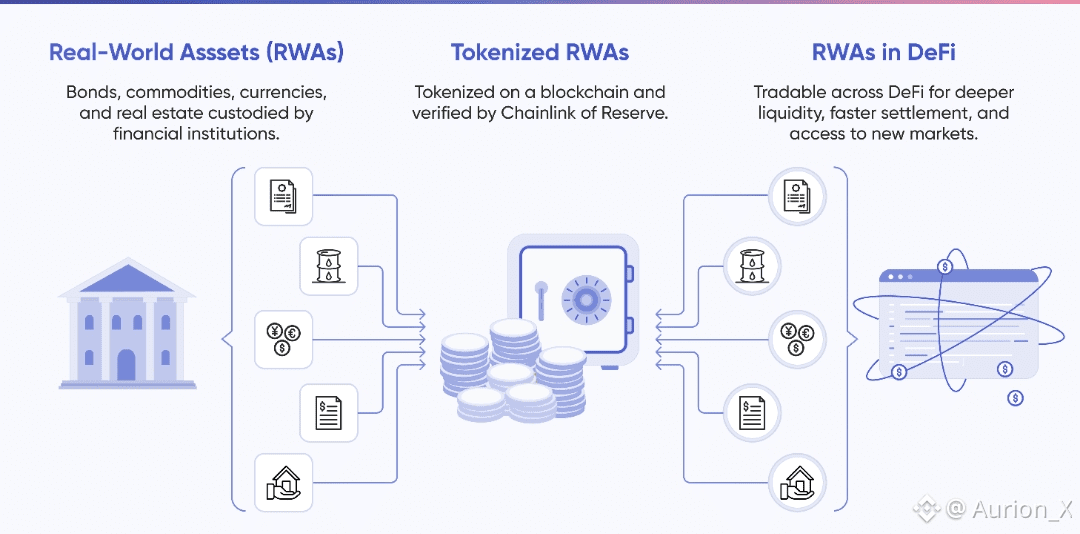
One of Dusk’s most distinctive strengths is its focus on real-world assets. Tokenization is often discussed in abstract terms, but Dusk approaches it as a complete financial lifecycle:
Asset issuance
Regulated trading
Settlement and clearing
Secure custody
This holistic design makes Dusk especially relevant for institutions exploring tokenized equities, bonds, or structured products. Its modular architecture—including a purpose-built smart contract environment and an efficient consensus mechanism—supports scalability without compromising security or decentralization. Rather than retrofitting legacy finance onto blockchain, Dusk rethinks the infrastructure from the ground up.
Identity and Compliance Without Data Exposure
Compliance is non-negotiable for institutional adoption, and Dusk treats it as a feature, not a constraint. Its identity framework allows users and institutions to prove required attributes—such as eligibility or accreditation—without exposing personal information on-chain. This can dramatically reduce friction in onboarding, audits, and cross-border participation, while still respecting user privacy.
For enterprises and regulated entities, this model lowers operational risk and simplifies regulatory alignment. For users, it restores a sense of data ownership that is often lost in traditional financial systems.
Empowering Users Through Self-Custody
Beyond institutions, Dusk also speaks directly to everyday participants. The ability to hold and manage tokenized financial assets through self-custody reduces reliance on centralized intermediaries. This design encourages transparency, resilience, and financial inclusion—particularly for users in regions where access to global financial markets is limited or inefficient.
Instead of positioning blockchain as a speculative playground, Dusk frames it as infrastructure—a neutral layer where individuals and institutions can interact on equal footing under clear rules.
A Long-Term Vision, Not a Shortcut
Dusk Network has been under active development for several years, focusing on research, compliance alignment, and gradual ecosystem growth. This patient approach matters. Financial infrastructure requires trust, stability, and clarity—qualities that cannot be rushed.
Recent technical expansions, including compatibility layers that improve developer accessibility, signal an intent to grow responsibly while remaining aligned with regulatory realities. Rather than competing directly with general-purpose blockchains, Dusk occupies a specialized niche: regulated decentralized finance.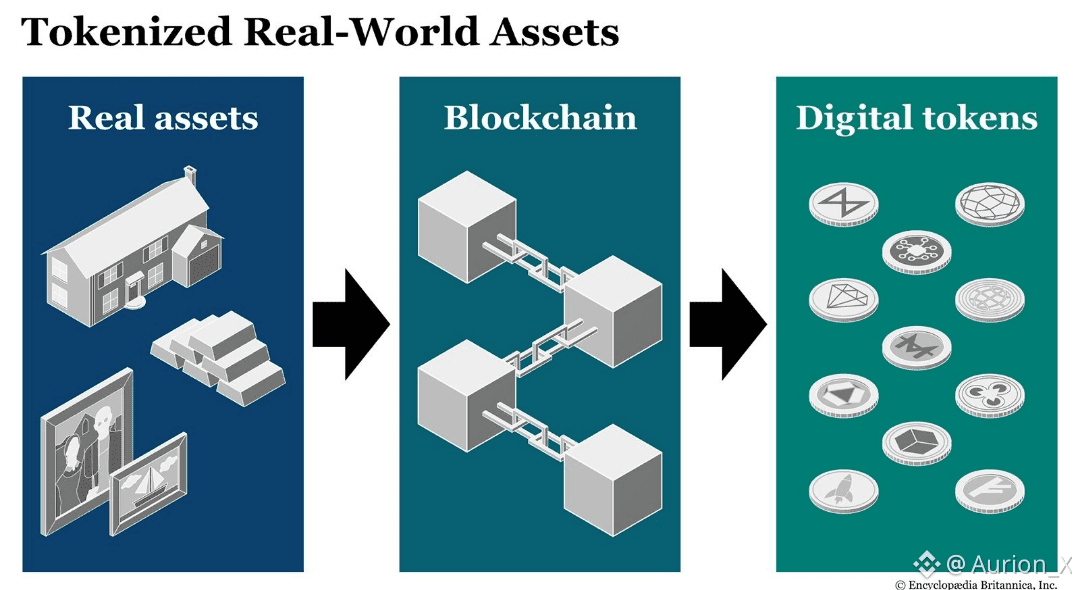
Why Dusk Matters Going Forward
As global finance continues to explore blockchain-based settlement, tokenization, and programmable assets, platforms that balance privacy, compliance, and decentralization will be essential. Dusk Network’s design philosophy aligns closely with where institutional and regulatory conversations are heading.
This isn’t about short-term price movements or speculation. It’s about building systems that can support real capital, real users, and real regulation—without sacrificing the core values that make blockchain transformative.
Final Thoughts
Dusk Network is quietly building the rails for a future where traditional finance and decentralized technology can coexist. For those interested in projects focused on utility, compliance, and long-term impact, Dusk is worth serious attention.
Shoutout to @Dusk for pushing forward a thoughtful and much-needed vision in blockchain.
