

As blockchain technology evolves, the conversation is shifting from simple value transfer to full-scale digital infrastructure. Applications today are no longer limited by smart contract logic alone — they are constrained by how data is stored, accessed, and verified. This is where Walrus Protocol plays a crucial role.
Walrus Protocol is built on the understanding that data availability is the backbone of decentralized systems. Without guaranteed access to data, even the most secure blockchain becomes unreliable. Walrus addresses this problem by creating a decentralized network where data is not only stored, but continuously protected against loss, manipulation, and censorship
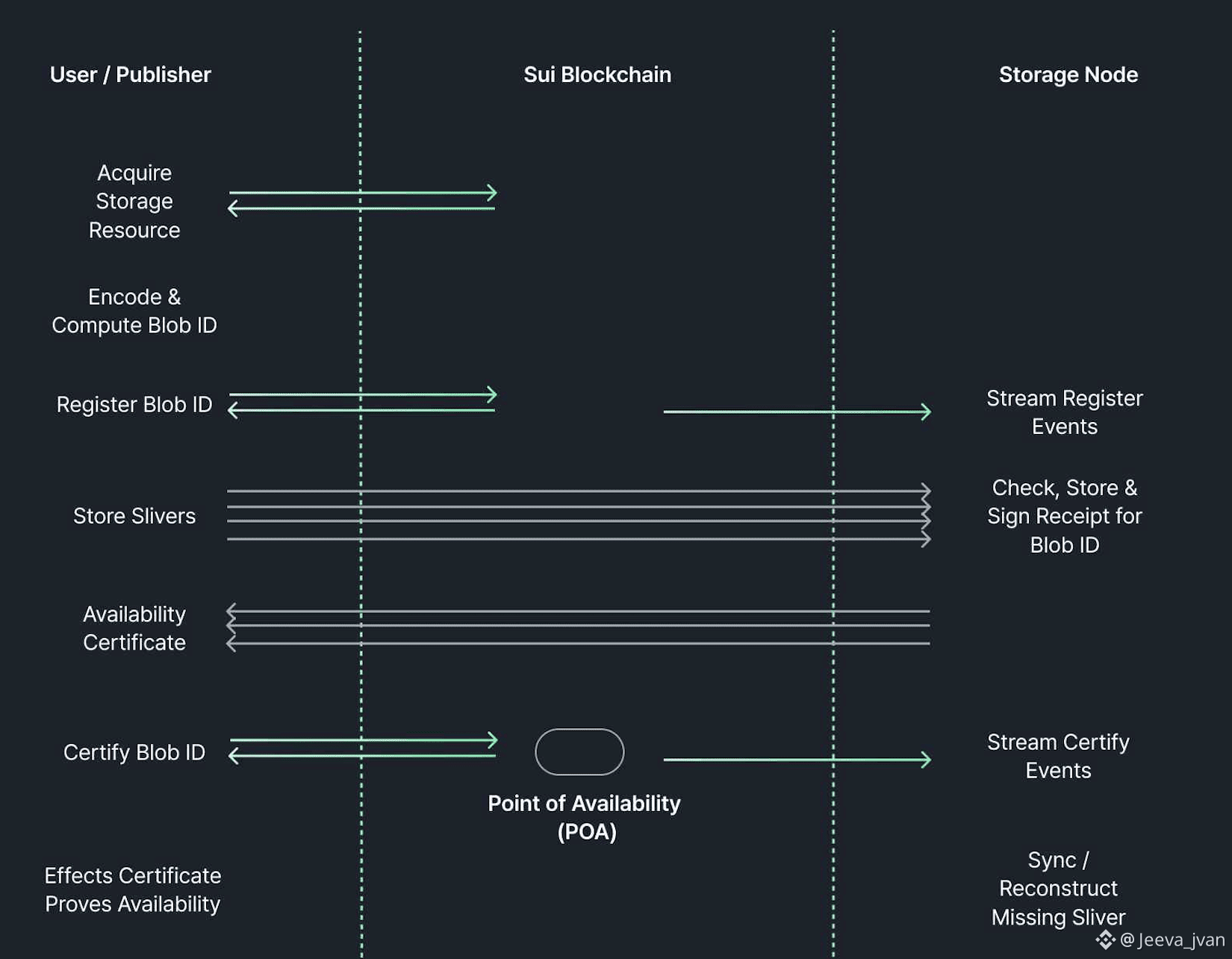
One of the most important implications of Walrus lies in its relevance to artificial intelligence. AI systems are only as trustworthy as the data they are trained on. Today, AI models rely heavily on opaque datasets controlled by centralized entities, creating risks around bias, data poisoning, and unverifiable provenance. Walrus enables AI developers to store training data and model artifacts in a verifiable, decentralized environment, ensuring transparency and integrity from data ingestion to inference
In decentralized finance, Walrus provides a foundation for trust-minimized data access. Price feeds, historical records, risk models, and offchain computation outputs can all be stored on Walrus and retrieved with cryptographic proofs. This reduces reliance on centralized data providers and strengthens the security assumptions of DeFi protocols operating in adversarial environments.
Another critical strength of Walrus Protocol is its resistance to centralization over time. Many networks begin decentralized but gradually concentrate power as scale increases. Walrus is designed to counter this tendency through its incentive structure, which rewards node performance rather than size or reputation. Nodes that reliably store and serve data earn rewards, while poorly performing nodes are penalized, ensuring long-term network health.
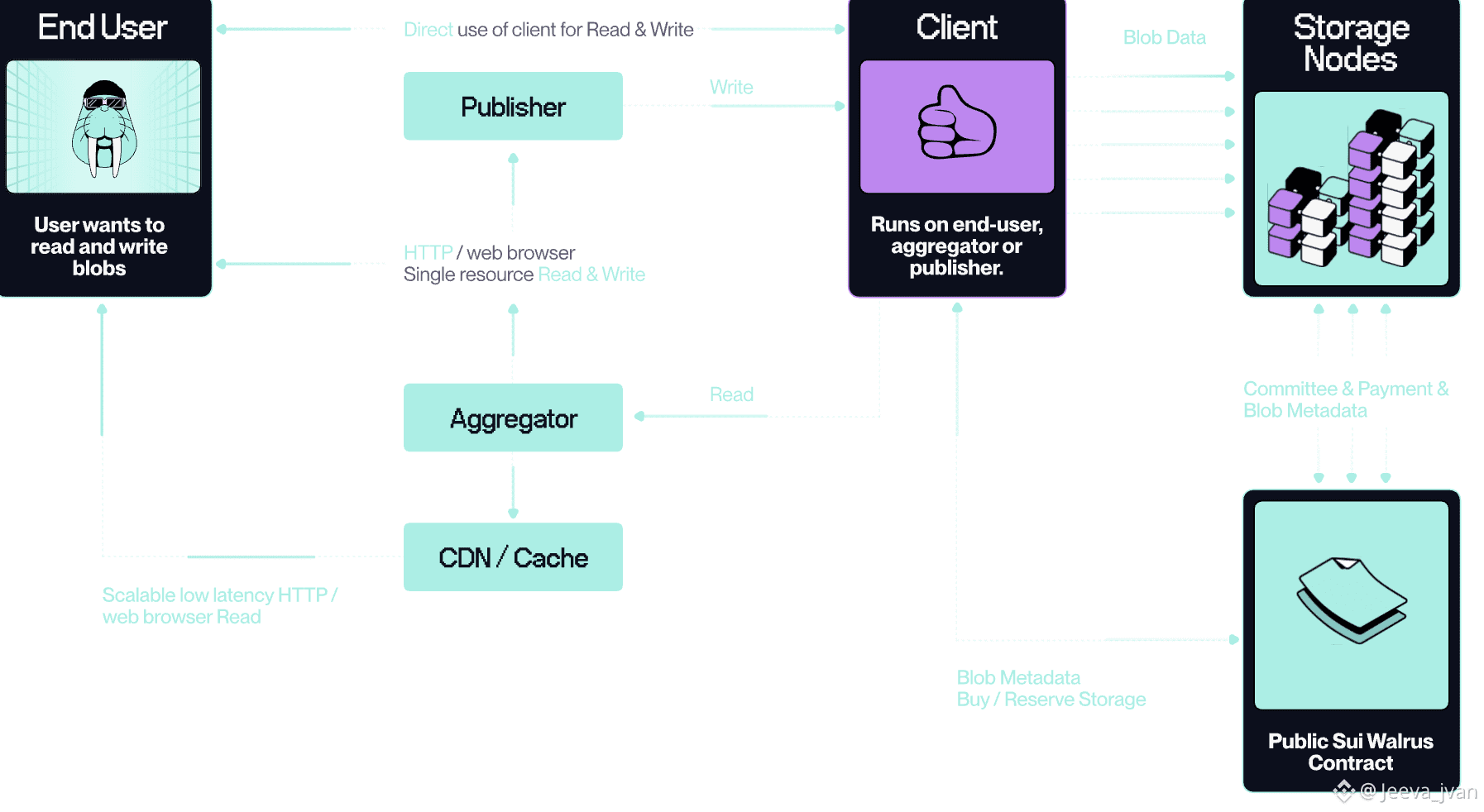
Walrus also plays a vital role in censorship resistance. In centralized systems, data can be removed or restricted silently. On Walrus, no single party has the authority to erase data unilaterally. As long as the network exists, data remains accessible according to protocol rules, making it an ideal foundation for open knowledge, decentralized media, and permissionless applications.
From a developer perspective, Walrus lowers the barrier to building fully decentralized applications. Instead of juggling multiple storage providers, offchain databases, and trust assumptions, developers can rely on Walrus as a unified data layer that integrates seamlessly with blockchain environments. This simplifies architecture while increasing security and reliability.
Ultimately, Walrus Protocol is not just another storage solution — it is core infrastructure for a decentralized future. As AI, Web3, and onchain economies converge, the demand for trustworthy, scalable, and censorship-resistant data will only grow. Walrus is positioning itself at the center of this transformation, ensuring that the next generation of applications is built on data that is verifiable, resilient, and truly decentralized

