
Walrus isn't just another storage protocol; it's a fully incentivized, decentralized network where $WAL tokenomics create alignment between users, nodes, and the ecosystem. Built on Sui for coordination, Walrus uses WAL for three core utilities:
Storage Payments – Prepay in WAL for fixed periods, with funds distributed gradually to nodes/stakers, ensuring stable fiat-equivalent costs and financial sustainability.
Delegated Staking & Security – Stake WAL to back reliable storage nodes (dPoS model), earn rewards based on performance, and help assign data – nodes compete for stake, driving efficiency and uptime. Slashing and penalties (with burns) punish bad actors.
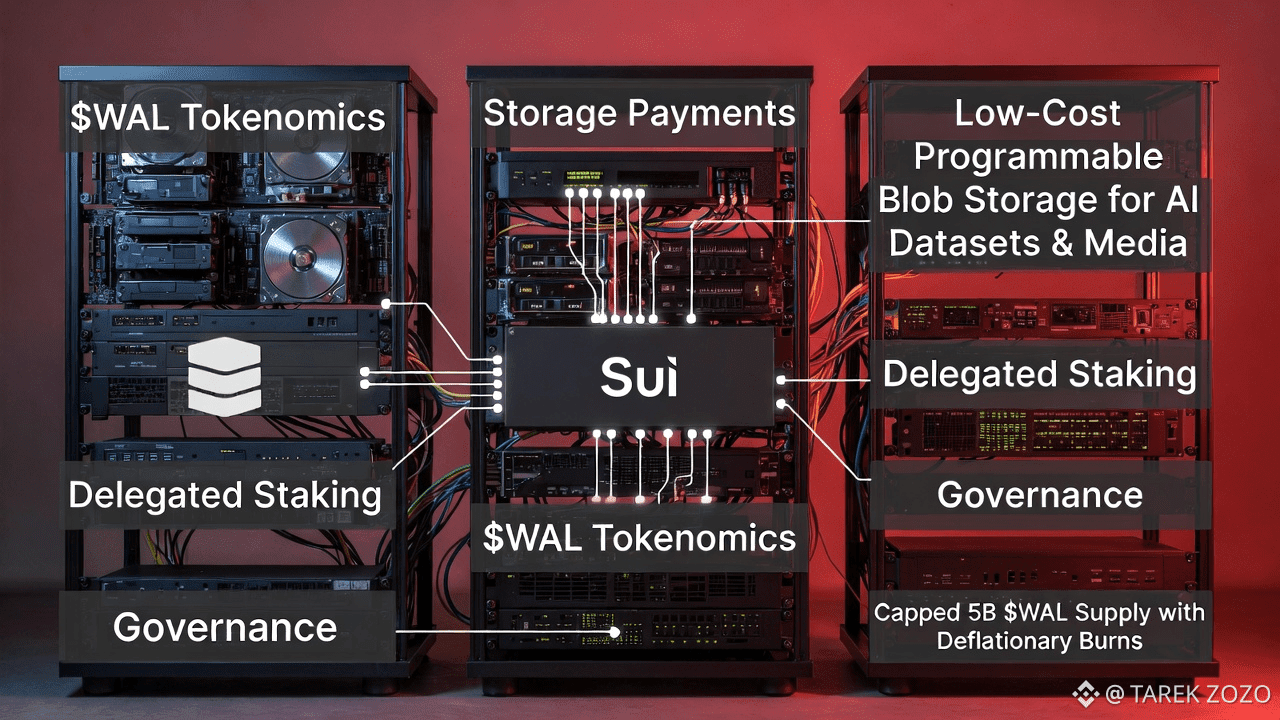
Governance – WAL holders (via staked nodes) vote on critical parameters like pricing, penalties, and upgrades, making the protocol community-driven and adaptable.
With a capped 5B supply, heavy community allocations (including airdrops), subsidies for early growth, and deflationary burns (short-term stake shifts, slashing), $WAL is designed for long-term value accrual as usage grows – more storage = more demand and burns.
This model supports Walrus' mission: low-cost (80-100x cheaper than some legacies), programmable blob storage for AI datasets, media, and more. As Sui's data layer evolves in 2026, WAL holders are positioned for real utility and rewards in the decentralized future.


