
Hey fam, it feels like forever since we last talked about what’s cooking with Walrus and I figured it was high time to put together a real deep dive for everyone. There’s so much happening in this corner of Web3 that it deserves more than a few tweets here and there. If you’ve been curious not just about price charts but what this project actually means for the future of decentralized data, this article is for you.
Before we get into it, let me just say this: what Walrus is building isn’t some niche experiment. It’s aiming at a fundamental piece of the internet’s backbone. We’ve long talked about decentralizing money, decentralizing identity, and decentralizing governance. But data is the part that actually carries the real world, images, videos, AI training sets, game assets, entire web apps — and until now we’ve not really had a decentralized answer that scales, performs, and remains affordable. Walrus is tackling exactly that.
A Quick Primer if You Are Just Getting Started
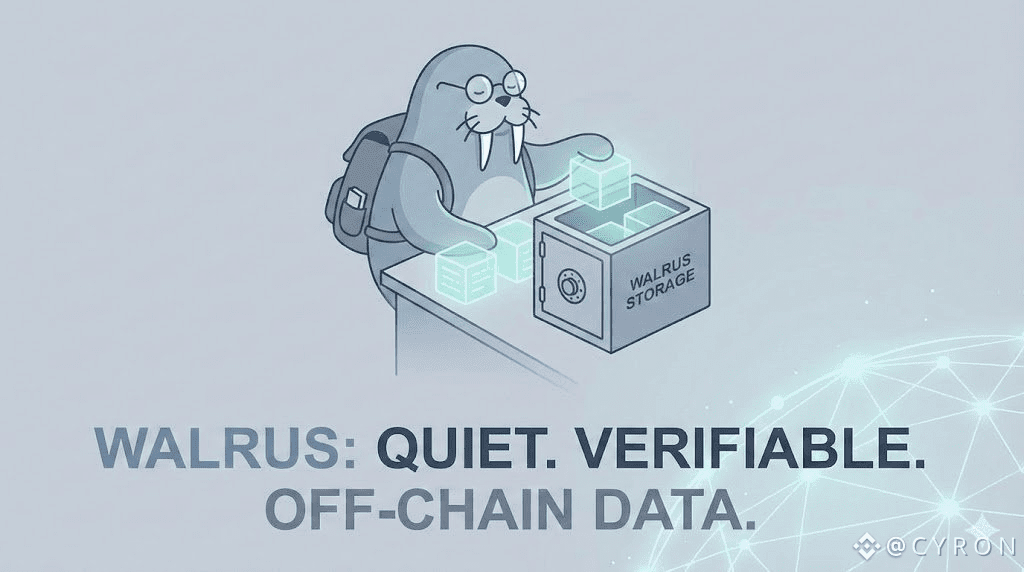
Walrus is a decentralized storage and data availability protocol designed to handle large files think anything that traditional blockchains struggle with due to cost and scalability, like videos, high-resolution images, massive datasets, and richer digital content. Instead of relying on centralized cloud servers, Walrus spreads data over a global network of storage nodes and ensures it stays accessible and resilient. The magic trick it uses for this is an efficient encoding technique that shatters large data chunks into multiple pieces that are spread across nodes. Even if some nodes go offline, the original file can still be reconstructed.
But this is more than just storage. Walrus treats stored data as programmable resources. That means developers can reference and use that data inside smart contracts, making it possible to build applications that manipulate large datasets directly on chain rather than pointing to centralized URLs. That’s a huge shift in how decentralized apps work.
How This All Came Together
Walrus didn’t just pop out of nowhere. The project began with early phases like whitepaper releases and testnets as the team refined how to handle technical hurdles like encryption, redundancy, and performance. In 2025, Walrus hit a watershed moment: the mainnet launch. This wasn’t just a technical checkpoint — it meant the protocol was live and ready to do real work. Upload and retrieve blobs, host decentralized sites, stake WAL tokens, and participate in governance were all now live activities on the network.
For many of us in the community, that shift from testnet to mainnet is where things stop being abstract theory and start becoming products developers can actually build on.
The Power of WAL: More Than Just a Token
A lot of people first notice WAL when it starts trading. But its utility goes far deeper. WAL is the lifeblood of the Walrus network:
Storage Payments — When you store or retrieve a blob, you pay with WAL.
Stake and Security — WAL holders can delegate their tokens to storage nodes, helping secure the network while earning rewards.
Governance — WAL holders participate in decisions about how the network evolves.
Economics That Support Performance — The protocol has built-in mechanics that burn tokens when nodes underperform and reward participation when nodes behave reliably. That keeps long-term incentives aligned and helps ward off lazy infrastructure providers.
What’s clever here is that WAL isn’t just a utility token — it’s part of the infrastructure-level economic system that keeps the network honest, efficient, and sustainable as it scales.
Real Adoption: What People Are Building
Here is where it gets exciting. This isn’t just talk. A bunch of real projects are already building on Walrus or integrating its storage layer into their stack. That includes decentralized media platforms, Web3 games with heavy asset requirements, and even AI tooling that needs secure, scalable data handling. Developers are using Walrus to host web content, serve game assets, archive NFT metadata, and more.
One of the biggest leaps comes from programmable storage, where apps actually control data logic through smart contracts. That wasn’t easy before. Traditional storage networks were great for static files but not so great when you wanted an app to do something with that data on chain. Walrus changes that.
Why the Community Matters More Than Ever
Something I’ve really appreciated watching is how Walrus has leaned into community participation. Rather than keeping tokens and influence concentrated among insiders, they designed the WAL token distribution around community growth. A large slice of the supply is reserved for the community through airdrops, future ecosystem programs, developer incentives, and support for early adopters. That kind of alignment means builders, users, and operators all have skin in the game.
More than that, the governance structure allows the community to influence key network decisions over time. This isn’t a team with total control and a passive user base — it’s meant to be a collective effort that evolves with contributions from everyone involved.
Cool Features That Matter in Practice
When the mainnet dropped, the team didn’t just flick a switch. There were several enhancements that made Walrus more practical and developer-friendly from day one:
Advanced Metadata Support — Files can carry rich metadata attributes, making them more useful inside apps.
Secure Direct Access — Storage nodes can serve content with publicly trusted certificates, making it easier for modern apps to interact with the network.
Authentication Options — Publishers can enforce access control via token-based authentication.
Operational Tools — Extensive logging and health checks help node operators maintain performance and provide the insight needed to scale services smoothly.
All of these may sound technical, but the bottom line is that building with Walrus today feels much more mature than most decentralized protocols ever do at launch.
Looking Ahead: What’s Next for Walrus
I think the most interesting part about Walrus right now is that we’re still early. Yes mainnet is live, yes developers are building, and yes WAL is circulating. But this is really just the start. There are a few areas where I’m eagerly watching things unfold:
Multi-chain expansion
Today Walrus integrates deeply with the Sui ecosystem, but there are signs and discussions around extending compatibility with other major chains. That’s going to be huge because it means apps on different blockchains can use Walrus as a common storage layer, driving up demand and utility.
AI and Machine Learning Data
As AI datasets grow in size and complexity, decentralized storage becomes even more attractive. Walrus’ architecture is suited for high-volume, verifiable storage — a requirement that centralized systems can’t always meet without tradeoffs in privacy or control.
Decentralized Web Hosting
Builders are already hosting sites using Walrus directly. Imagine a future where fully decentralized applications serve not just logic but their entire frontend contents without reliance on any centralized servers. That’s a true Web3 vision, and it’s closer than you think.
Final Thoughts
If you’ve been on the fence, I encourage you to take a deeper look at what’s happening with Walrus. It’s one of those projects that doesn’t always make the flashiest headlines, but the work it does touches the entire ecosystem. Storage is foundational. You can have the best blockchain, the fastest consensus mechanism, and the slickest frontend — but if you don’t have a trustworthy data layer, the whole stack wobbles.
Walrus isn’t just another storage project. It’s building a decentralized, programmable, and scalable data substrate for Web3 and beyond. And that’s something worth paying attention to.
Let’s keep watching this space together. The best may well be still ahead.

