
As blockchain adoption grows, scalability becomes crucial. Layer 2 solutions like Plasma, Optimistic Rollups, and zk-Rollups aim to reduce congestion on Ethereum while maintaining security. Plasma, pioneered as a framework for off-chain transactions, enables smaller chains to process activity independently and submit periodic summaries to the main chain. This approach reduces on-chain load, lowers fees, and increases transaction throughput.
Optimistic Rollups, on the other hand, bundle multiple transactions into a single batch, assuming validity unless challenged. This “optimistic” approach increases speed and reduces costs but relies on challenge periods to ensure security. Meanwhile, zk-Rollups leverage zero-knowledge proofs to instantly verify transaction correctness, providing near-instant finality and strong security guarantees, though with higher computational complexity.
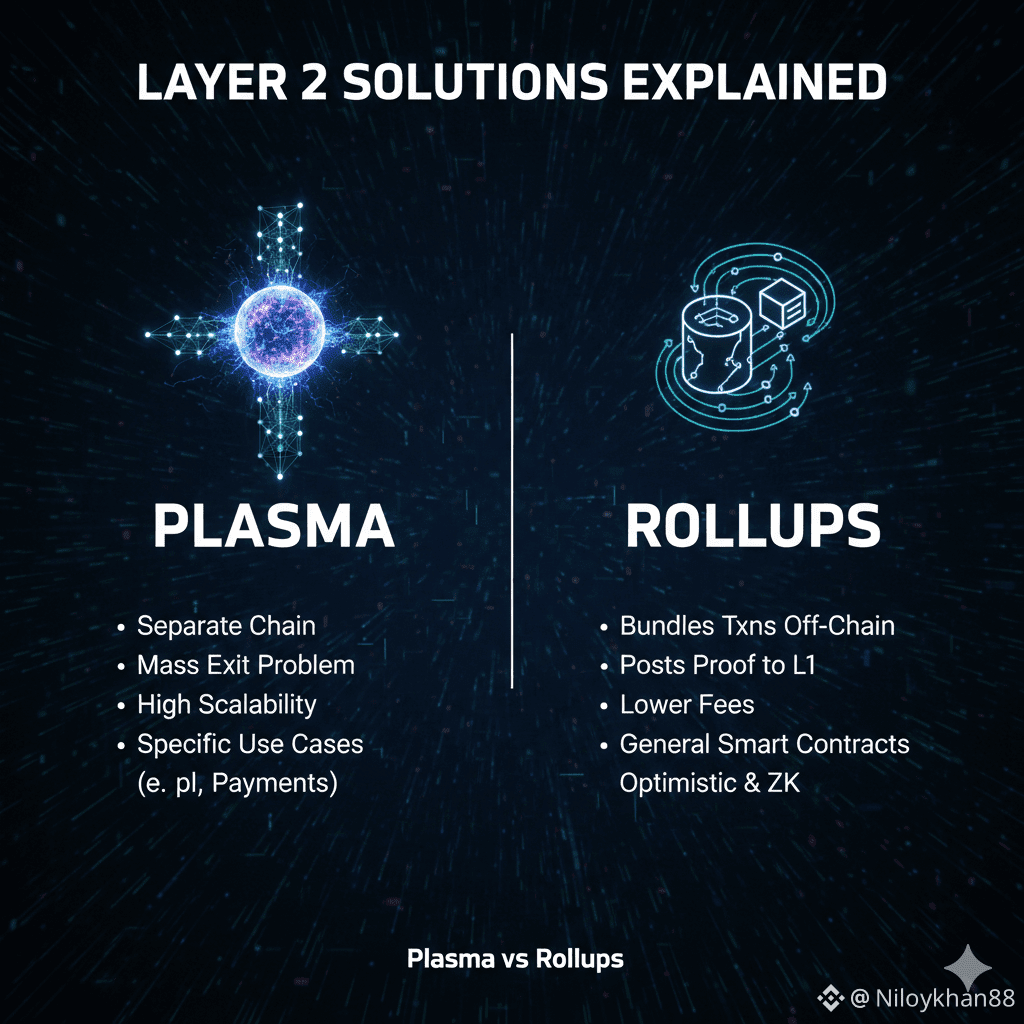
Plasma shines in scenarios where mass micro-transactions occur, as it allows sub-chains to operate efficiently with minimal main chain interaction. However, withdrawal times can be longer compared to Rollups due to exit challenges. Optimistic and zk-Rollups focus on Ethereum-compatible scalability with faster settlement and more predictable UX, making them attractive for DeFi and NFT platforms.
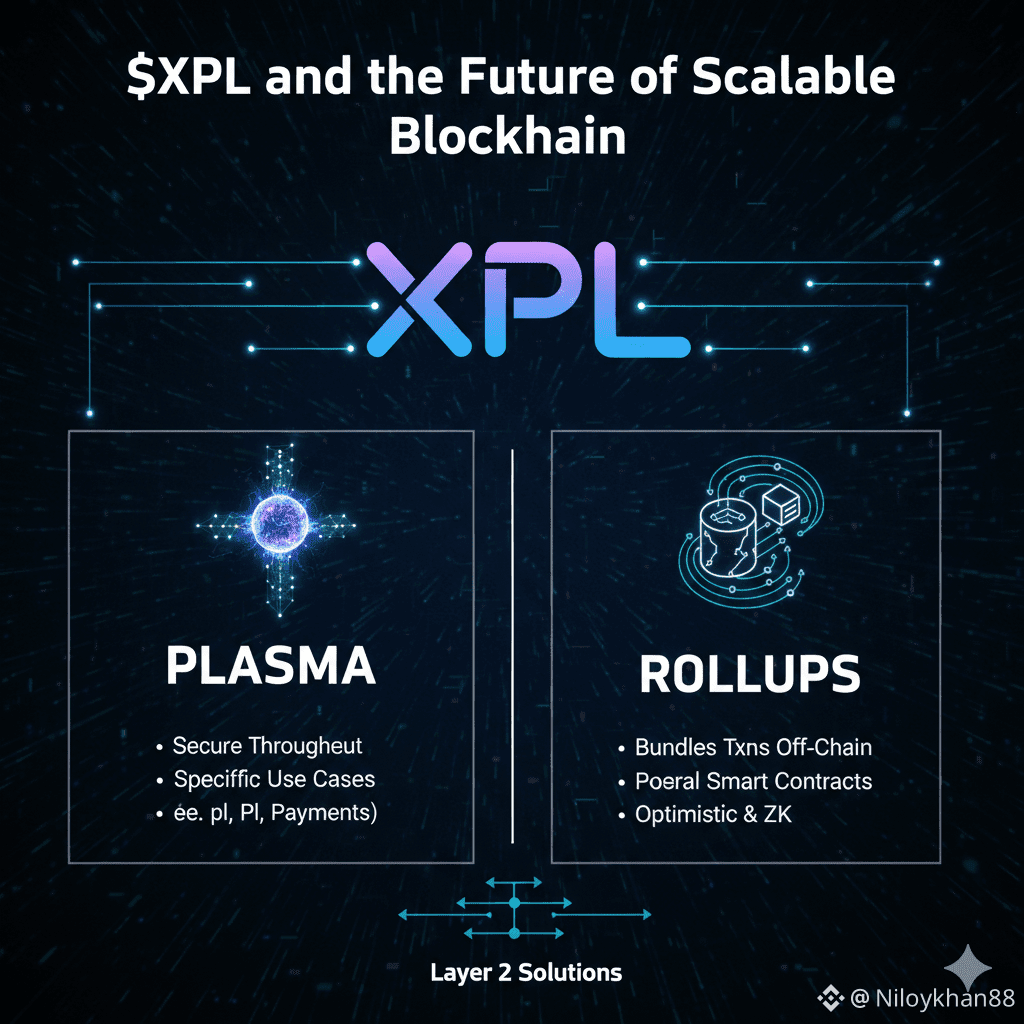
Choosing the right Layer 2 depends on the use case: Plasma offers secure off-chain scaling for high-volume micro-transactions, while Rollups prioritize faster settlement and ecosystem compatibility. By integrating these solutions, blockchain networks can achieve the ideal balance between speed, cost-efficiency, and security.
Explore how #Plasma is reshaping the Layer 2 landscape and why projects are turning to solutions like $XPL to enhance scalability. For updates and insights, follow @Plasma $XPL #Plasma

