

@Walrus 🦭/acc ($WAL ) is really starting to stand out in the Web3 space because it tackles one of the biggest hurdles right now: safe, controlled data storage. As more real-world apps jump into decentralized tech, letting just anyone upload freely isn't always the best or safest idea. On Walrus Mainnet, every piece of data you store actually costs real SUI and WAL tokens, so open access can lead to spam, abuse, and surprise expenses fast. That's exactly why the Authenticated Publisher feature is such a game-changer.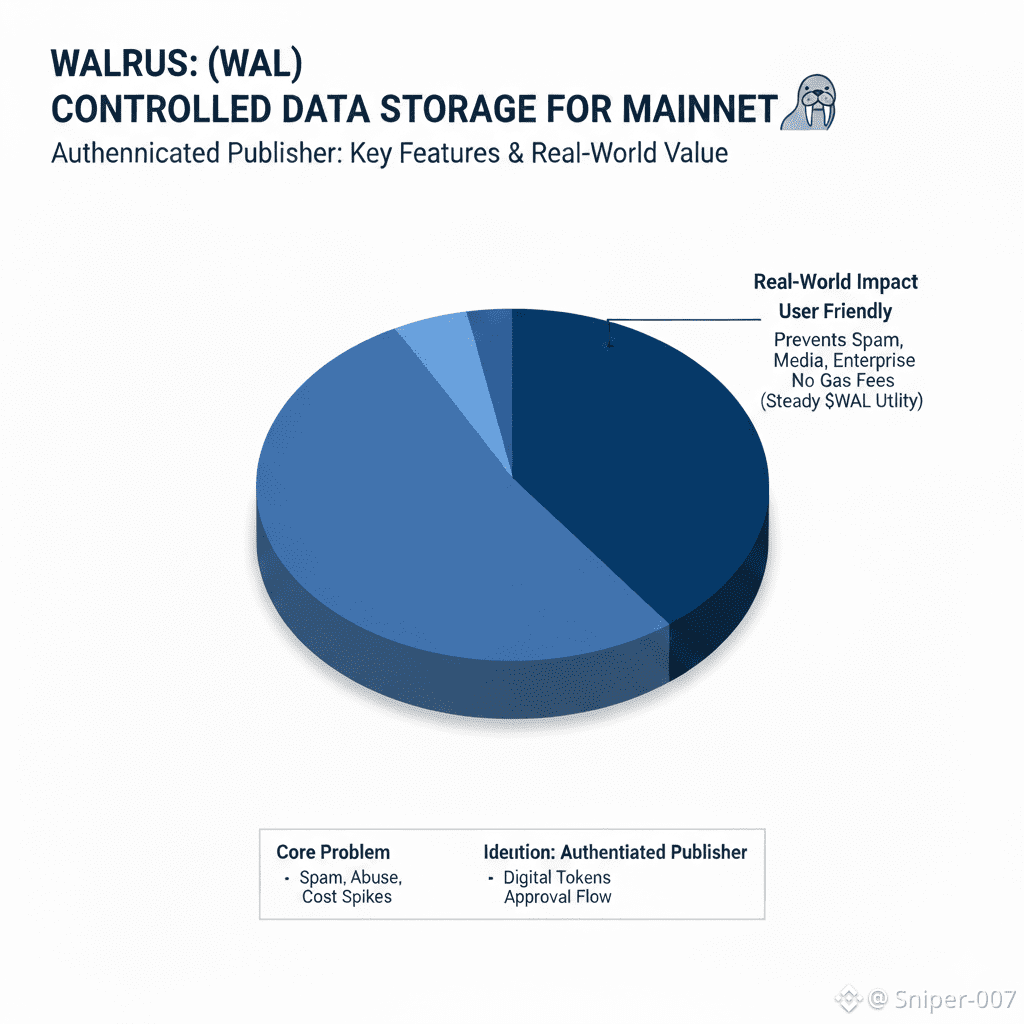
Rather than an open-door policy, this system adds a smart layer of permissioning that keeps things secure, keeps costs in check, and still feels easy to use. It's built for serious projects that need reliable, predictable storage without the headaches.
What the Authenticated Publisher Actually Does on Walrus
At its core, the Authenticated Publisher is a setup where every upload needs proper identity checks and approval. No one can just dump data onto the network—each request requires a special digital authorization token to go through. This way, only approved users or apps get to store files on Mainnet.
This becomes super important on Mainnet since you're dealing with real economic stakes in SUI and WAL. Authentication helps operators dodge spam, unwanted uploads, and runaway bills, all while letting them provide storage services through regular web interfaces.
Why It Makes Sense for Mainnet (Unlike Testnet)
Testnet is great for messing around with public, open publishing—perfect for devs experimenting. But Mainnet is different: unrestricted uploads can rack up serious costs in no time. The Authenticated Publisher fixes that by enforcing rules on every upload.
Operators get to set who can upload, cap file sizes, decide storage periods, and more. It transforms Walrus from a potential money pit into solid, dependable infrastructure that apps can actually rely on.
Breaking Down the Authenticated Publishing Process
It's designed to be straightforward, especially for end users. The operator starts by funding their wallet with sufficient SUI and WAL, then sets up the publisher to only handle verified requests.
Users log in normally—like with a regular username and password on any website—no crypto wallet needed. That's a huge win for mainstream adoption. The app's backend then verifies if the user is allowed to upload a file of that size and for how long.
Once approved, the backend generates a one-time authorization token with strict limits (size, duration, etc.). The user submits their file using that token. The publisher validates everything—the token's legit, hasn't been used, fits the rules—then proceeds to store the data on Walrus.
Why It's Perfect for People Who Aren't Crypto Natives
The best part? Regular users don't have to deal with wallets, gas fees, or blockchain stuff at all. They upload files the same way they would on Dropbox or Google Drive.
Everything crypto-related—verification, payments in WAL/SUI, storage—happens behind the scenes through the app. This lets platforms deliver true decentralized security without forcing anyone to learn new tools or handle keys.
Built-in Security and Smart Controls
To prevent abuse, tokens are single-use only, so no replay attacks. They can auto-expire too, cutting down on risks over time.
Operators enforce tight rules: oversized files or wrong durations get rejected instantly. This keeps spending predictable and usage fair. For trusted setups, you can loosen some restrictions while still requiring identity checks.
Perfect Fit for Real-World Apps
This model shines for web platforms, media sites, enterprise solutions, and any service needing decentralized storage with managed oversight. Apps can handle quotas, budgets, and access rights, while Walrus guarantees the data stays secure and available.
It even enables subscription-style plans—users pay normally, the backend covers the WAL/SUI costs, and everyone gets a seamless experience.
Why This Matters for $WAL Right Now
Walrus is buzzing because it's shifting from concepts to actual usable tech. The Authenticated Publisher proves the team gets what businesses and developers really need: control over costs, strong security, and no unnecessary friction.
As more projects seek decentralized storage that acts like trusted traditional systems, Walrus delivers real flexibility instead of rigid, one-way solutions.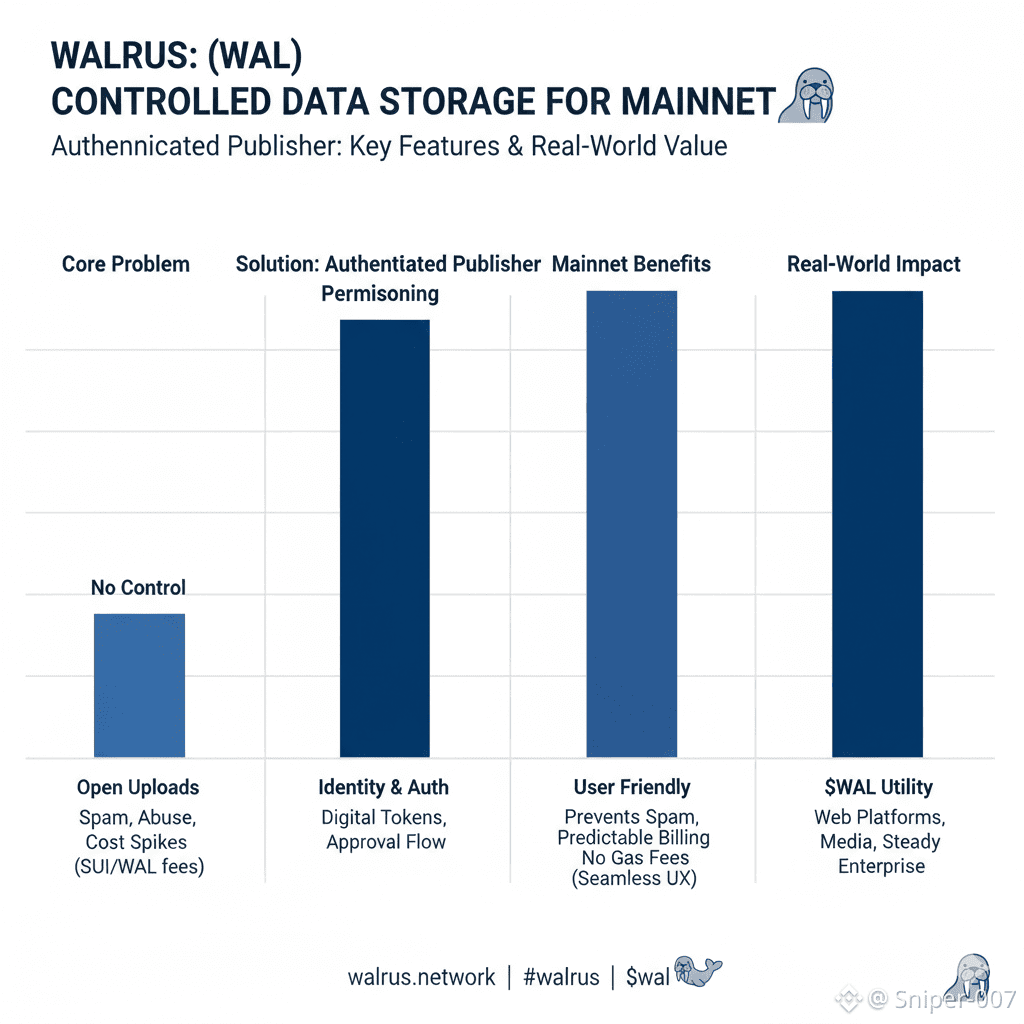
My Take on Where Walrus Is Heading
From a practical angle, this is brilliant. Too many Web3 projects expect users to change their habits and learn complicated systems. Walrus flips the script by making blockchain storage fit into everyday flows.
It turns $WAL into more than a token—it's fuel for real services, real users, and steady, meaningful growth.
Wrapping Up
The Authenticated Publisher is solid proof that Walrus is built for the real world. By blending controlled access, cost awareness, and user-friendly design, it creates a Mainnet-ready storage solution that actually works.
Developers gain predictability and power. Everyday users get simplicity. And the WAL ecosystem moves closer to true, lasting adoption.