


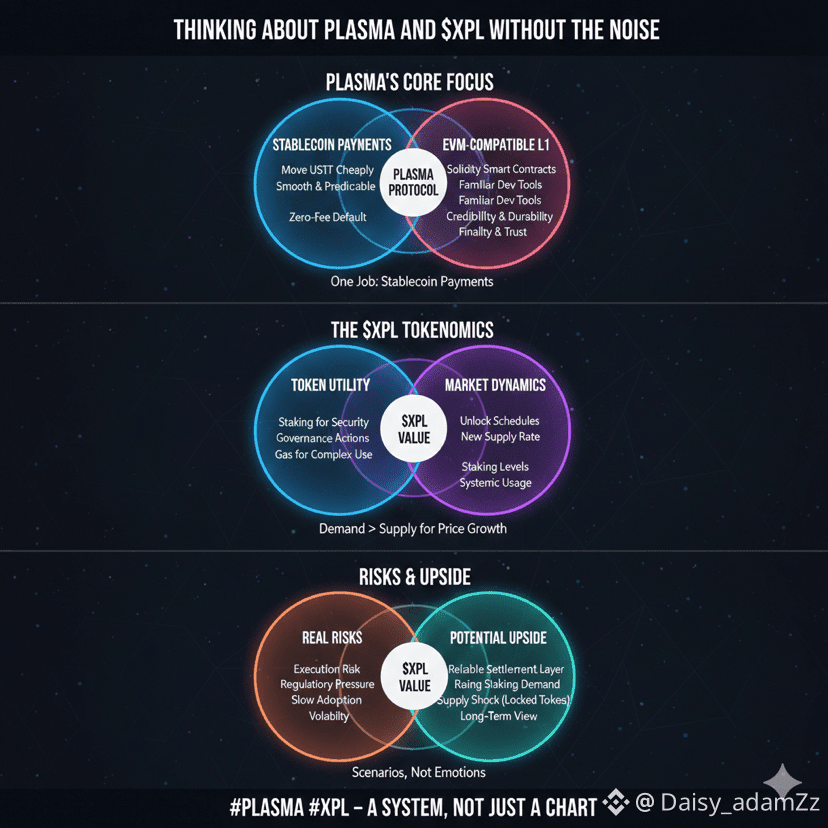
Most blockchains try to do everything at once. DeFi, NFTs, games, governance, memes. Plasma takes a different path. It focuses on one clear job: moving stablecoins in a way that feels normal to everyday users and businesses.
Plasma is designed as a payment network first, not a general-purpose chain. That decision shapes everything. The goal is simple transfers, predictable costs, and no friction for users who just want to send stablecoins without thinking about gas or network mechanics.
On Plasma, stablecoin transfers are treated as a core function, not an afterthought. Users can send USDT without holding a separate gas token or worrying about fees. The protocol handles that complexity in the background, so payments feel closer to using a normal financial app than a blockchain.
This does not mean the system is careless. Plasma uses strict rules around what actions are sponsored. Only basic stablecoin transfers are covered, not random smart contract calls. There are limits and controls to prevent abuse. This keeps the system stable and manageable while still offering a smooth user experience.
Plasma is fully compatible with the EVM, which makes life easier for developers. Teams don’t need to learn new languages or tools. Existing payment apps, wallets, and infrastructure can be adapted without rebuilding everything from scratch. This lowers the barrier to real adoption.
For long-term security, Plasma connects its settlement to Bitcoin. This gives the network a stronger base and a longer time horizon. Instead of relying only on speed, Plasma adds durability and resistance to censorship, which matters for serious payment systems.
The network itself is secured by validators who maintain the chain and keep it running. This structure supports decentralization while still allowing Plasma to operate as a reliable payment rail.
What stands out to me is that Plasma accepts the realities of payments. Zero-fee experiences need controls. Sponsorship needs limits. Abuse must be expected, not ignored. Plasma doesn’t pretend users are always honest; it designs for real behavior.
Plasma may not feel exciting at first glance, but it is practical. It’s built for small payments, repeat transfers, and real usage. Instead of selling a vision, it focuses on making stablecoin payments work the way they should.
In simple terms, Plasma is not trying to be everything. It’s trying to do one thing well — make stablecoin payments feel easy, reliable, and invisible. That focus is what makes it interesting.

