
Dusk Foundation tightens after a transaction is already finished.
Finality is there. The state moved. Internally, nothing is disputed. Then the process that depends on it reaches out for confirmation and finds there isn’t one it’s allowed to use yet.
No trace to paste. No ordering to point at. Nothing that says “this happened” in a way the next system in the chain can consume.
That’s when the delay starts to matter.
On Dusk, a confidential transfer can settle without leaving behind the kind of residue teams are used to leaning on. No ambient signal. No harmless artifact that can stand in while the real one is prepared. If the disclosure condition hasn’t been invoked and cleared, the ledger stays quiet.
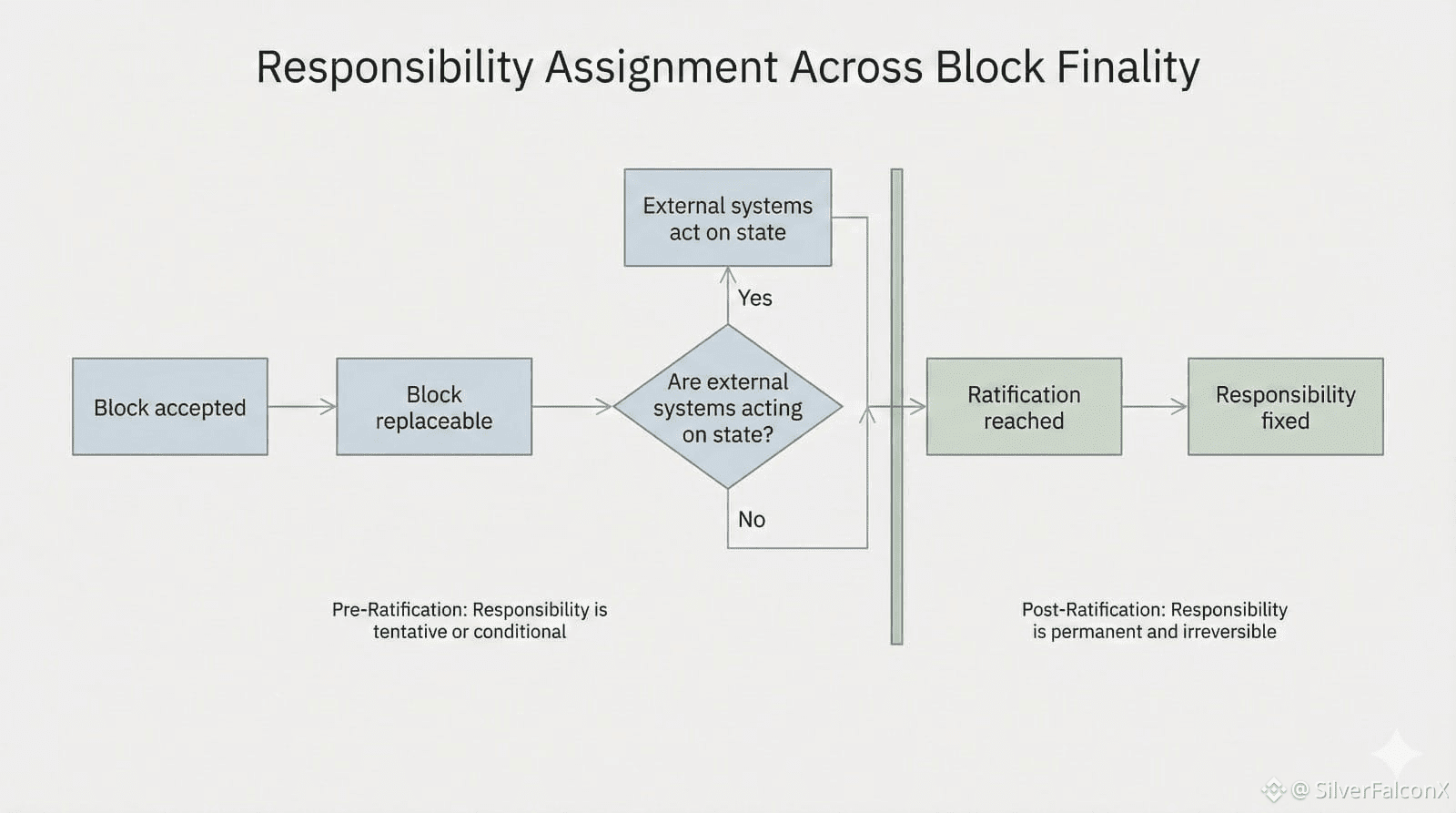
From the chain’s perspective, this is normal. From operations, it’s destabilizing.
The transaction is done, but nobody downstream is allowed to treat it as done yet. Booking can’t close. Internal sign-off stalls. Someone asks whether they’re waiting on a failure. They aren’t. They’re waiting on permission.
That distinction doesn’t help in the moment.
People start circling the same questions. Did we miss a step. Did it actually finalize. Can we show something while we wait. The answer keeps landing in the same place: not until the condition fires, not until the proof exists.
Dusk's Moonlight paths don’t relax visibility just because a workflow is impatient. Phoenix flows don’t surface interim evidence to keep things moving. Execution finished on time. Acknowledgment did not.
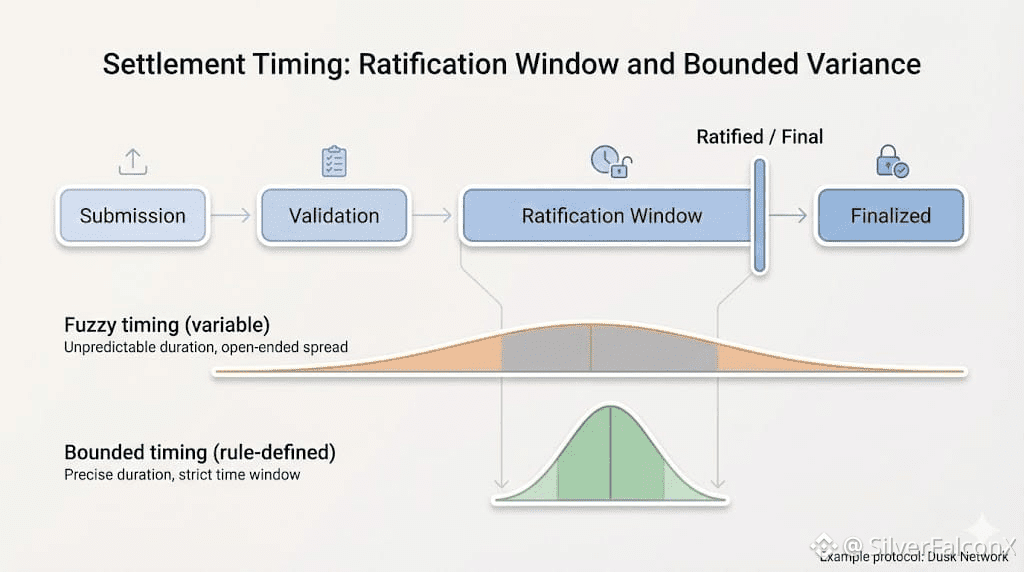
The uncomfortable part is that nothing is wrong enough to escalate.
Validators are healthy. Blocks keep closing. Other transfers go through. The only thing missing is the witness everyone assumed would be free.
This is where habits show.
Teams are used to confirmation being cheap. If value moved, someone can vouch for it. Dusk breaks that reflex. Confirmation has its own rules, its own timing, and it doesn’t care how many dependencies are stacked behind it.
Waiting stretches.
Deadlines don’t move. Processes don’t branch. No one can responsibly say “we’re good” yet.
The protocol doesn’t step in to soften that pause. It doesn’t mint a placeholder. It doesn’t widen access to reduce friction. It stays silent until the disclosure path actually clears.
Execution already happened.
The rest of the system just isn’t allowed to talk about it yet.
