
Public blockchains were designed for transparency. Regulated finance was not.
Financial institutions must protect sensitive data while still producing outcomes that regulators, auditors, and counterparties can verify. On most blockchains, this creates a tradeoff: either transactions are transparent but non-confidential, or confidential but unverifiable. DUSK is built specifically to remove this tradeoff.
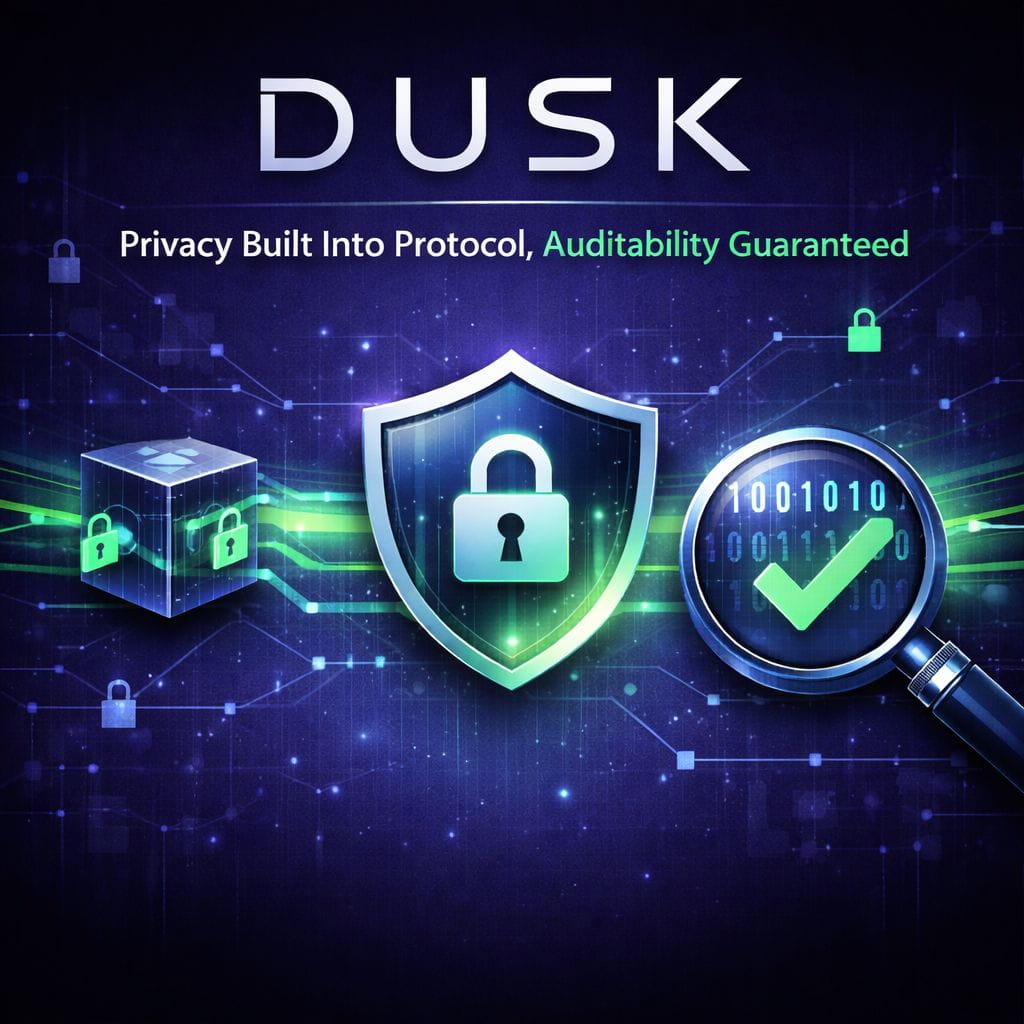
Full on-chain transparency exposes transaction amounts, counterparty relationships, and business logic. For regulated assets, this creates competitive, legal, and compliance risks. Many institutions push sensitive logic off-chain, weakening auditability and increasing operational complexity. When execution cannot be verified on-chain, trust shifts back to intermediaries.
Pure privacy systems hide data but often at the cost of verifiability. If validators cannot independently verify execution, the system relies on assumptions rather than guarantees. In regulated environments, this is unacceptable. Auditors and regulators must be able to confirm that rules were followed, outcomes were correct, and no unauthorized behavior occurred. Without verifiable execution, confidential systems become opaque and untrustworthy.
DUSK’s protocol allows transactions to remain confidential while still producing cryptographic proofs that execution was correct. Sensitive inputs stay private, but outcomes are verifiable by the network. Validators confirm correctness without accessing underlying data, preserving auditability without sacrificing confidentiality.
Regulated financial workflows require confidential data handling, deterministic execution, and verifiable outcomes. DUSK’s design supports these requirements natively, without relying on off-chain trust models or application-level workarounds. This makes DUSK suitable for regulated securities, institutional settlement, and compliance-driven financial infrastructure. Privacy and auditability are no longer opposing goals.
DUSK does not treat privacy as an add-on or auditability as optional. Both are enforced at the protocol level, enabling confidential settlement that remains verifiable, compliant, and trustworthy. For regulated finance, this is not an optimization. It is a requirement.
