

If you think about it, most of the internet’s data isn’t really yours. It’s stored somewhere else, behind someone else’s rules, in servers run by companies you’ll never meet. A file you uploaded yesterday could be gone tomorrow. Content can change without warning. Ownership is mostly a promise you can’t enforce. That’s exactly the problem Walrus was designed to fix. It asks a question that sounds almost simple but changes everything: what if your data could exist online, freely, without anyone in the middle?
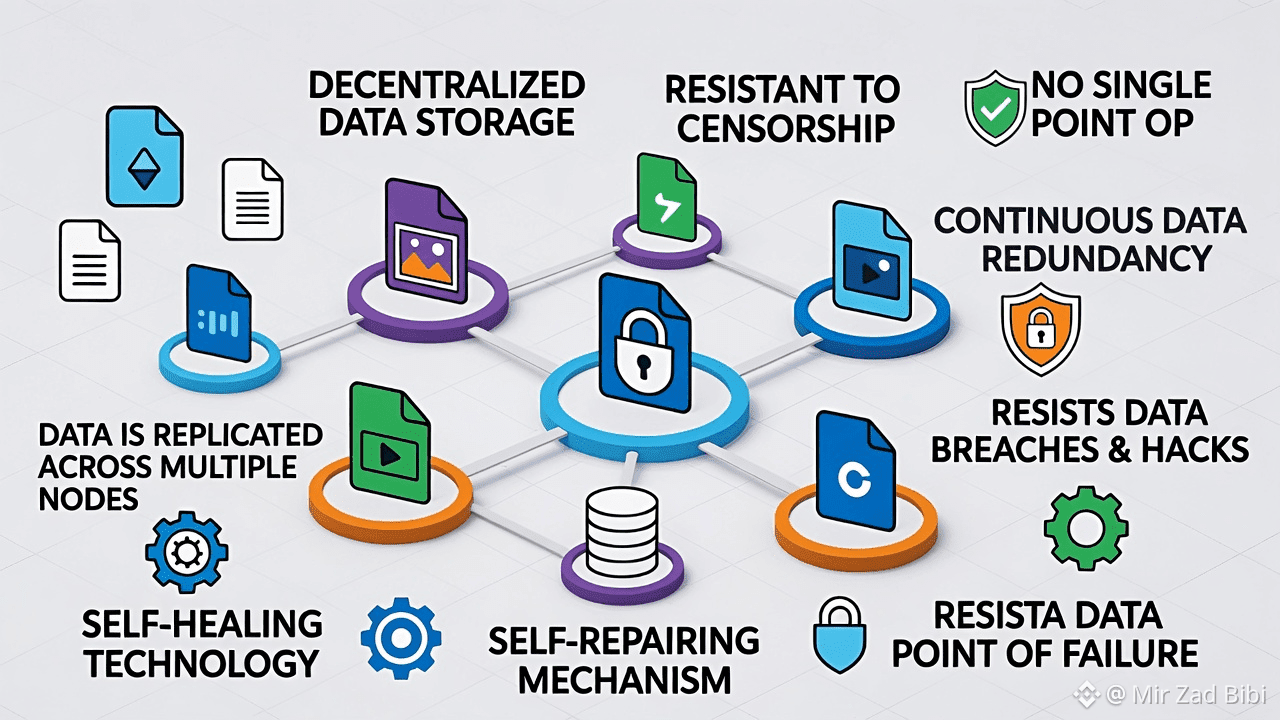
Walrus doesn’t treat data like it belongs to an app or a platform. It treats data as its own thing—independent, verifiable, permanent. When you store a file there, it doesn’t sit on a single server waiting for someone to babysit it. Instead, the file is split, encrypted, and scattered across a network of nodes. Each node has only a piece of it, but the network together can always reconstruct the original file. That means no single company can disappear overnight and take your data with it.
Freedom here isn’t messy or chaotic. It’s permissionless persistence. You don’t need to ask anyone for permission to access your files, and no one can quietly decide to block them. The network enforces availability with cryptography and economic incentives. Nodes have to prove they’re holding the data correctly, and if they fail or misbehave, the network notices. Your files exist because the system is built to make them exist—not because someone decided to keep them online.
Another big difference is that Walrus separates data from the applications that use it. Usually, when an app shuts down, the files it hosts go away too. Not here. Apps can be built, updated, or abandoned, but the data remains intact and verifiable. Developers can build on top of shared datasets without fearing that the underlying files will disappear overnight. It’s a freedom most systems don’t offer, but it’s exactly what makes building on Walrus feel different.
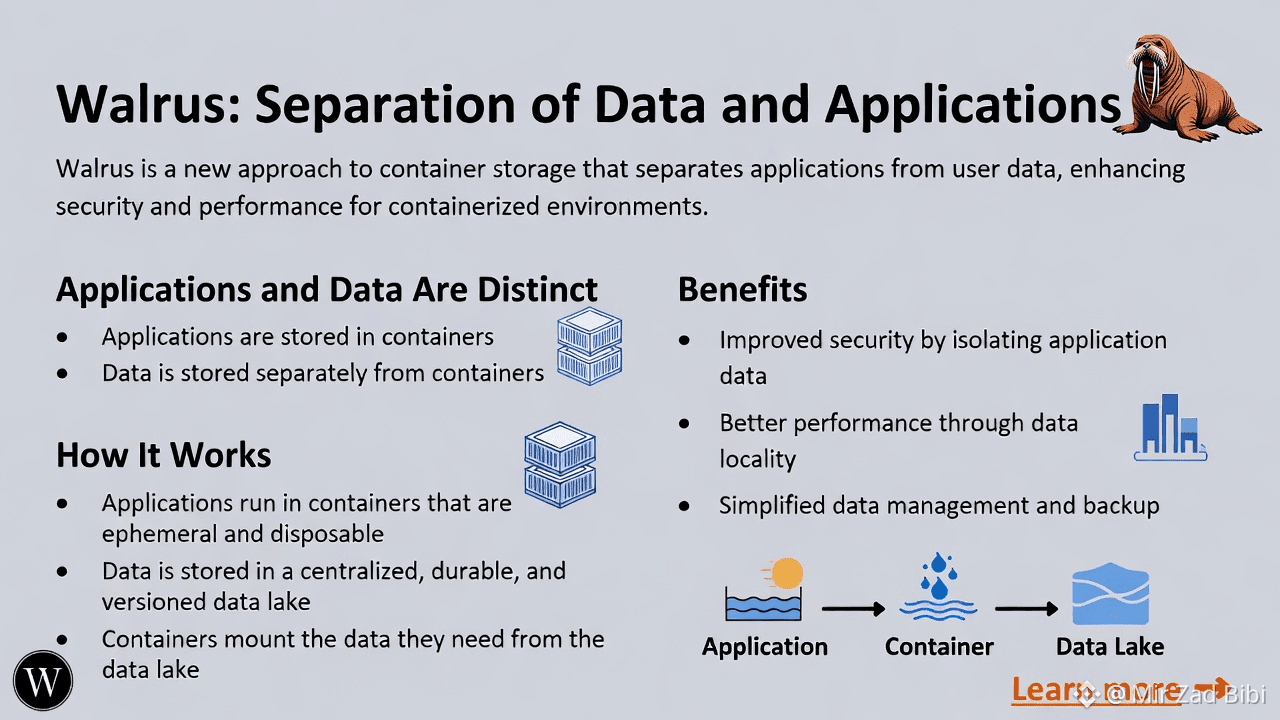
The resilience is also remarkable. Your data is distributed across many independent operators, so no single party can censor it or selectively block access. Even if parts of the network fail or get attacked, the system can heal itself. It keeps serving files. This isn’t a philosophical point—it’s intentional engineering. The network is built to survive problems, not just to look nice on paper.
Economics plays a role too. Nodes are rewarded for storing data properly. They prove they hold valid fragments, and any failures are penalized. This makes storage verifiable and self-maintaining. The network doesn’t rely on anyone’s goodwill. It relies on design, incentives, and accountability.
Walrus also changes how we think about ownership and control. Normally, files are tied to platforms: if the platform disappears, your data disappears. Here, your files live independently. You control your data, the network enforces availability, and no single company can take it away. That means your digital content can persist for years, even decades, beyond trends, apps, or companies.
It opens up new possibilities too. Developers can experiment freely. They can build apps on top of shared data, without worrying that the files will vanish tomorrow. They can create services, new tools, or features, knowing the underlying content will still be there. This kind of freedom encourages innovation, collaboration, and growth in a way centralized systems never can.
At its core, Walrus assumes things will fail. Systems fail, actors misbehave, companies disappear. Instead of pretending these problems don’t exist, it embraces them and builds a network that keeps files alive anyway. That’s why data stored on Walrus doesn’t just survive—it thrives. It’s distributed, accountable, resilient, and free.
Censorship resistance is baked in. Centralized platforms can delete or block content silently. Walrus resists that by spreading files across multiple independent nodes. No one can quietly erase your data. Even if some nodes fail or there’s an attack, the system self-repairs. Freedom here is real, tangible, engineered.
Walrus doesn’t just store files. It changes the game for what it means to own data online. You don’t rely on a single company or platform to keep your files alive. Your data exists independently. It’s verifiable, persistent, and reliable. That’s more than storage—it’s durable digital infrastructure you can trust.
In the long term, Walrus turns digital content into something that can outlast trends, applications, and even companies. Files uploaded today can remain accessible years from now. Developers and users alike can build on this permanence, innovate without fear, and ensure their content remains uncensored and available.
Ultimately, Walrus exists to make sure your data is yours. It assumes failure, misbehavior, and disruption will happen, and it builds around that reality. Your files aren’t dependent on anyone’s choices—they live freely because the network guarantees it. Walrus isn’t just about keeping things online. It’s about giving control back to you, creating a resilient, open, and independent home for data on the internet.

