
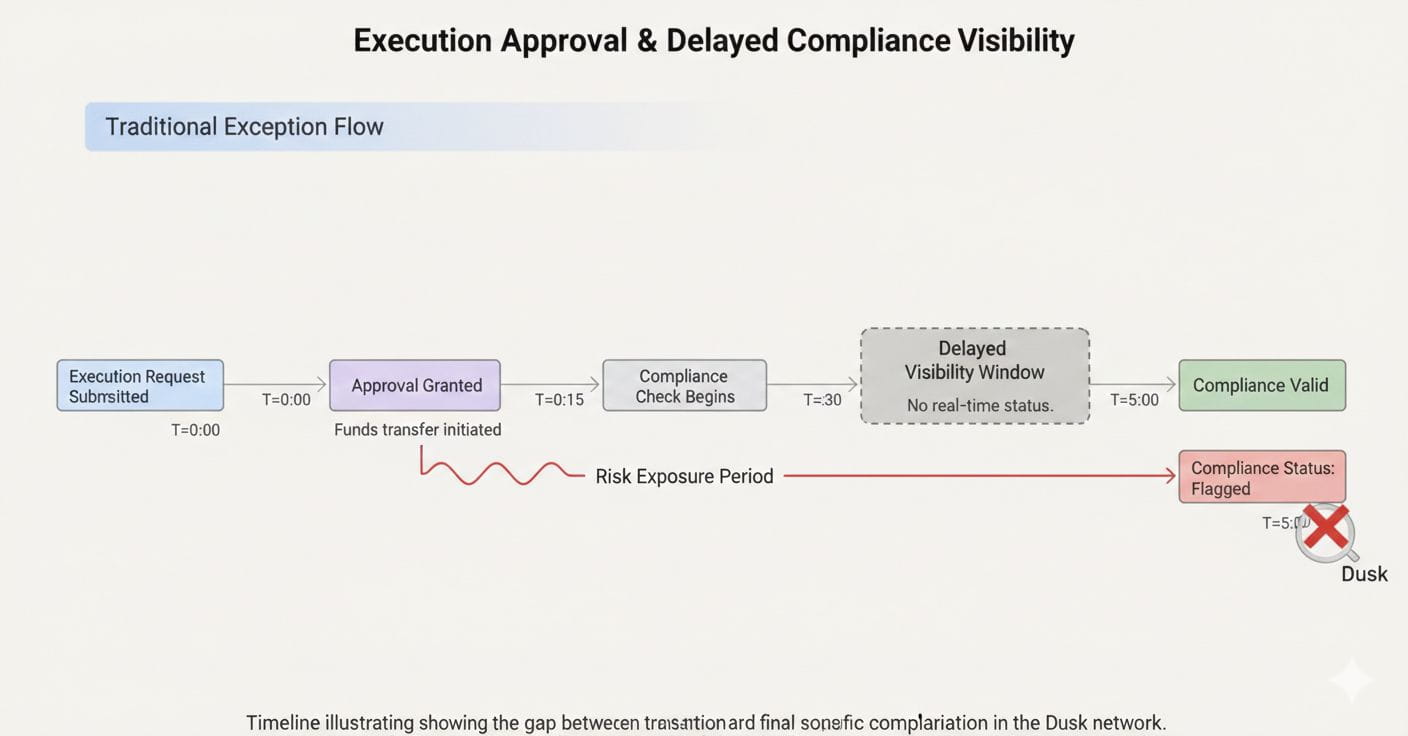
The transaction cleared instantly.
Execution saw no violation. Entitlements were satisfied. State advanced. Nothing in the executor’s scope justified a pause.
Ten minutes later, a different inbox lit up.
Compliance reviewed the same action with a different lens. Everything was technically allowed. And yet something about repeating this outcome felt wrong.
Under Moonlight, intent does not travel with execution for everyone. The why stays sealed unless disclosure is explicitly widened. That detail arrived too late to stop momentum.
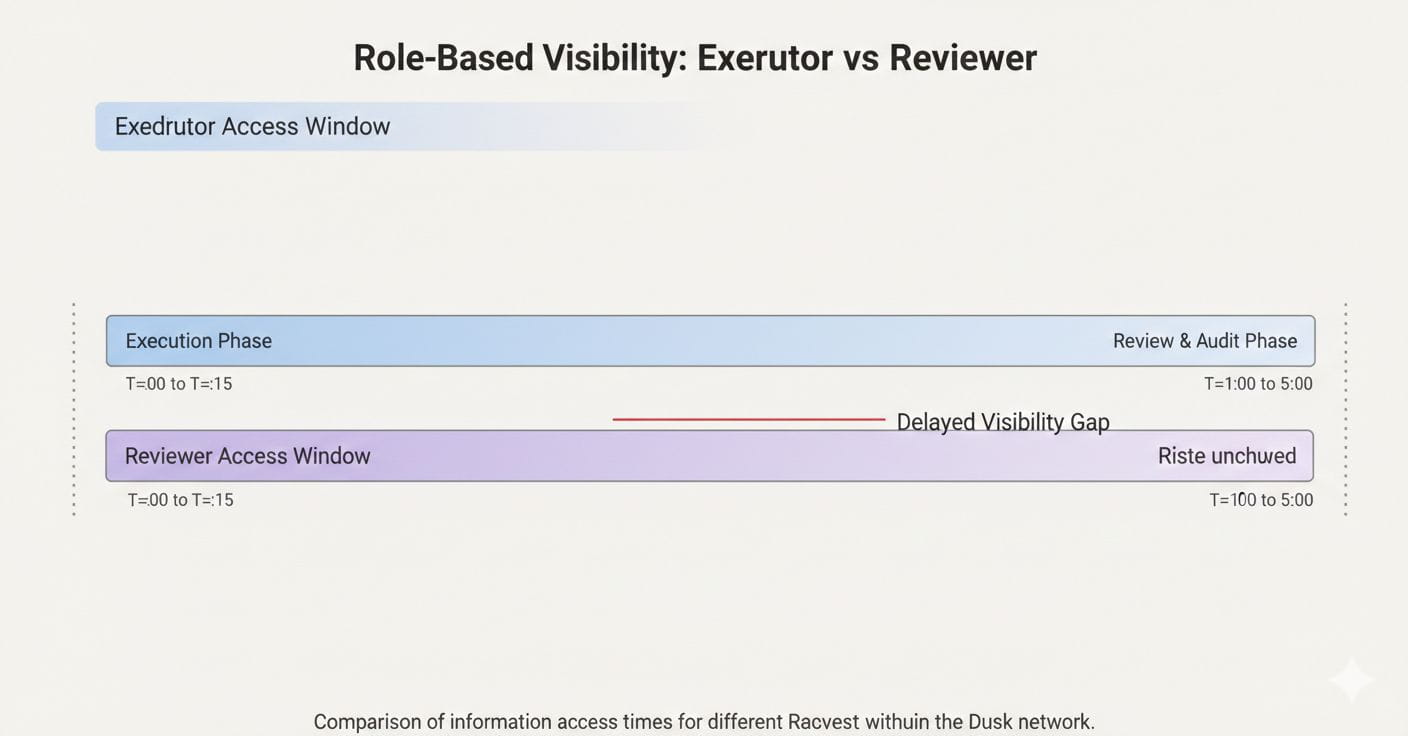
There was a blank field in the report.
Basis for release under scope.
No owner.
Timestamp closing fast.
Reversing required a scope expansion. That required justification. Justification required authority. Authority was not on the desk staring at the cutoff.
So it went through.
Not cleanly. Just through.
This is where Dusk quietly rewires behavior. Teams stop relying on mid flow intervention because it is expensive to defend later. The stop gets dragged upstream where pausing is cheaper and blame is clearer.
Execution keeps winning. Compliance adapts around it.
The cost is not regulatory failure.
The cost is precedent.
Once something clears cleanly enough times, it becomes normal. And on Dusk, normal is defined by what the system allows you to see in time.
That is the tradeoff institutions actually wrestle with.
