


Crypto loves fake choices. Privacy or regulation. Freedom or law. Anonymity or adoption. Most projects pick a side loudly and then act surprised when the other side blocks them forever. Dusk does not play that game. It treats privacy and compliance as engineering problems not ideological battles.
This already puts it in a small uncomfortable category because it refuses to satisfy maximalists on either side. And that is usually where real infrastructure lives.
Dusk does not hide from regulation and it does not expose users by default. It builds systems where both can exist at the same time whether people like that or not.

Privacy Through Math Not Through Darkness
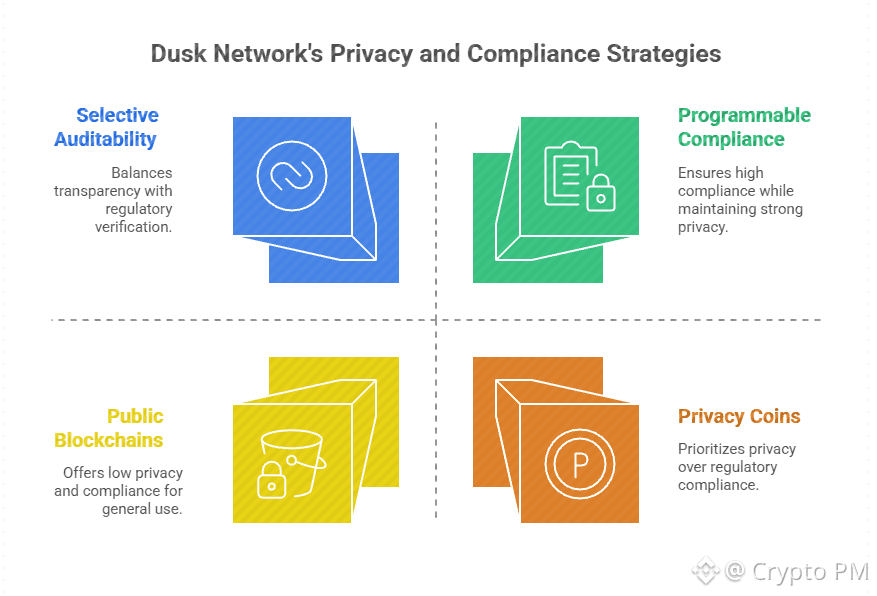
Most privacy systems rely on obscurity. Hide everything and hope nobody asks questions. That fails the moment serious money shows up. Dusk takes a harder route. It uses cryptographic proof instead of secrecy.
Zero Knowledge Proofs are the core here. Transactions are verified without revealing sensitive data. Ownership balances and fees are checked mathematically without putting identities or amounts on a public ledger. This is not hiding. This is proving correctness without disclosure.
Inside its EVM layer Dusk uses Hedger which combines ZK proofs with Homomorphic Encryption. This allows smart contracts to operate on encrypted data. Contracts can update balances execute logic and enforce rules without ever seeing the raw values.
This is expensive complex and slow to build. Which is exactly why most chains do not do it.
Selective Auditability Instead Of Public Exposure
Here is where Dusk really diverges. It separates public transparency from regulatory verification. Those are not the same thing even though crypto often pretends they are.
With selective auditability regulators can verify compliance using cryptographic attestations without demanding raw data dumps. The public does not see sensitive details. Competitors do not see positions. But compliance still exists.
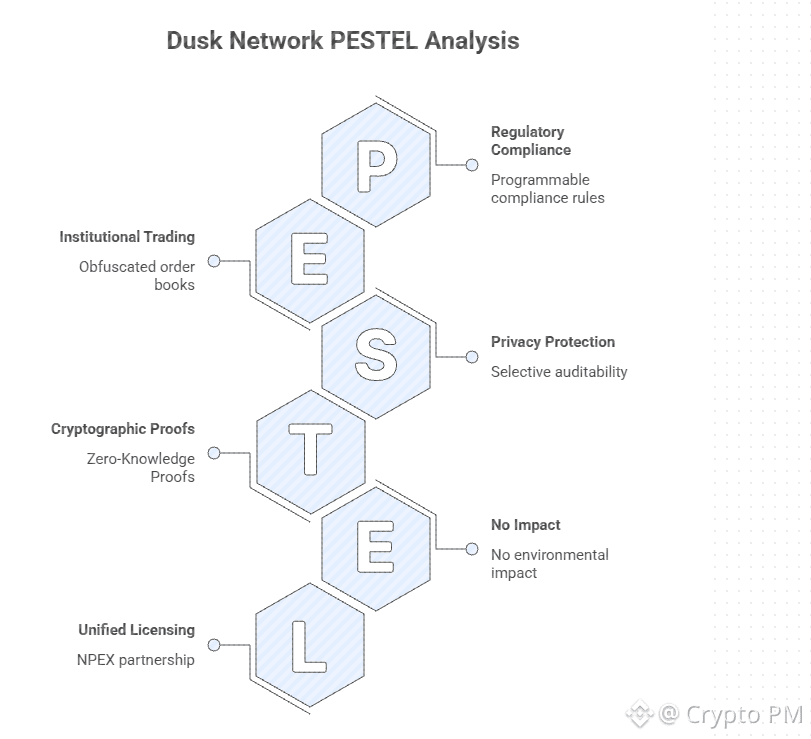
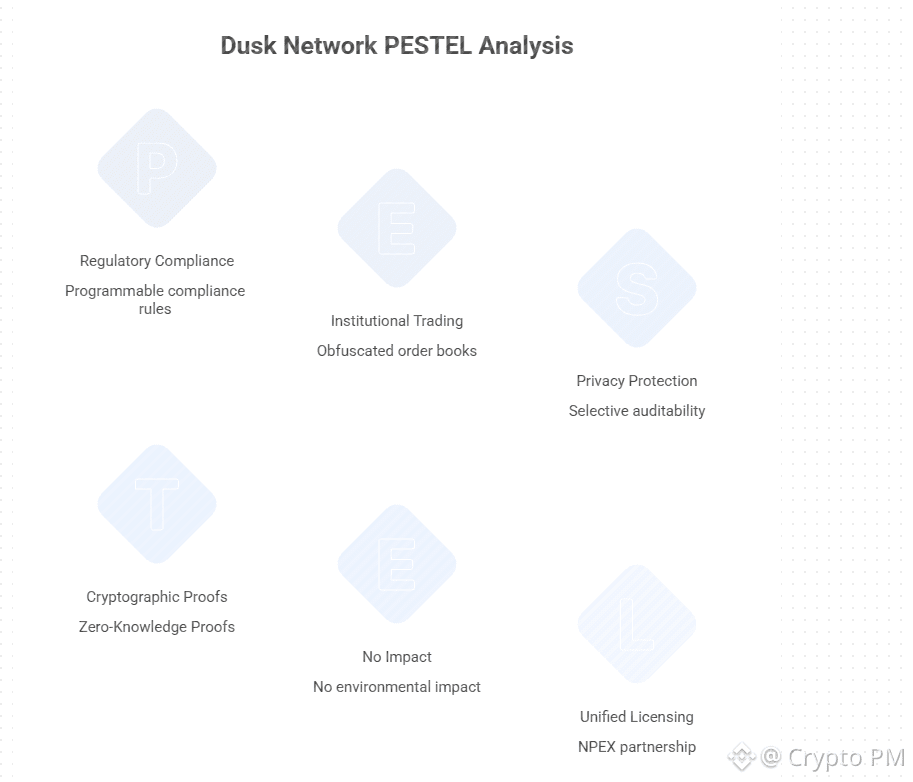
Compliance logic is programmable. Rules like transfer restrictions eligibility checks and KYC conditions are embedded directly into smart contracts. If a transaction fails the rules it does not execute. There is no discretion no trust layer no human override.
This is compliance enforced by math not by paperwork.
Two Transaction Models For Two Realities
Dusk does not force everything into one model. That is another mistake many chains make. Instead it runs dual transaction systems depending on what the application actually needs.
Phoenix is the private model. It is UTXO based and optimized for confidentiality. Amounts sender receiver links are hidden using nullifiers and ZK proofs. This is designed for institutional settlement strategies and private trading activity.
Moonlight is the transparent model. It is account based similar to Ethereum. Public tokens simple transfers and fully visible activity live here.
Developers choose. The protocol does not pretend one size fits all. That flexibility matters more than people admit.
Institutional Problems Crypto Usually Ignores
Dusk solves problems most chains avoid because they are not fun to talk about. Obfuscated order books are one example. Public order books invite front running manipulation and exposure. Institutions cannot operate like that.
Through Hedger Dusk supports obfuscated order books. Intent is hidden. Exposure is hidden. Strategies are protected. This is standard in traditional finance and nearly impossible on transparent chains.
Then there is asset standardization. Dusk built the Confidential Security Contract standard specifically for tokenized securities. Dividends governance voting and asset management all exist in a private compliant environment.
This is not DeFi experimentation. This is market infrastructure.
One Time KYC Without Constant Surveillance
Through its partnership with NPEX Dusk enables unified licensing across the network. One time KYC applies across applications. Users are verified once and then operate without repeated intrusions.
This matters more than people realize. Constant KYC destroys UX and leaks data. One time verification with cryptographic enforcement is how institutions actually want systems to work.
Again this is boring. Again this is necessary.
Why Dusk Is Not A Privacy Coin
Dusk is not Monero. It is not Zcash. It is not trying to escape oversight. It is trying to make oversight compatible with privacy.
That difference matters. Privacy here is functional not ideological. It protects commercial secrets personal data and market integrity while still respecting law.
If that sounds less exciting than total anonymity that is because it is. But it also works in the real world.
The Uncomfortable Truth
Crypto does not get mass adoption by yelling louder. It gets adoption by solving uncomfortable problems properly. Privacy without compliance dies. Compliance without privacy scares users.
Dusk sits in the middle and accepts the cost of complexity.
my take
I think Dusk is doing the version of privacy that nobody cheers for until it becomes unavoidable. This is not rebel privacy. This is professional privacy. The kind that institutions demand and regulators tolerate.
Most privacy projects will never cross that bridge. Dusk already built it slowly quietly and without applause.
If on chain finance grows up this approach wins. Not fast. Not loudly. But permanently.