
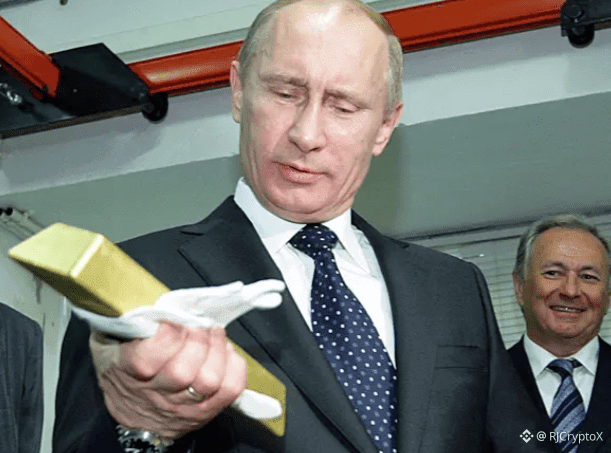
Russia has quietly liquidated a massive portion of its gold reserves over the past three years, a move that signals growing financial strain beneath the surface. In mid-2022, the National Wealth Fund held more than 550 tons of gold. By early 2026, that figure had fallen to roughly 160 tons, meaning nearly three-quarters of the reserves have already been sold. What remains is reportedly held in opaque central bank accounts, leaving little room for maneuver if economic conditions deteriorate further 😳.
The National Wealth Fund’s remaining liquid assets, including gold and foreign currency holdings, now stand at around 4.1 trillion rubles. If oil prices and the ruble remain under pressure, another major drawdown could occur this year, potentially draining more than half of what is left and leaving Russia’s financial cushion dangerously thin ⚠️.
This is more than a technical adjustment. The National Wealth Fund is meant to stabilize the economy during shocks, fund infrastructure, support social programs, and provide long-term fiscal security. As reserves shrink, fiscal flexibility collapses, emergency funding options narrow, and long-term economic resilience weakens 📉. In extreme scenarios, this could limit the state’s ability to sustain large-scale government and strategic spending.
With gold — traditionally the last line of defense — being aggressively sold, the margin for error is shrinking fast. Once reserves fall below critical levels, policy choices become far more painful and constrained 💥. Countries do not sell gold from sovereign funds unless pressure is building. Rapid depletion of national reserves signals stress, not strength, and Russia’s financial buffer continues to erode with each drawdown.


#Gold #Russia #Putin #MacroRisk
Follow RJCryptoX for real-time alerts.