


Reliability is easy to promise and hard to deliver. In decentralized storage, the gap between promise and reality is often where systems fail. Walrus narrows this gap by directly linking reliability to financial outcomes.
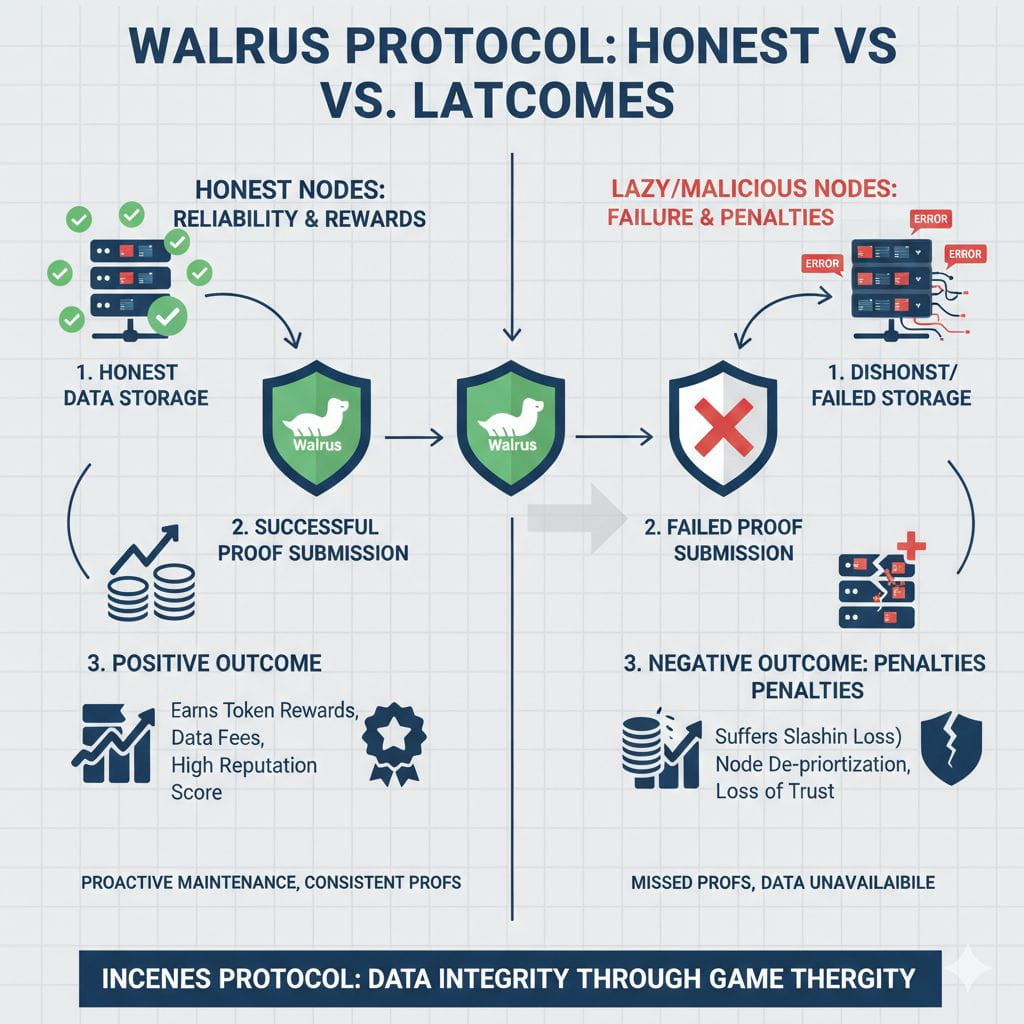
At its core, Walrus treats reliability as a measurable performance metric. Storage providers are not rewarded for joining the network or making claims. They are rewarded for continuously proving that data remains available. This shifts reliability from a marketing term to an operational requirement.
Financial incentives play a dual role here. First, they motivate participation. Nodes join the network because they can earn rewards. Second, and more importantly, they regulate behavior over time. Reliable nodes earn more. Unreliable nodes earn less or are pushed out.
What makes this alignment effective is automation. There is no need for trust, coordination, or reputation systems. Proofs are generated, verified, and evaluated by the protocol itself. This reduces governance overhead and eliminates subjective judgment.
Another important factor is predictability. Storage providers can estimate their costs and expected rewards with reasonable accuracy. This encourages long-term investment in infrastructure rather than short-term extraction. Reliable operators are more likely to stay, improving network stability.
For applications built on top of Walrus, this alignment provides confidence. Developers do not need to guess whether storage providers will behave responsibly. The protocol enforces responsible behavior through incentives.
From an investor standpoint, this design reduces systemic risk. Networks that rely on altruism or vague promises are fragile. Networks that rely on aligned incentives are resilient. Walrus clearly aims for the latter.
In the long run, aligning reliability with financial incentives could enable entirely new markets. Storage could be priced based on proven availability guarantees. Applications could choose providers based on measurable performance. Data could become a fully financialized resource.
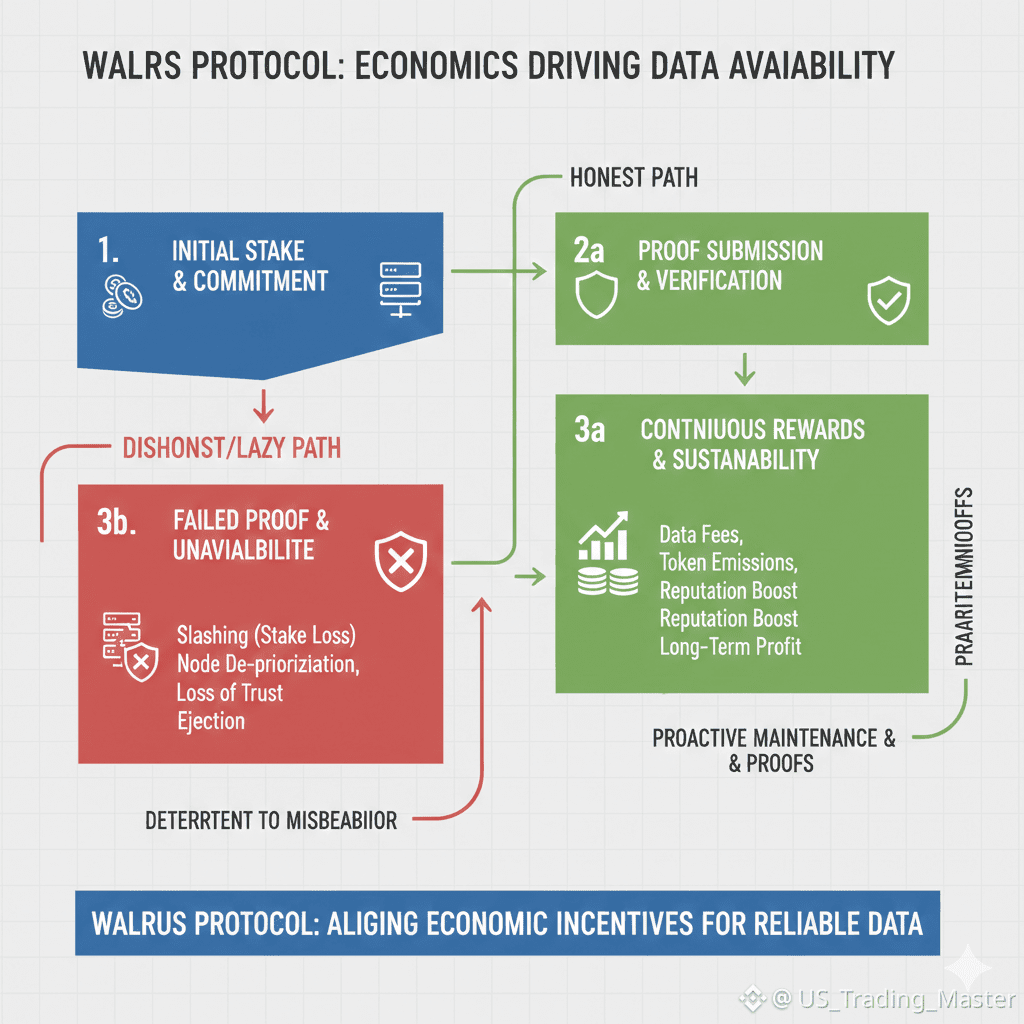
In my view, Walrus demonstrates how decentralized infrastructure matures. It moves beyond ideology and focuses on incentives, enforcement, and sustainability. Reliability is no longer something users hope for — it is something the system economically enforces.

