📈 1. What is Bitcoin?
Bitcoin (BTC) is the first and largest cryptocurrency — a decentralized digital currency that runs on blockchain technology. It operates independently of governments or banks and is used globally as a digital asset.
📊 2. Current Market Status of Bitcoin (2026)
Bitcoin reached around $126,000 in October 2025 as its all-time high, but later experienced a price correction.
Many major investors still believe in Bitcoin; for example, MicroStrategy invested billions in Bitcoin to show confidence. (reuters.com)
🔮 3. Bitcoin’s Future – Price Predictions
Bitcoin’s future is subject to debate, with analysts giving different estimates:
📌 Mid-Term (2026‑2027)
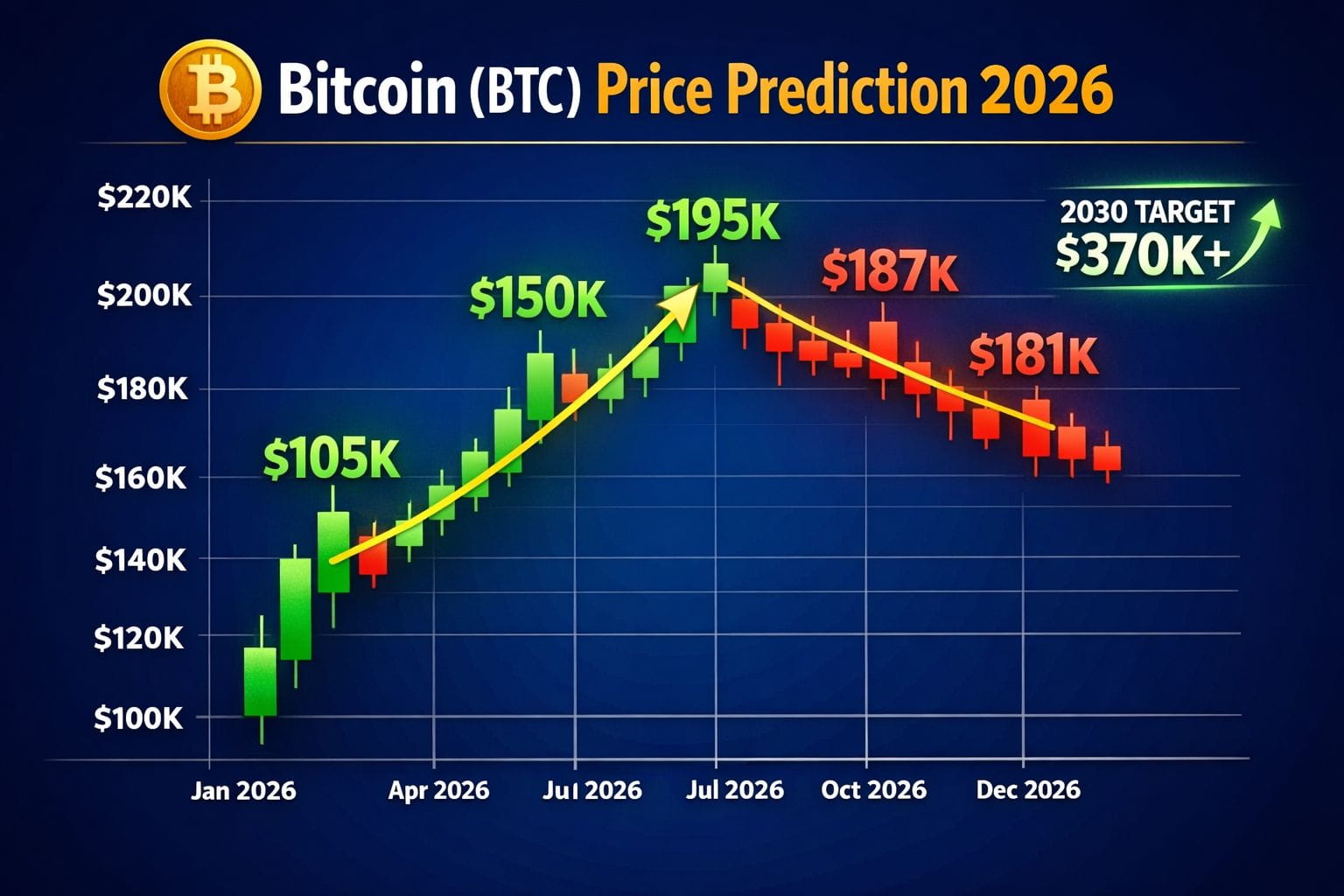
Some forecasts suggest Bitcoin could reach $150,000 in 2026, but volatility could also push it lower. (cointelegraph.com)
Moderate predictions estimate a range of $74,000 to $105,000. (coincodex.com)
📌 Long-Term (2030 and beyond)
Optimistic analysts suggest Bitcoin could reach $350,000–$500,000 by 2030. (techopedia.com)
Some extreme models even predict potential prices above $1,000,000. (litefinance.org)
💡 Note: All predictions involve risk and uncertainty — cryptocurrency markets are highly volatile.
🧠 4. Key Drivers of Bitcoin’s Future
🚀 1) Institutional Adoption
Bitcoin ETFs and institutional funds have made Bitcoin a more credible asset. This increases access for major companies and pension funds. (tmgm.com)
🌍 2) Global Financial Integration
Bitcoin is increasingly integrated with traditional financial markets, which boosts its credibility as a risk asset. (arxiv.org)
🪙 3) Bitcoin Halving
Bitcoin’s supply mechanism halves every four years, reducing supply and increasing scarcity — often causing price spikes.
📜 4) Regulatory Clarity
Clearer cryptocurrency regulations worldwide could attract more investors and strengthen market confidence. (tmgm.com)
⚠️ 5. Risks and Challenges
Bitcoin remains a highly volatile asset. Some potential risk factors include:
📉 1) Sudden Price Drops
Bitcoin could drop sharply due to bear markets or market corrections, potentially reaching $40,000–$70,000. (cointelegraph.com)
🏛️ 2) Regulatory Changes
Stricter regulations in some countries could negatively impact market sentiment.
🔄 3) Changing Market Cycles
Some analysts believe Bitcoin’s traditional 4-year cycle is weakening, making future market timing less predictable. (reddit.com)
🌟 6. Bitcoin’s Future Summary
Aspect
Outlook
Short-Term (2026)
Mixed — possible range $70,000–$150,000
Mid-Term (2027)
Potential growth with high volatility
Long-Term (2030+)
Strong bullish forecasts up to $500K–$1M+
Key Drivers
Institutional adoption, halving, regulation
Main Risks
Volatility, market cycles, regulatory uncertainty
🔍 Conclusion
Bitcoin has the potential to remain a major digital asset, with increasing significance among institutional investors and global finance systems. However, it remains a risky and volatile investment, with potential for major price swings. Proper research and risk management are essential before investing.
#bitcoin #BTC走势分析 #Crypto #Cryptocurrency #CryptoNews #Blockchain #CryptoTrading #BitcoinPrice #BTCUpdate #DigitalCurrency #CryptoMarket #CryptoFuture #BitcoinForecast #CryptoInvesting #DeFi #Bitcoin2026 #CryptoAnalysis #BitcoinTrends" #CryptoPredictions #btcnews99