


Vanar is built with a very grounded mindset: if blockchain is going to reach real people, it has to feel natural inside the things they already love. That is why Vanar keeps leaning into consumer routes like gaming, entertainment, digital worlds, and brand experiences. Instead of asking users to learn a new culture first, the chain aims to sit quietly in the background while the product experience stays front and center.
Vanar is its focus on making Web3 feel usable at scale. Not in the way most projects say it, but in the way consumer products demand it. Fast feedback loops, smooth onboarding, predictable interactions, and an environment where developers can ship without forcing users to think about technical steps. This is where the team’s background in games and mainstream entertainment becomes more than a talking point. Those industries are built on retention and simplicity, so the chain’s design philosophy naturally points toward reducing friction rather than adding complexity.
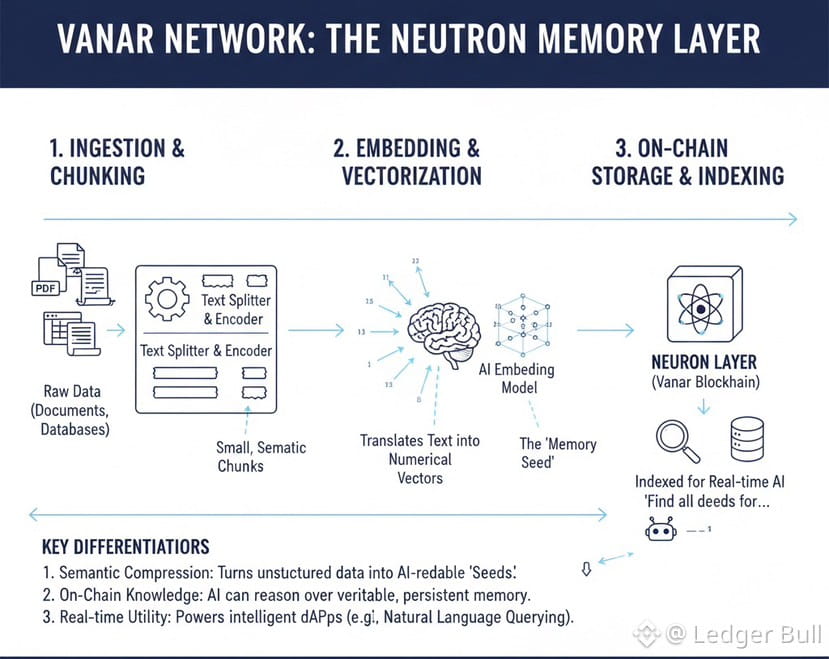
Vanar also stands out because it is not positioning itself as just another Layer 1 with a speed narrative. The project is increasingly framing itself as a broader infrastructure stack, where the chain is the base and additional layers are built to support data, context, and intelligence on top. The direction is clear: applications are not only transactions. Applications need memory, state, identity, behavior patterns, and the ability to adapt. If that intelligence layer becomes real and usable for builders, it gives Vanar a stronger identity than competing only on performance claims.
Vanar is trying to make onchain information more useful, not just more available. Think about what happens when a game, a metaverse world, or a brand platform grows. You do not just need transfers. You need history that can be verified, reputation that can be carried across experiences, permissions that can be enforced, and data that can be interpreted by software without constant manual intervention. The project’s messaging around semantic memory and reasoning layers points toward a future where apps can store meaningful context and act on it, with the chain providing integrity and proof.
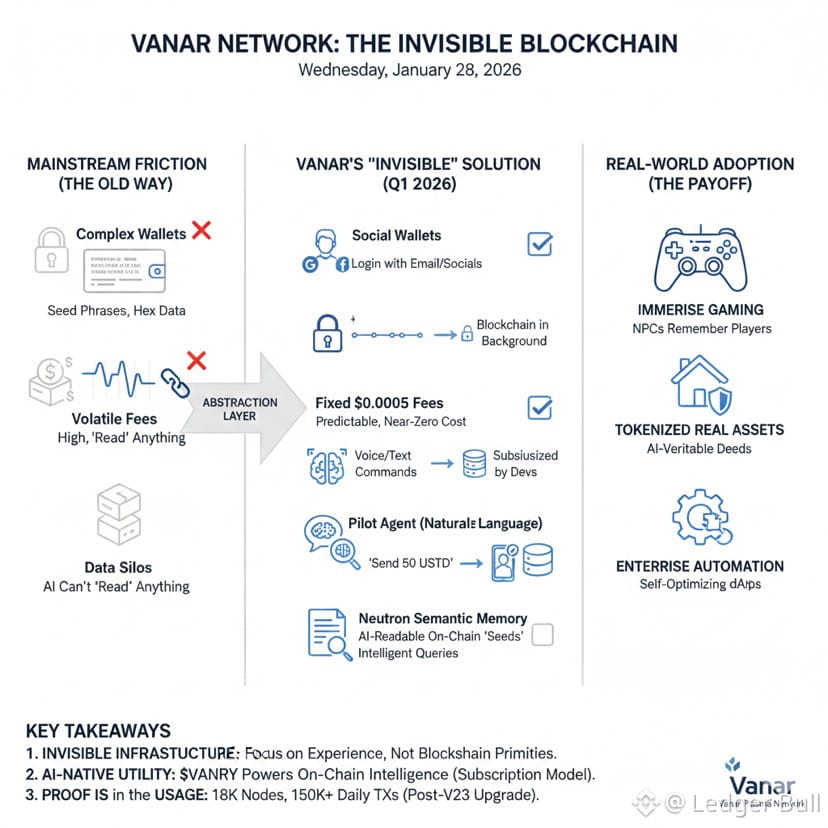
This matters because the next wave of adoption will not arrive through niche tools. It will arrive through normal behaviors: playing, collecting, exploring, participating, earning, and belonging. Vanar’s ecosystem signals this through known consumer facing products connected to its broader vision, including Virtua Metaverse and the VGN games network. Those touchpoints make the adoption narrative credible because they are not abstract. They map to how mainstream users actually engage with digital value today.
VANRY sits at the center as the network token, powering the chain economy and aligning security with growth. In a consumer driven ecosystem, the token has to do more than exist on a chart. It needs to support a predictable user experience, help sustain validators and network operations, and remain simple enough that developers can design around it without confusing their users. The clearest benefit of this approach is that developers can build token powered experiences where fees and interactions stay manageable as user counts grow, which is the difference between a demo and a product.
Vanar’s EVM compatibility is another practical advantage. Consumer products do not want experimental tooling if it slows down shipping. Familiar environments, reusable developer skills, and broad compatibility reduce the cost of building. That matters because the real competition is not another chain. The real competition is time, attention, and the ability to launch something people actually want to use.
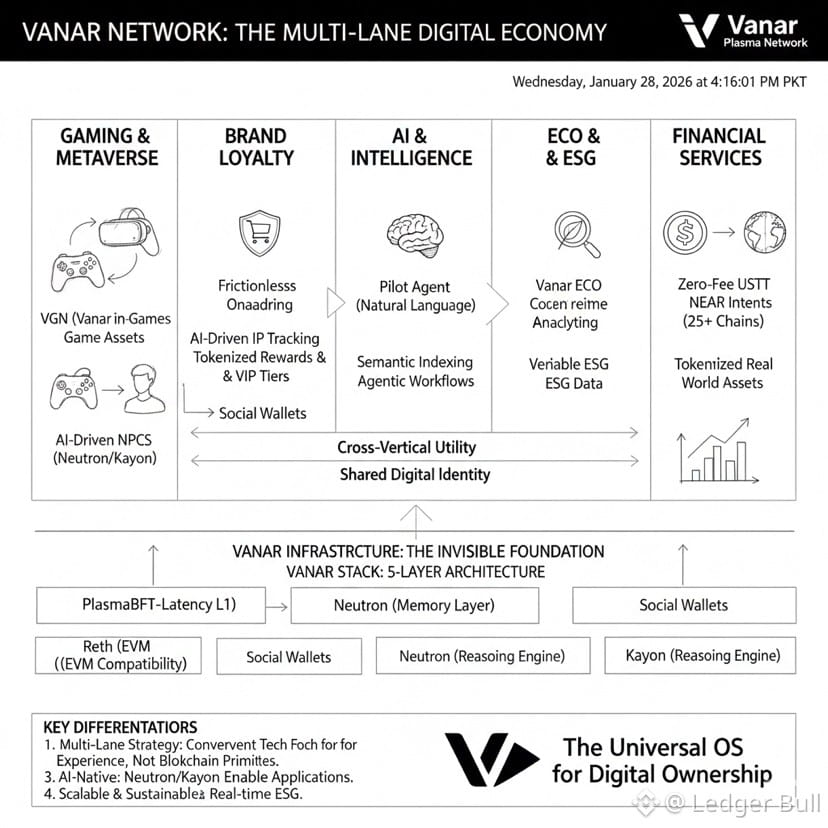
Vanar’s positioning is that it does not force a single lane. The project speaks to multiple mainstream verticals, including gaming, metaverse, AI, eco, and brand solutions. That can sound wide, but it makes sense if you understand the shared theme: consumer experiences powered by digital ownership and programmable value. A brand loyalty layer, a gaming economy, and a digital identity system all need similar foundations. They need low friction onboarding, stable interactions, and the ability to prove assets and actions without turning the app into a technical tutorial.
Vanar is making is that the next generation of applications will feel smarter. Not louder, not more complicated, just smarter in the way they remember what matters. If applications can carry portable context, they can reduce repeated steps, improve personalization, enforce rules more cleanly, and deliver experiences that feel consistent across different environments. That type of infrastructure is not glamorous, but it is exactly what consumer scale products require.
Vanar frames adoption. It is not pretending that mainstream users are waiting to learn blockchain vocabulary. It is designing toward experiences where blockchain is simply the rail for ownership and settlement. The chain becomes the part you do not notice until you need to verify something, move it, trade it, or prove it belongs to you. That is how real adoption usually happens in technology. The most important systems become invisible.
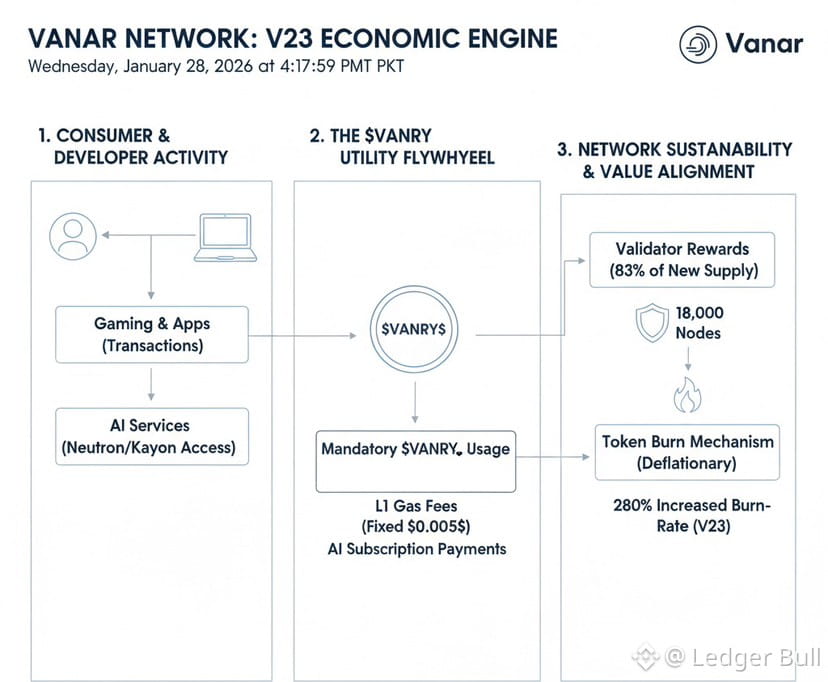
If you are watching what is next, the real signal will be execution and usage. Not hype, not branding, not big promises. The indicators that matter are whether developers can integrate the stack easily, whether consumer products keep users active, and whether the ecosystem grows because people want the experiences, not because they are chasing short term incentives. When Vanar’s intelligence and memory layers become tools that builders actually use, you will see it show up in the quality of apps, not just in announcements.
