
The crypto culture is constructed based on an illusion. Even though we claim that decentralized finance (DeFi) is impossible to stop and cannot be censored, nearly every large dApp has a single vulnerable component, which is the frontend.
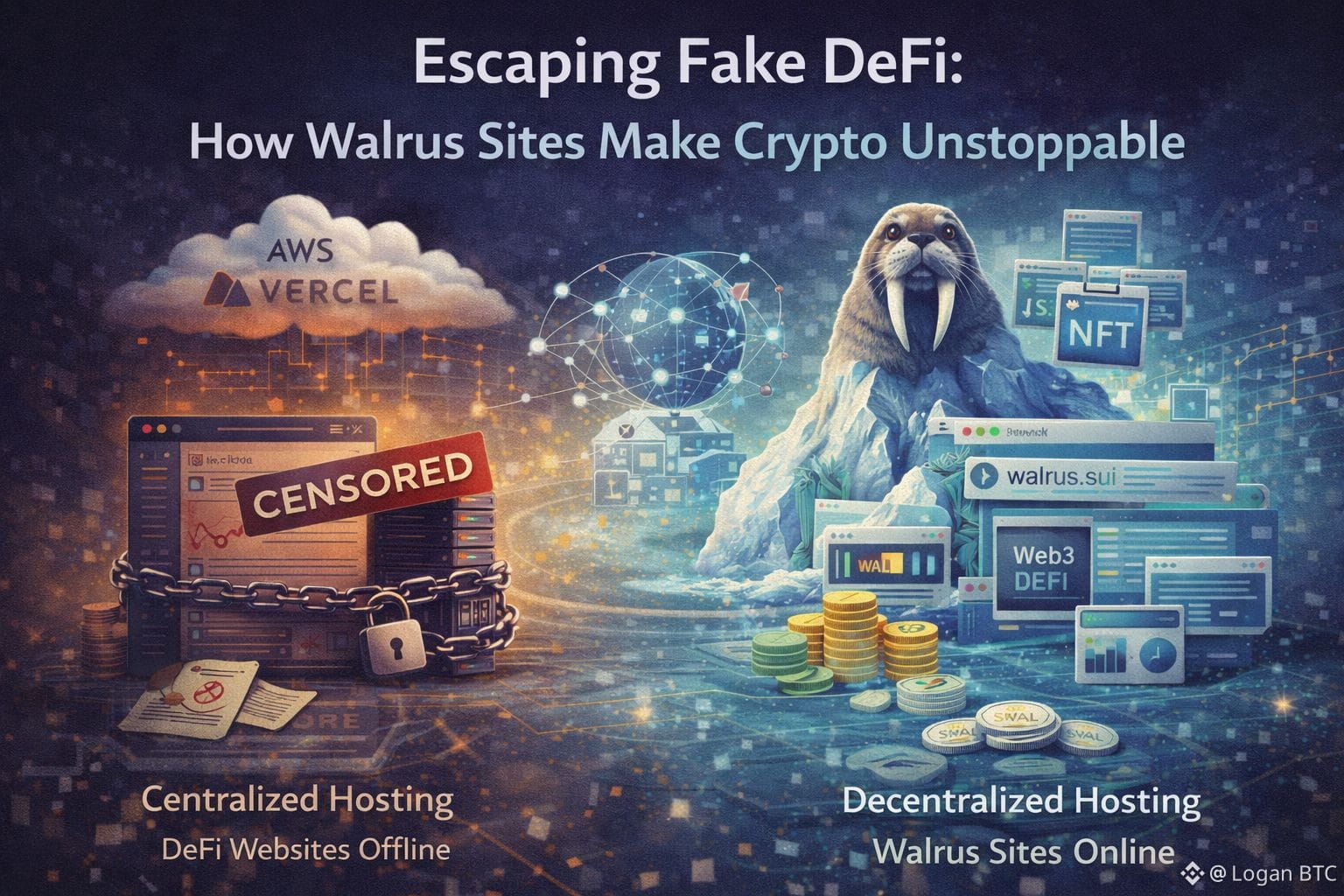
You are likely on a site on Amazon Web Services (AWS) or Vercel when you sell of and buy on a decentralized exchange (DEX) or lend on a lending protocol. The blockchain contracts do not change and the site may change. In case the cloud provider receives cease-and-desist letter or somebody hacks the DNS, the so-called decentralized application may be blocked to nearly all the people.
This issue will be resolved in Walrus Protocol in 2026. It will have the capacity not only to store data, but entire websites, which are known as Walrus Sites. This will allow real stoppable apps to exist in the first place.
The Problem with IPFS
Walrus is not the first to make decentralized hosting an attempt. The IPFS is an ancient system, yet it is slow. IPFS has very slow small modern site loading, similar to dial-up. Also, in case nobody maintains a node, the website will go offline due to the lack of pinning in the network.
Due to this reason developers returned to central servers. Instead of being decentralized, they opted for speed and reliability which today constitutes the hybrid fake DeFi system.
Enter "Walrus Sites"
Walrus uses its own method. IPFS needs to store your file in the appropriate node, however Walrus will divide the data and write it on a large number of fast nodes with 2-D erasure coding. This accelerates the load speed of websites like the Web2 sites.
Developers can now place all their front-end files, HTML, CSS, JavaScript and photos on Walrus. This makes them Sui Objects to Walrus who is the owner of the site. They simply sign a transaction on Sui and all the changes are recorded in an immutable history to change the site.
The Sui Pro: Dynamic DNS.
The positive thing is that it does not use normal DNS. Walrus Sites is integrating SuiNS (Sui Name Service) rather than GoDaddy or Google Domains. One can enter the address app.walrus or defi.sui into the browser and the browser locates the address on the blockchain and directs the user to the storage.
The censorship is not possible in this design. One cannot shut down a single server, cripple a DNS database, and make the site go down by the power of a cloud provider. The place remains alive while Walrus stays.
The Investment Case for $WAL
Investors find new value into the WAL token. Had Walrus been nothing more than crypto storage service, it would only be as valuable as what you charge to store. However, since it will bring the unstoppable web, it will mean that the currency that data moves on the decentralized internet is $WAL.
Whenever a person opens a Walrus site, bandwidth is utilized. A developer also purchases storage when they modify the front -end. A more significant reduction in the cost of storage will make the users of the new aggressors avoid the AWS in favor of Walrus to place all the dApps on the client side (and comply with the strict regulatory system of the EU) and then the necessity to pay the price of the $WAL is based not on individual storage costs, but on a consistent flow of use.
Summary: AWS Web3 is over. It is no longer the case that decentralized hosting is too low-performing. Walrus provides the industry with the means to create applications as powerful as the blockchains they operate. The next wave will give emphasis on independence of apps rather than tokens alone.