

 In crypto, we often hear one sentence repeated everywhere:
“Not your keys, not your coins.”
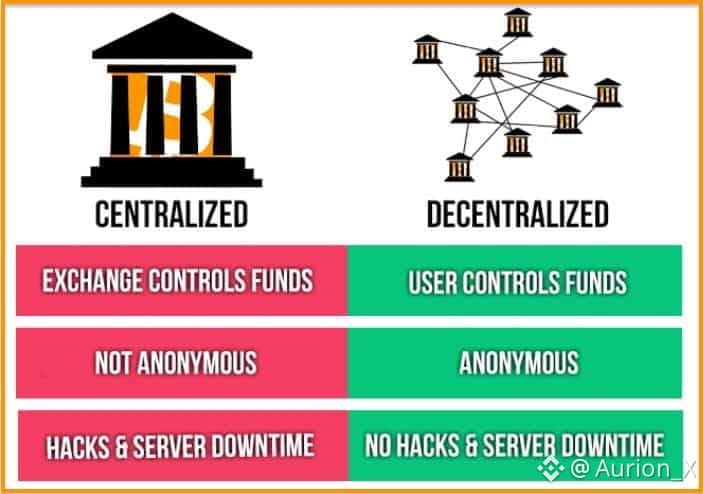
It sounds simple. But in reality, most of us still use platforms where we don’t actually control our assets.
So the real question is:
When you buy crypto, who truly owns it—you, or the platform holding it?
After spending years in this space, using both centralized and decentralized exchanges, I’ve realized this debate isn’t just technical. It’s about trust, freedom, and responsibility.
Let’s break it down.
The Comfort of Centralized Exchanges
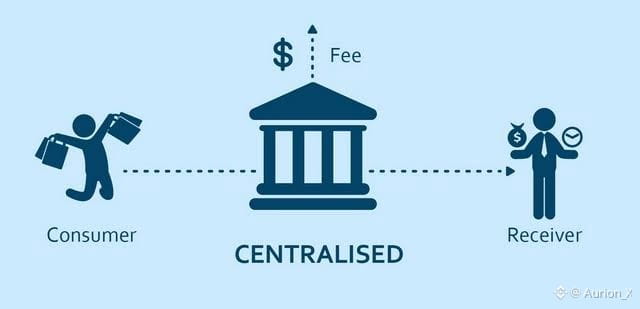 Centralized exchanges (CEXs) like Binance, Coinbase, or OKX are where most people start. And honestly, it makes sense.
They are:
Easy to use
Fast
Beginner-friendly
Packed with features like staking, futures, and fiat on-ramps
For many users, a CEX feels like a crypto bank. You log in, see your balance, trade instantly, and everything “just works.”
But here’s the catch:
When you store funds on a CEX, you don’t hold the private keys.
The exchange does.
That means:
They custody your assets
They control withdrawals
They can freeze accounts
They follow regulations and orders
In normal times, this feels fine.
In crisis moments, it becomes risky.
We’ve already seen what happens when centralized platforms fail, get hacked, or mismanage funds. Users are often the last to get protection.
So while CEXs offer convenience, they also require full trust.
And in crypto, trust is supposed to be optional.
The Freedom of Decentralized Exchanges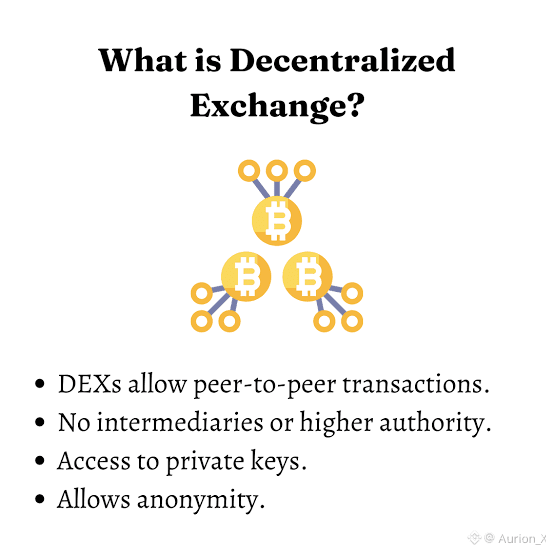
Decentralized exchanges (DEXs) like Uniswap, PancakeSwap, or Curve work very differently.
There’s no company holding your funds.
No central wallet.
No login system.
You connect your own wallet and trade directly on-chain.
This means:
You control your private keys
You hold your assets
No one can freeze your wallet
No platform can block your access
With a DEX, you are your own bank.
That’s powerful.
It reflects the original vision of crypto:
permissionless, borderless, and trust-minimized finance.
But freedom comes with responsibility.
The Hidden Cost of Self-Custody
Using a DEX sounds perfect—until something goes wrong.
If you:
Lose your seed phrase
Send funds to the wrong address
Interact with a scam contract
Get phished
There is no support desk.
No refund.
No recovery.
Your funds are gone.
Forever.
This is the part many people underestimate.
Self-custody gives you full control, but it also gives you full liability.
For beginners, this can be overwhelming.
Control Is Not Just About Keys
Most people think control = private keys.
But real control is bigger than that.
It includes:
Access to liquidity
Ability to exit positions
Protection from manipulation
Reliability during high traffic
Security of infrastructure
In extreme market conditions, DEXs can suffer from:
High gas fees
Slippage
Front-running
Congestion
Meanwhile, CEXs may halt withdrawals or trading.
So in reality, both systems have moments where control is limited.
Just in different ways.
Why Most Users Choose Centralization (For Now)
Despite all the risks, CEXs still dominate.
Why?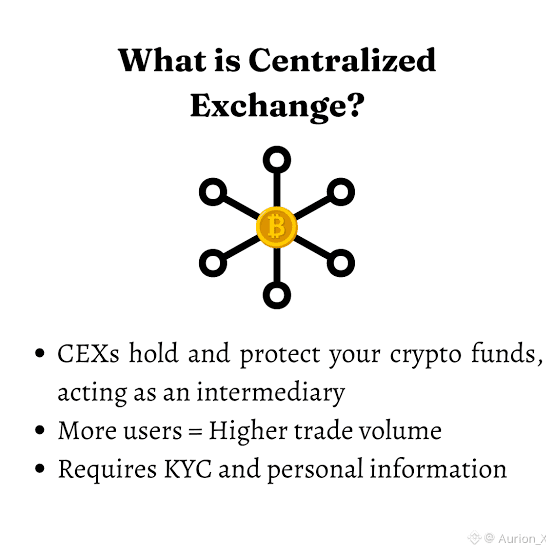
Because most people want:
Simplicity
Speed
Support
Fiat access
Low friction
Crypto adoption is still early.
Most users are not ready to manage keys, wallets, bridges, and gas.
So they trade sovereignty for convenience.
And that’s a rational choice—for many.
Why Decentralization Still Matters
Even if you use CEXs daily, DEXs play a crucial role.
They are:
Backup systems
Innovation hubs
Censorship-resistant markets
Proof that finance doesn’t need intermediaries
Without DEXs, crypto becomes just another fintech industry.
With them, it remains a movement.
They keep centralized platforms honest.
They remind us what’s possible.
My Personal View: It’s Not CEX vs DEX — It’s Balance
After years in crypto, I don’t see this as a war anymore.
I see it as a toolkit.
Use CEXs for:
Onboarding
Large liquidity
Fast trading
Fiat services
Use DEXs for:
Long-term holding
Privacy
True ownership
Exploring new protocols
Personally, I keep trading funds on centralized platforms and move long-term holdings to self-custody.
That way, I get both efficiency and independence.
The Future: Hybrid Models Are Coming
 The next phase of crypto won’t be purely centralized or decentralized.
We’re already seeing:
Non-custodial CEXs
Smart contract wallets
Account abstraction
On-chain order books
Self-custody with UX support
The future is likely hybrid: User-owned assets + platform-level convenience.
And that’s a good thing.
Final Thought: Control Is a Choice
Crypto gives us something traditional finance never did:
A choice.
You can choose:
Full custody
Partial custody
Or full delegation
But every choice has a price.
Convenience costs sovereignty.
Sovereignty costs comfort.
The key is knowing what you’re giving up—and why.
Because in the end, the question isn’t:
“Which exchange is better?”
It’s:
“How much control am I willing to take responsibility for?”