I remember the first time a friend tried to explain blockchain to me. We were sitting in a noisy café spoons clinking against mugs and ten minutes in I was nodding like I understood… while understanding absolutely nothing. It felt distant. Cold. Like a system designed more for charts and traders than for real people. That feeling stuck with me for a long time. Which is probably why Vanar caught my attention in the first place.
Vanar doesn’t introduce itself like a lecture. It doesn’t feel like it’s yelling buzzwords at you from a pitch deck. Instead it feels more like someone pulling up a chair and saying “Okay what if this stuff actually made sense for everyday life?” And that’s a refreshing place to start.
At its core Vanar is a Layer-1 blockchain but that description alone doesn’t really do it justice. What matters more is why it was built. The team behind it comes from games entertainment and working with brands industries where people care deeply about experience. You can tell. The whole approach feels shaped by moments like logging into a game after work wandering through a digital world or seeing a brand experiment with something playful and new. This isn’t theory. It’s muscle memory from shipping real products.
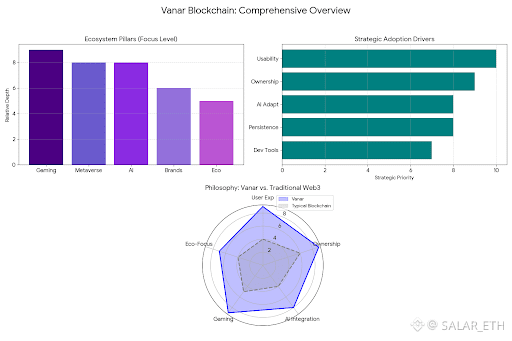
One afternoon while testing a metaverse demo for fun I realized how different it feels when tech disappears into the background. You stop thinking about wallets and transactions and start thinking about where you want to go next. That’s the vibe Vanar seems to be chasing. Its ecosystem stretches across gaming metaverse spaces AI-driven experiences eco initiatives and brand solutions all stitched together by the VANRY token. Not as an afterthought but as the fuel that keeps everything moving.
The Virtua Metaverse is a good example of this philosophy in action. It isn’t trying to overwhelm you with complexity. It feels more like stepping into a digital venue part social space part playground where ownership actually means something. Your assets aren’t just locked inside one app. They belong to you. That small shift changes how you behave. You explore differently. You invest emotionally. It’s the same feeling as decorating a room you own versus one you’re renting.
Then there’s the VGN games network which quietly does something powerful. It treats games not as disposable entertainment but as worlds worth building in. Anyone who’s spent hundreds of hours in a favorite game knows that strange attachment. The idea that your progress items or identity could live beyond a single server shutdown hits closer to home than most people admit.
What really pushes Vanar into interesting territory though is how it weaves AI into the chain itself. Not as a flashy add-on but as part of the foundation. The goal is simple to say and hard to execute. Applications that can remember adapt and respond more like living systems than static software. Imagine digital characters that recall your past choices or platforms that evolve alongside their users instead of resetting every session. That’s the kind of future Vanar is quietly aiming for.
The phrase “bringing the next 3 billion users to Web3” gets thrown around a lot and honestly it usually makes me roll my eyes. But in Vanar’s case it feels less like a slogan and more like a design constraint. Everything points toward usability. Familiar tools for developers. Smooth onboarding for users. Fewer moments where you feel lost or intimidated. It’s the difference between building a spaceship and building a reliable train. One looks cooler. The other actually moves people.
I once watched a friend zero interest in crypto get genuinely excited about owning a digital item in a game because she could use it elsewhere. No jargon. No explanations. Just a spark of curiosity followed by a smile. Those moments don’t show up on dashboards but they’re how adoption really happens. Slowly. Personally. Human to human.
Of course none of this guarantees success. Real-world adoption is brutally hard. Markets swing. Attention drifts. Every blockchain promises the future and only a few earn a place in it. Vanar still has to prove that people will stay build and care long-term. But there’s something quietly reassuring about a project that leads with products instead of promises.
When I think about Vanar now I don’t picture a chain or a token. I picture spaces where people play create experiment and maybe even feel a little bit at home. And in a world full of abstract tech talk that feeling warm familiar human might be its most valuable feature of all.