
Failure is inevitable in complex systems. Networks halt, applications pause, governance processes stall, and upgrades go wrong. What separates resilient ecosystems from fragile ones is not the absence of failure, but the ability to recover with integrity. This is where Walrus Protocol plays a critical role in Web3 infrastructure.
Failure Is Not the End, Data Loss Is
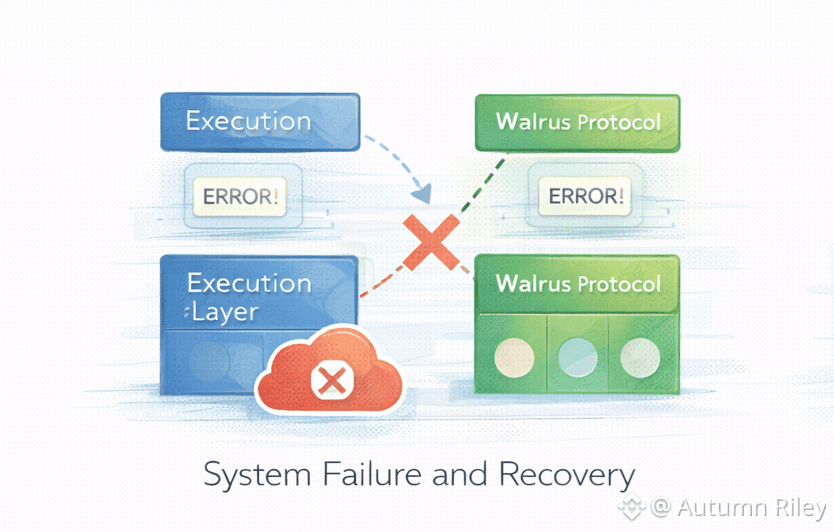
In many Web3 incidents, the real damage does not come from downtime—it comes from missing or inaccessible data. Without historical records, system state, or governance context, recovery becomes chaotic. Walrus Protocol ensures that critical data remains available even when execution layers fail, allowing systems to restart without losing continuity.
Recovery Requires Verifiable History
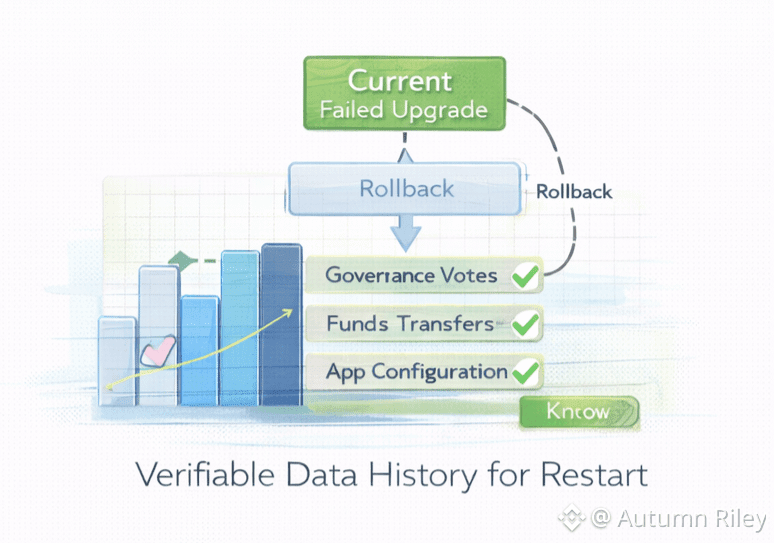
Restarting a decentralized system requires more than rebooting code. Communities need access to past votes, treasury movements, configuration changes, and application state. Walrus Protocol provides a decentralized data layer that preserves this information independently of execution environments, making recovery verifiable rather than discretionary.
Supporting Rollbacks and Safe Upgrades
Upgrades and rollbacks are common sources of risk. When data is tightly coupled to execution, reverting changes becomes complex and error-prone. Walrus Protocol enables safer upgrade paths by keeping data accessible across versions, allowing developers and communities to reason clearly about what changed and why.
Incentives for Reliability Under Stress
The $WAL token aligns network participants around maintaining data availability during both normal operation and periods of disruption. By rewarding uptime and consistency, the protocol reinforces behavior that supports recovery rather than abandonment when systems are under pressure.
Building Ecosystems That Can Restart
Long-lived Web3 systems must assume failure will happen. Infrastructure should be designed to make recovery predictable, transparent, and decentralized. Walrus Protocol supports this by acting as a persistent data backbone that systems can rely on when everything else is being rebuilt.
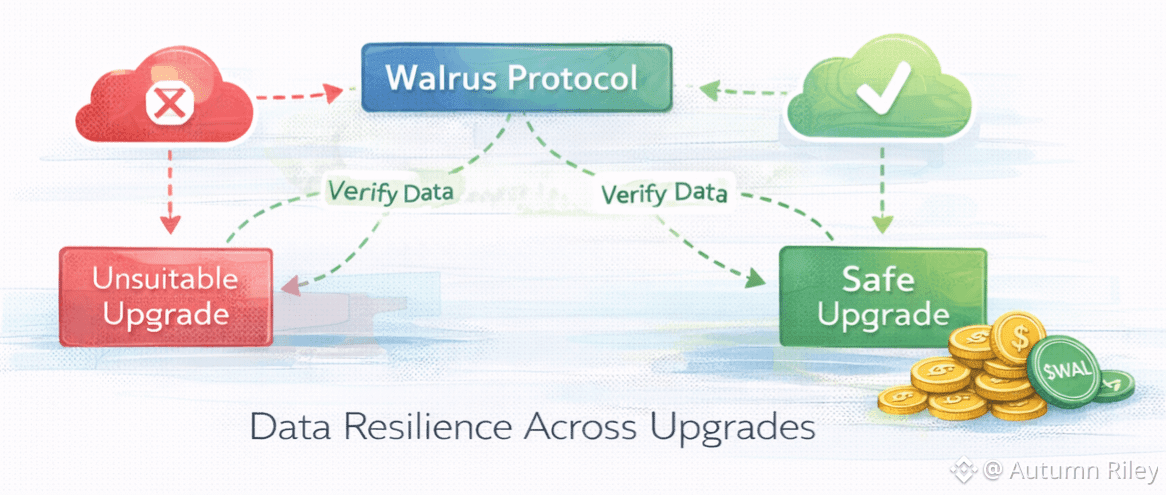
In a decentralized future, resilience is not about avoiding failure—it’s about ensuring systems can restart without losing trust, history, or coordination. Walrus Protocol contributes to Web3 infrastructure that is prepared not just to run, but to recover. #walrus @Walrus 🦭/acc