

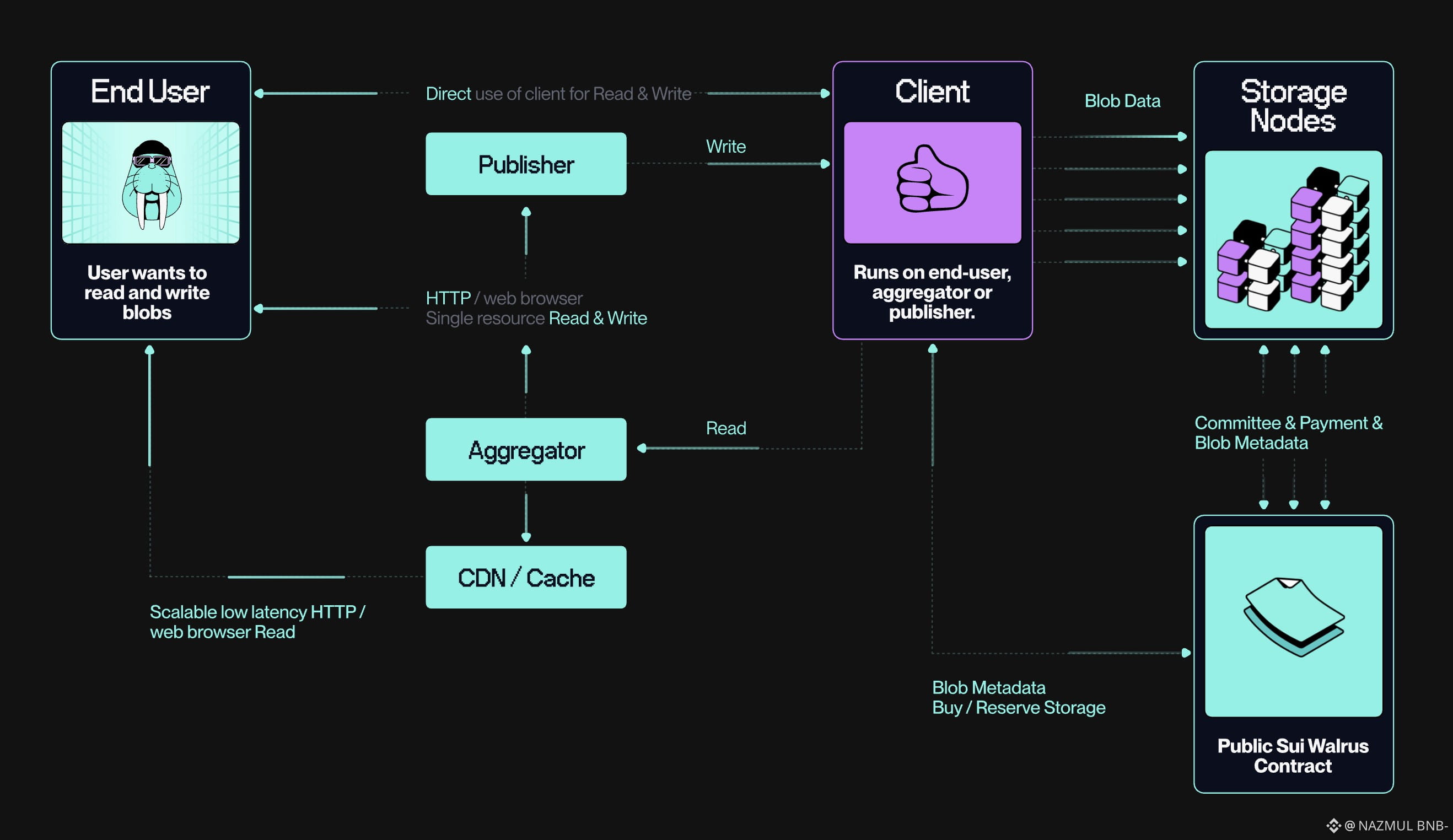
In crypto, price usually speaks louder than progress. When a token runs hot, people assume something important is happening. When it drifts or drops, attention moves elsewhere. Walrus sits in that uncomfortable middle ground right now. It is not collapsing, but it is not being celebrated either. That alone makes it interesting. As of early February 2026, WAL trades far below its previous highs, with steady volume and a market cap that suggests hesitation rather than abandonment. This kind of market behavior often points to uncertainty, not failure. People are unsure how to value what is being built. Walrus is not positioning itself as a flashy new narrative. It is trying to solve a problem most users never think about until something breaks: reliable, affordable data storage that applications can actually depend on over time.
At a simple level, Walrus is about storing data. But that description misses the point. The real challenge in decentralized storage is not whether data can be saved. It is whether it can be retrieved reliably without costs spiraling out of control. In many systems, reliability comes from heavy replication. Data is copied again and again across nodes, just in case something fails. That works, but it is expensive. Over time, bandwidth and storage overhead quietly eat into the system. Walrus approaches this differently through its encoding design, often referred to as Red Stuff. Instead of endlessly copying full datasets, the network breaks data into pieces in a structured way. If parts go missing, the system can recover only what was lost, rather than rebuilding everything. A simple way to think about it is repairing a torn page instead of reprinting the whole book. This design choice is not glamorous, but it directly targets the cost of long-term reliability, which is where many storage networks struggle.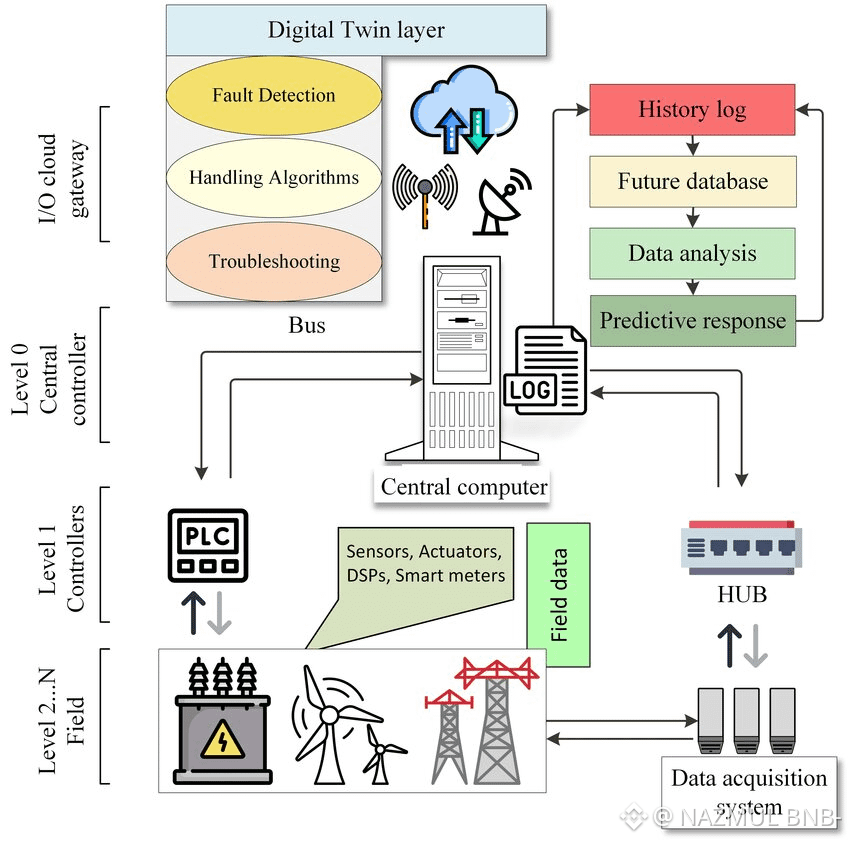
This technical choice shapes how Walrus behaves economically. Storage networks live and die by incentives. Users want predictable pricing. Node operators want stable rewards. Tokens, however, are volatile by nature. When prices surge, storage suddenly becomes expensive. When prices fall, operators lose motivation and leave. Walrus tries to smooth this tension by using prepaid storage fees that are paid in WAL and distributed over time to storage nodes and stakers. The goal is not to eliminate volatility, which is unrealistic, but to soften its impact on the people actually keeping the network alive. For users, this means storage costs that do not swing wildly from one month to the next. For operators, it means income that reflects real usage rather than short-term market noise. This kind of design rarely excites traders at first, but it matters for building something that lasts.
Of course, none of this exists in a vacuum. Token supply dynamics still matter, and Walrus is no exception. A large portion of the total supply is not yet circulating, which introduces future sell pressure as unlocks occur. This is not unique to Walrus, but it does create real calendar risk. Long periods of calm can be followed by sudden increases in available supply. If demand for storage and staking does not grow alongside those unlocks, the token price can remain under pressure regardless of technical progress. This is why usage metrics matter more than marketing. Growth in paid storage, consistent renewals, and active node participation are the signals that show whether the system is earning its place. Without them, even the best-designed infrastructure struggles to gain market trust.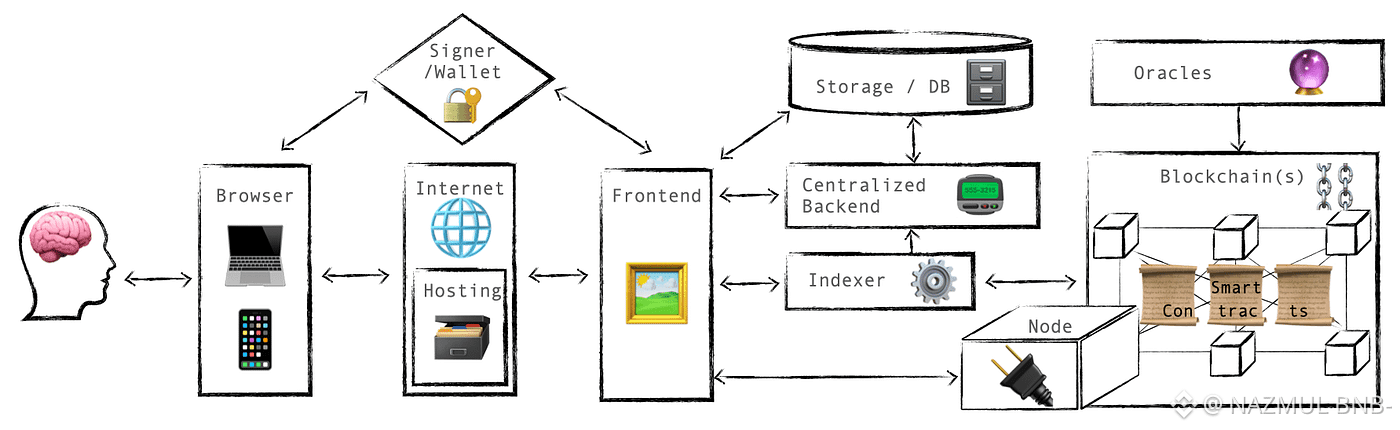
What makes Walrus stand out is not a promise of dominance, but a realistic path to usefulness. If the network works as intended, applications can treat storage as a dependable layer rather than a constant risk. Developers do not need to rebuild complex offchain systems just to ensure their data survives. They can assume availability, verify integrity, and move forward. That shift is subtle but important. It turns storage from a background service into a core part of how apps function. Over time, this kind of quiet reliability tends to compound. It does not generate hype overnight, but it builds trust through consistent performance. In that sense, Walrus resembles infrastructure we rely on every day. No one praises it when it works. Everyone notices when it fails.
The current market disagreement around WAL reflects this tension between visible price action and invisible progress. Traders look for momentum. Builders look for systems that do not break under pressure. Walrus is clearly optimizing for the second group. Whether that choice pays off depends on execution and adoption, not slogans. If usage grows and the economic model continues to support both users and operators, the network earns the right to be considered core infrastructure. If not, it risks becoming another well-intentioned experiment. For now, Walrus sits in that in-between state where the outcome is still open. That uncertainty is exactly why it deserves careful attention, not blind optimism or quick dismissal.

