
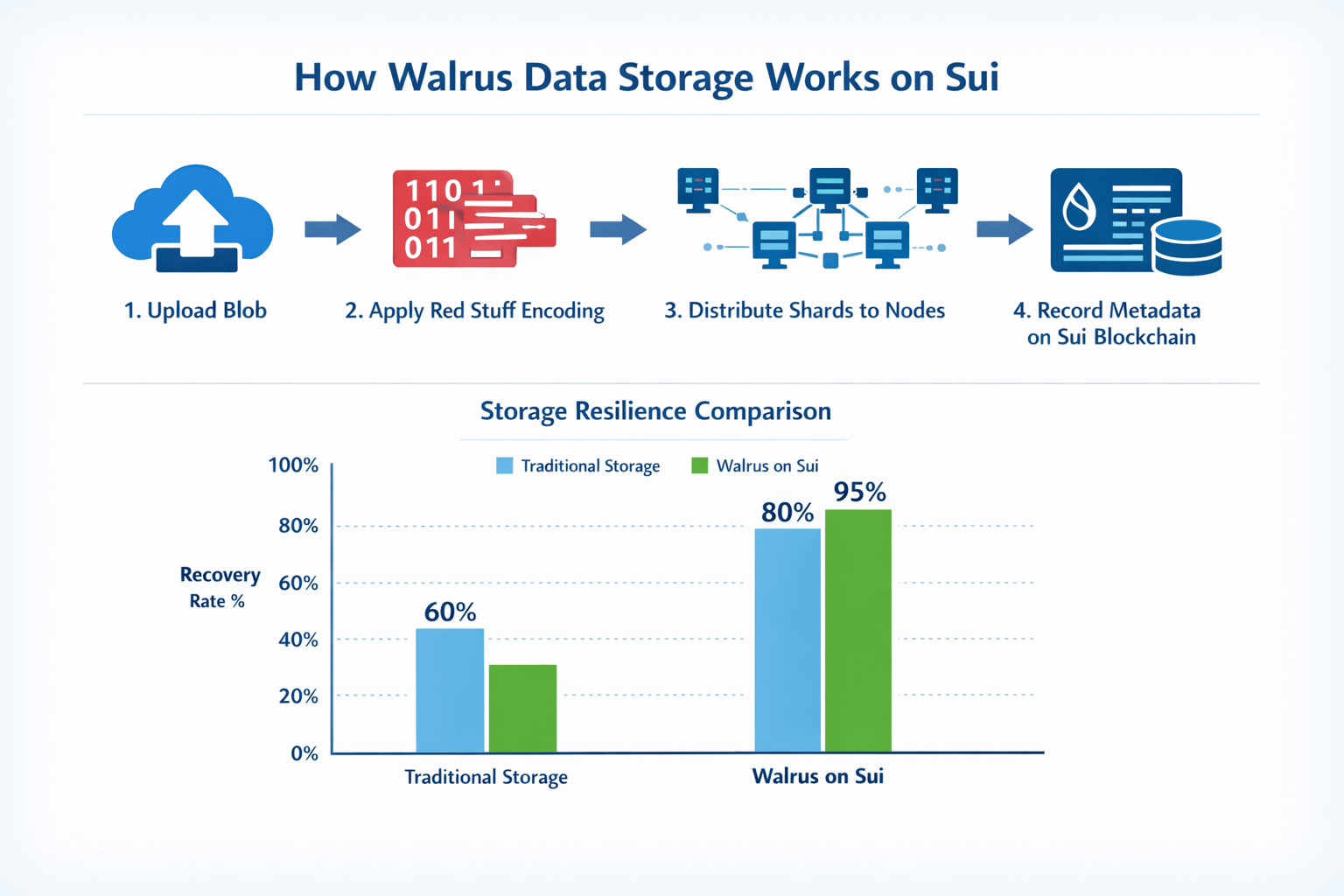
People who put files on the internet without the services of huge corporations discuss it much. Walrus enters the picture as a deal with the Sui network handling big files including videos or images. Its developers designed it in such a way that it becomes cheap and were distributed in many points to ensure that failure of one point will not lead to failure of the whole thing. Parts of the information are stored in nodes and Sui takes care of the tracking component. Users upload a file which is broken and then coded in such a way that it may be put back together comprising of few fragments of a file. This enables the storage to be secure and quick to access. Teams at Mysten Labs put this version together and made the full version available as early as March 2025. Since then, it is used as NFT and AI apps since this protocol is compatible with high-speed networks.
Have a second glance at the relation between Walrus and Sui. The network works wise of the speed of the Sui to memorize the location of data and guarantee its availability. On writing a file, Sui records the information and bits are managed by the nodes. This segmentation enables Walrus to expand without slowing down. Their primary gimmick is called erasure coding and it breaks one file into many small fragments. Take away some pieces, that is all, the system takes others to replace it. In order to become a member, node operators post tokens to ensure that all are not dishonest. The latest partnerships, e.g. the one with Space and Time had features to track real-time activity. Their Explorer posts uploads, read and node health instantly.
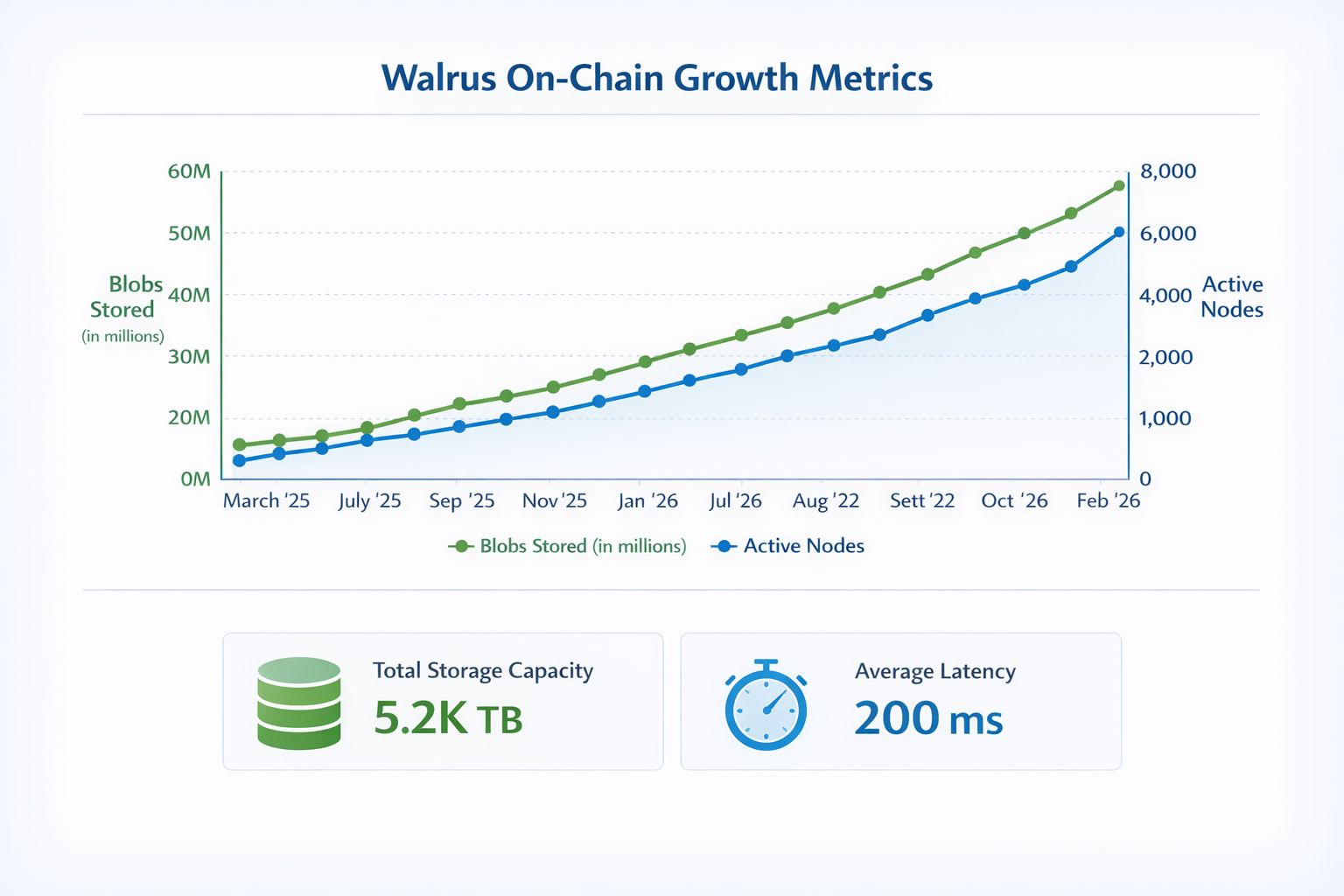
On-chain tracking information places a vivid outlook of the growth into a frame. Sui already had a customer base of over 2.7 billion transactions in the first half of 2025 and Walrus was riding on this fact as one of the critical elements to data requirements. The number of stored blobs that have been used in leaping has gone up as more projects are leveraging on it to store heavy files. Statistics show that there is an expansion of the number of nodes, and the operators are spreading all around the globe to reach a broader audience. Usage trends show slow increases in the volume of uploads on a daily basis, and in the number of uploads of AI applications which consume high amounts of data. One can query this data using such tools as the Explorer and get numbers on the distribution of shards or latency of numbers. Trace flows Trace flows to show the flow of data between users and nodes.
Relate it to greater transformations in AI. Chain agents need places of data that they can trust and Walrus provides them that foundation. The developers develop agents that store and access information which is not centrally stored in servers. This opens the opportunities of applications working with real-time data, including tokenized assets or common data. Macro views are AI pushing more data to blocks, and configurations like Walrus, which satisfy that requirement on Sui. Patterns of this sort can be determined through education on such measures (high-volume time during the storage, frequent file extensions, etc.).
Grasp the tools for analysis. First, you should press Walrus Explorer so that you can view the contents of the blobs and network statistics. Collect information about individual files or health in general. Use with Sui scanners in order to have all transaction logs. This technique reveals the conduct of the operators and efficiency gains throughout the course of time. Trends of participation e.g. additional reads during events. The experience of the flows is useful to users in optimisation of the storage in their own.