

When projects publish roadmaps, they usually feel like wish lists. Timelines stretch far into the future, features are stacked neatly into quarters, and everything looks achievable as long as you don’t ask too many questions. I’ve learned to read those documents less for what they promise and more for how they think.
Looking at Vanar’s path toward 2026, what stands out isn’t the number of planned upgrades or the scale of ambition. It’s the direction of travel. The roadmap doesn’t read like a race to add more blockchain features. It reads like a slow shift away from thinking of the chain as the product at all.
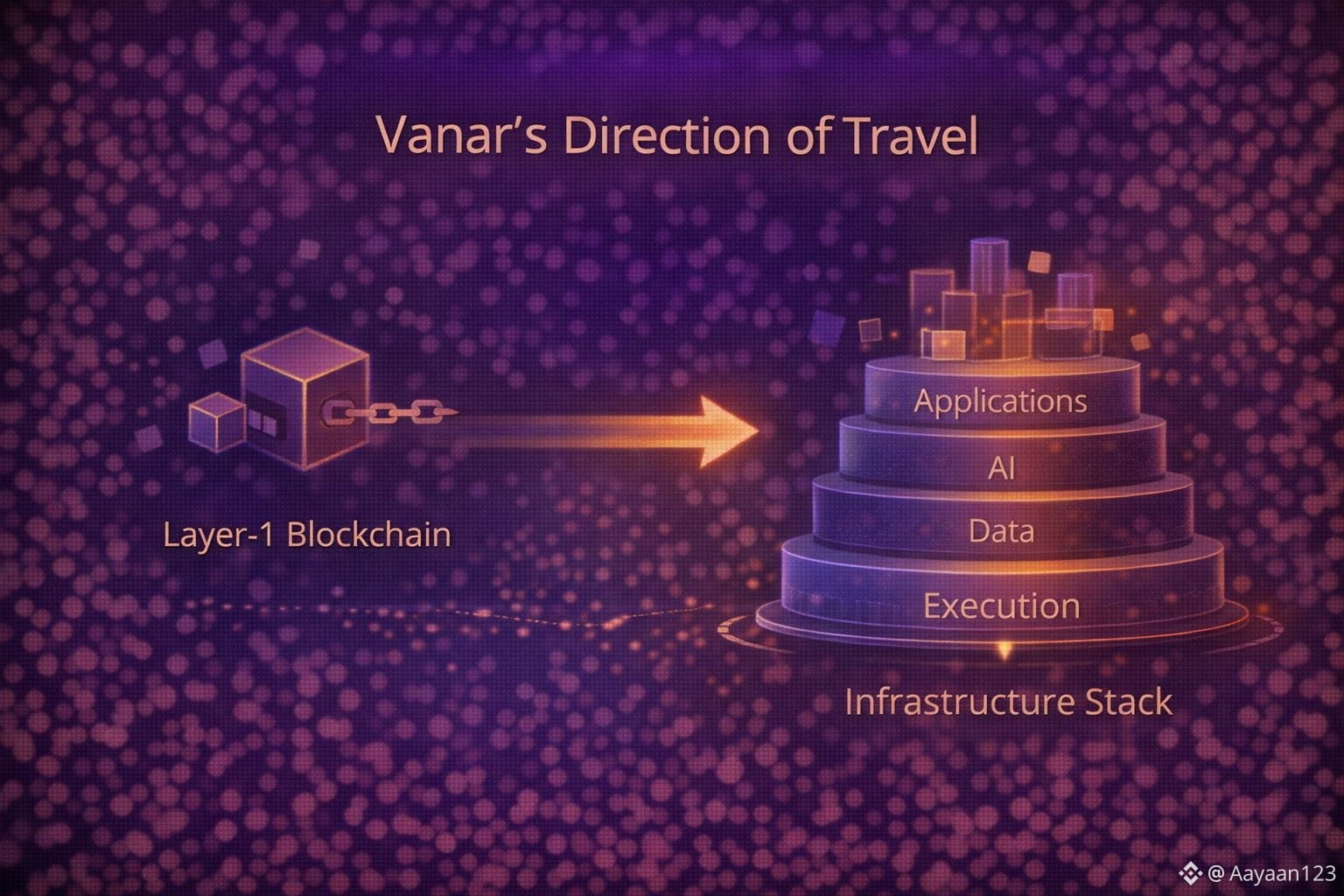
Vanar starts as a Layer-1, but it doesn’t seem interested in staying there.
At its foundation, Vanar already behaves differently from many L1s. The emphasis has never been on headline-grabbing throughput numbers or aggressive comparisons with competitors. Instead, the focus has been on stability, predictable costs, and real usage. That matters because it shapes what comes next. A chain designed to support live consumer products has very different constraints than one optimized for experimentation.
By the time you get to the 2026 horizon, the roadmap feels less like an expansion of a blockchain and more like the assembly of an infrastructure stack.
One of the key transitions is how Vanar treats AI. Rather than positioning AI as a layer that sits on top of everything else, the roadmap suggests a gradual integration into how the network understands and manages data. Neutron is an early signal of this. It’s not framed as a flashy AI feature, but as a way to make on-chain information more meaningful and accessible.
That framing matters. Before blockchains can feel usable to non-technical users, they need to become interpretable. Raw transactions and logs are fine for machines, but people need context. The roadmap’s emphasis on semantic data and reasoning tools points toward a future where interacting with a chain doesn’t require translating everything into developer language first.
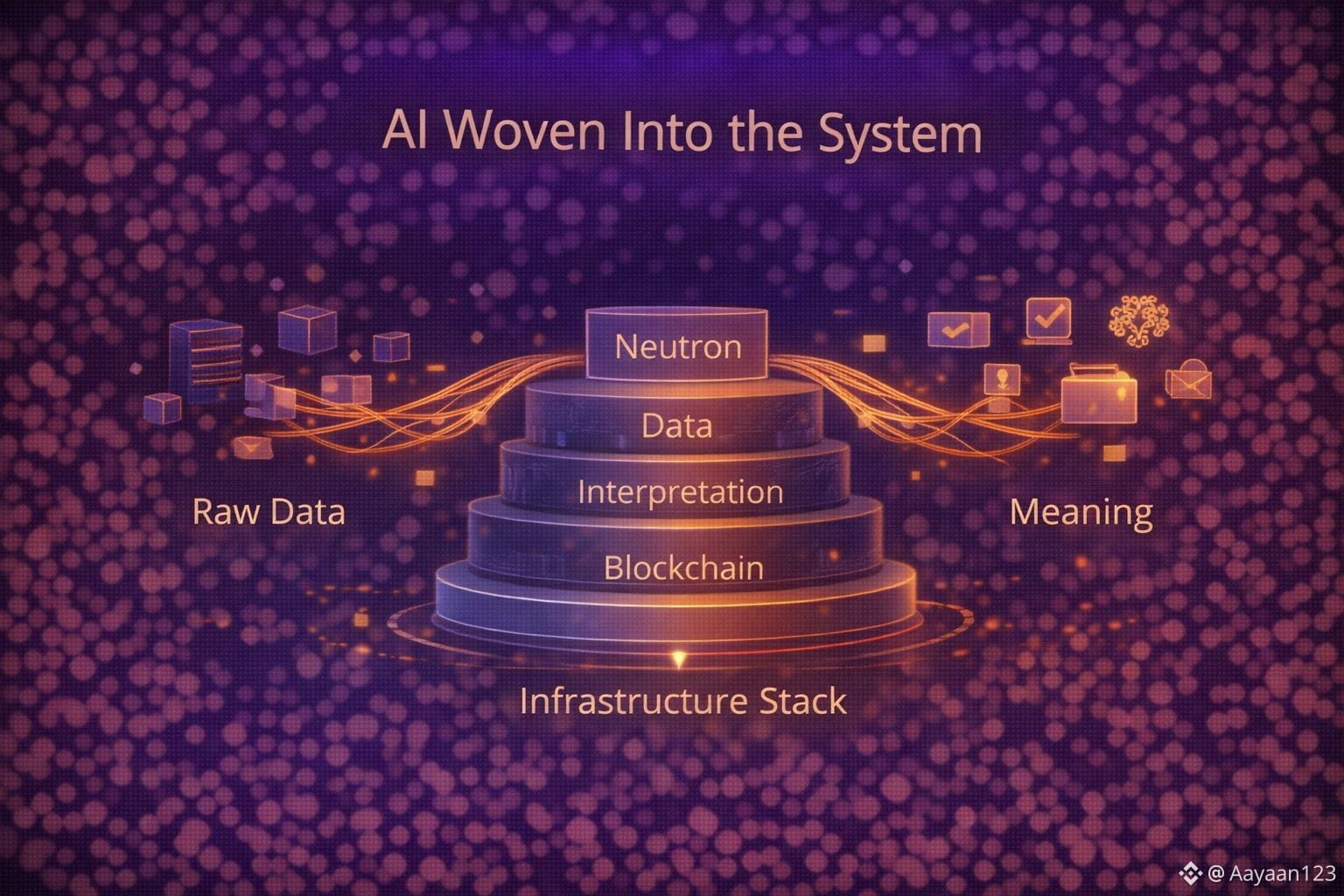
As these capabilities mature the role of the blockchain subtly changes. It stops being just a ledger and starts functioning more like a knowledge layer. That’s a significant shift. A system that can explain what happened, why it happened, and how it relates to past events is far more useful than one that only records outcomes.
Another thread running through the roadmap is abstraction. Vanar doesn’t appear to expect users to become more crypto-literate over time. If anything, the assumption seems to be that most users will remain indifferent to blockchain mechanics. The solution, then, isn’t education it’s design.
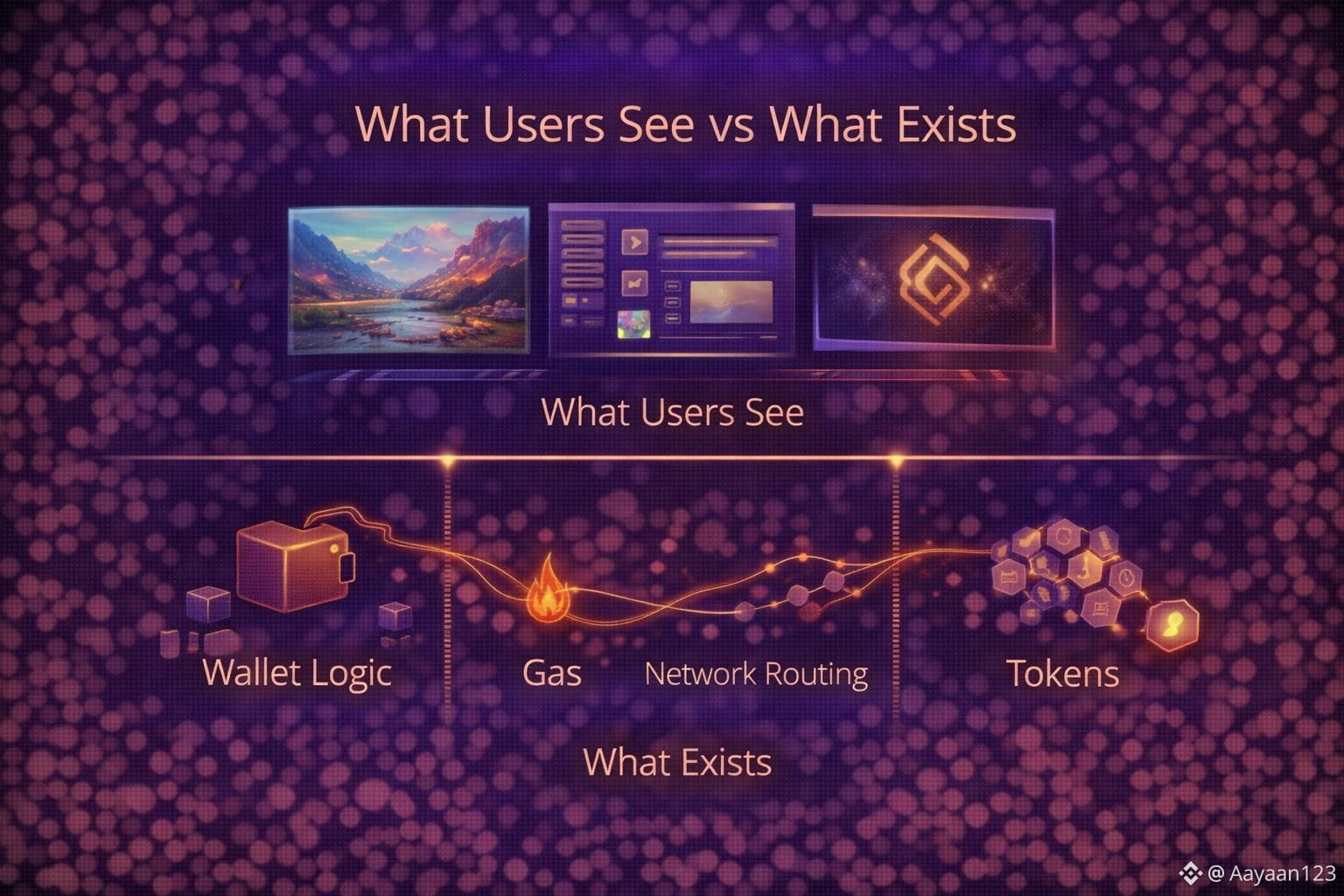
By 2026, much of the complexity that defines today’s Web3 experience is meant to be invisible. Wallet interactions, gas management, and network choices are increasingly treated as implementation details rather than user responsibilities. That’s a quiet but important acknowledgement that mainstream adoption won’t come from teaching everyone how chains work.
This mindset is especially relevant given where Vanar is already being used. Games, digital environments, and brand-driven platforms don’t reward complexity. They reward immersion. Every extra step or unfamiliar concept increases the chance that a user disengages. The roadmap reflects lessons learned from those environments, not from theory.
Scalability also shows up in a more grounded way than usual. Rather than chasing extreme throughput metrics, the focus is on sustaining consistent performance under real load. That’s a less glamorous problem, but a more honest one. Systems that work beautifully in low-traffic conditions often behave very differently once they’re actually used.
Vanar’s existing transaction history means future upgrades have to account for continuity. This isn’t a clean-slate chain planning hypothetical features. It’s an active network planning how to evolve without disrupting what’s already running. That constraint forces discipline. Backward compatibility, data persistence, and operational reliability become priorities.
The token model fits into this evolution in a similarly understated way. VANRY remains central to network operations but the roadmap doesn’t suggest a future where users are constantly interacting with the token directly. Instead it’s positioned as infrastructure fuel for the system rather than the focus of it.
That approach aligns with how mature platforms handle economics. Users care about outcomes, not mechanisms. If the system works smoothly, most people don’t need to know what token made it possible. Abstracting that complexity is not about hiding value; it’s about letting value express itself through experience instead of explanation.
Governance and decentralization also evolve along this path. Rather than being treated as ideological goals they’re framed as operational necessities. As the network supports more real activity decision-making structures need to become clearer and more resilient. The roadmap hints at gradual refinement here, not sudden transformations.
What’s notably absent from the roadmap is any sense of urgency to dominate narratives. There’s no suggestion that Vanar needs to redefine Web3 in a single cycle. The ambition feels longer-term and more patient. That can be uncomfortable in a space accustomed to rapid hype cycles, but it’s often how durable infrastructure is built.
By 2026, if this roadmap plays out as intended, Vanar may no longer be easily described as “just” a Layer-1. It would function more like a foundation for AI-assisted, consumer-facing Web3 systems where the blockchain itself is rarely the headline. That transition from visible technology to invisible infrastructure is subtle, but profound.
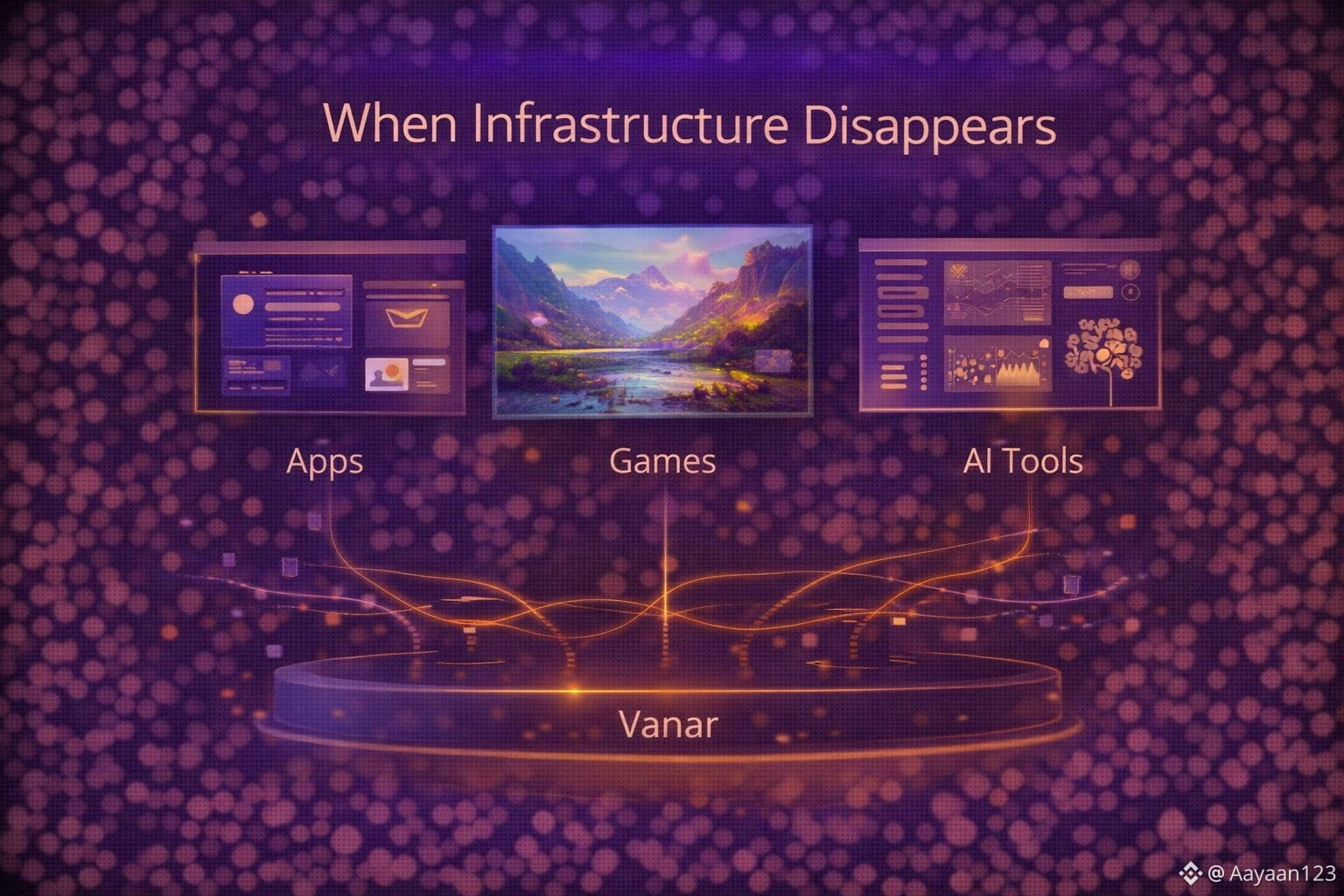
It’s also a reminder of how consumer Web3 is likely to evolve more broadly. The future probably won’t be defined by louder claims or more complex architectures. It will be shaped by systems that remove friction quietly, support real products reliably, and allow users to engage without needing to care how everything works underneath.
If Vanar’s roadmap tells us anything about where things are heading, it’s this: the next stage of Web3 won’t ask people to believe in blockchains. It will ask them to use things that happen to run on them and never feel the difference.