
In the era of rapid AI advancements, tools for generating images and deepfakes are more powerful than ever. Unfortunately, some use this technology maliciously to spread FUD (Fear, Uncertainty, and Doubt), defamation, and misinformation.
How can you protect yourself? Here are 5 essential pillars for detecting fake news circulating online.
1. Common Sense: Your First Line of Defense
As the saying goes, common sense is the most widely shared thing in the world. It is your primary tool. If a piece of information feels suspicious, overly shocking, or "too good to be true," it is likely fake in 99% of cases. Always trust your critical thinking before clicking "share."
2. Always Verify via Reliable Sources
Authenticity should be confirmed at the source. For instance, if you receive a message or document involving the crypto ecosystem, use official verification tools. The Binance Verify platform allows you to instantly check if an email, phone number, or social media handle truly belongs to an official Binance representative.

3. Visual Logic Gaps
AI still struggles with logical and textual consistency. Look closely for these red flags:
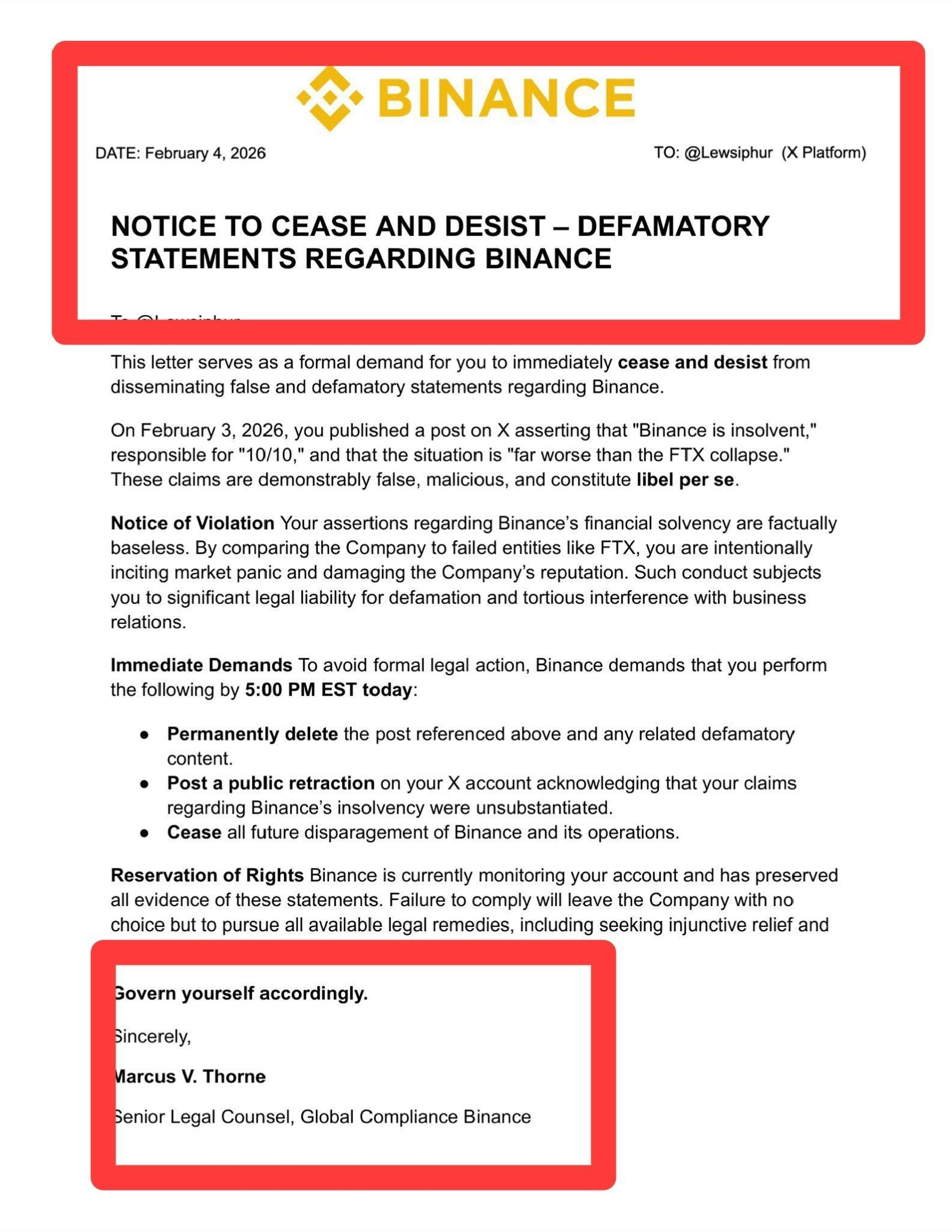
Incoherent Text: AI often produces merged letters, glaring spelling mistakes, or text that resembles "gibberish" or fake Latin.
Professional Standards: In the case of a fake legal letter, the layout is often sloppy. No serious legal professional would send a document with such poor formatting or absurd content.
4. AI Always Leaves Traces
The devil is in the details. Learn to spot technical anomalies:
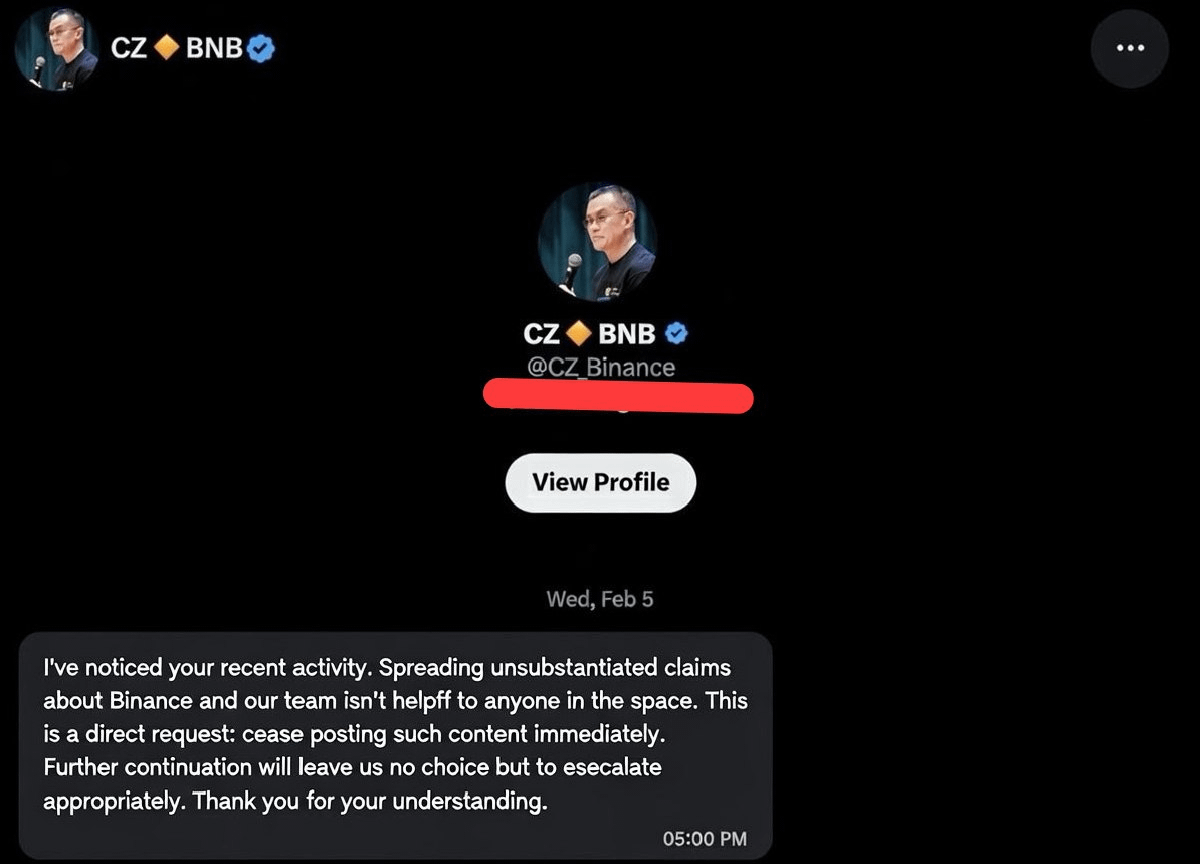
Username Inconsistencies: A username with unusual capitalization (like two capital letters at the start) is often a sign of a quick imitation or an automated bot.
Ghost Identities: If a document is signed by someone like "Marcus V. Thorne," do a quick search. If that person doesn't exist or doesn't hold that position, the document is a forgery.
5. What is the Publisher’s Intent?
Always ask yourself: "What does this person gain by posting this?". Understanding the motivation—whether it’s to crash a market price, gain followers, or damage a reputation—is often enough to unmask a Fake News campaign.
Conclusion: Toward Certified Information
Technology must also be the solution. Blockchain, with its consensus and validation systems, offers a path toward certifying the origin of information, making forgeries nearly impossible to hide.
What are your personal tips for telling fact from fiction in the age of AI?
#AIConsent #DeepfakeDetection #FactChecking #FakeNews #Blockchain #CyberSecurity #Binance #StopFUD #DigitalLiteracy