
I used to think audits happened in rooms. Spreadsheets, testnets, engineers with coffee and checklists. Then I watched a player log back into Virtua Metaverse after six months.
Their apartment was still there. Furniture arranged wrong, deliberately wrong, they'd left it that way, but there. Inventory matched. Neighbor's graffiti still on the shared wall. Nothing reset. Nothing reconciled. Just... held.
That scared me more than any bug report.
First I thought: snapshot. Must be snapshots, some clever caching that reconstructs state on demand. I went digging through Vanar's architecture, or whatever you want to call that Layer 1 blockchain under the hood, looking for the cheat. The compression. The trick that makes infinite storage feel free.
Couldn't find it.
Second guess: maybe nobody actually leaves. Maybe "offline" is just low-power simulation, NPCs wearing player masks, keeping the world warm. I started tracing dormant addresses, dead sessions, wallets that hadn't signed in weeks. The chain still knew them. Not as ghosts. As debt.
Every item, every coordinate, every half-finished trade, still accounted for, still consuming whatever resources persistence costs.
"Persistent worlds" is what we call it in pitches. Sounds magical. Like the cloud, or the metaverse itself, just... remembers. But memory isn't magic. It's pressure. Continuous pressure. A gaming world that never wipes is a chain that never gets to start over, never archives, never breathes. The cracks don't hide in logs. They show up as floating furniture, duplicated hats, players who remember owning things the ledger swears they never bought.
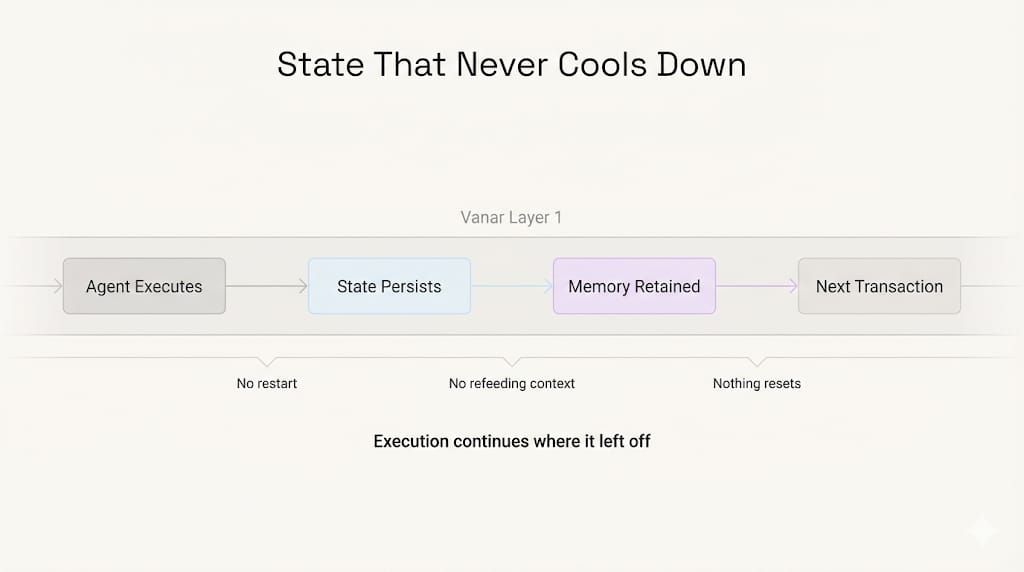
I kept using the word "audit." Then I hated it. Audits imply someone arrives, checks, leaves. This is more like... exposure. The Virtua Metaverse doesn't get audited. It audits itself by existing.
Every long session, every item history stretching back years, every identity that persists across the multi-product ecosystem, from racing games to social spaces to whatever they build next, it's all one continuous stress test.
Third guess was the honest one: maybe the infrastructure is just stubborn.
Not smart. Not elegant. Just unwilling to forget. That refusal costs something. Blockspace, complexity, the weight of every decision compounding.
But players don't see cost. They see their apartment. Their stuff. The wall they tagged. And they trust it, wrong word, "trust", they expect it, the way you expect your own memory not to lie.
That's the real audit. Not whether the chain is correct. Whether it's still there when nobody's watching.
Vanar holds. "Holds" might be too neat a word.