

Cryptocurrency can be very profitable, but it is also very risky. Prices can go up or down by 10%, 20%, or even 50% in a single day. Many people lose money in crypto not because crypto is bad, but because they do not manage risk properly.
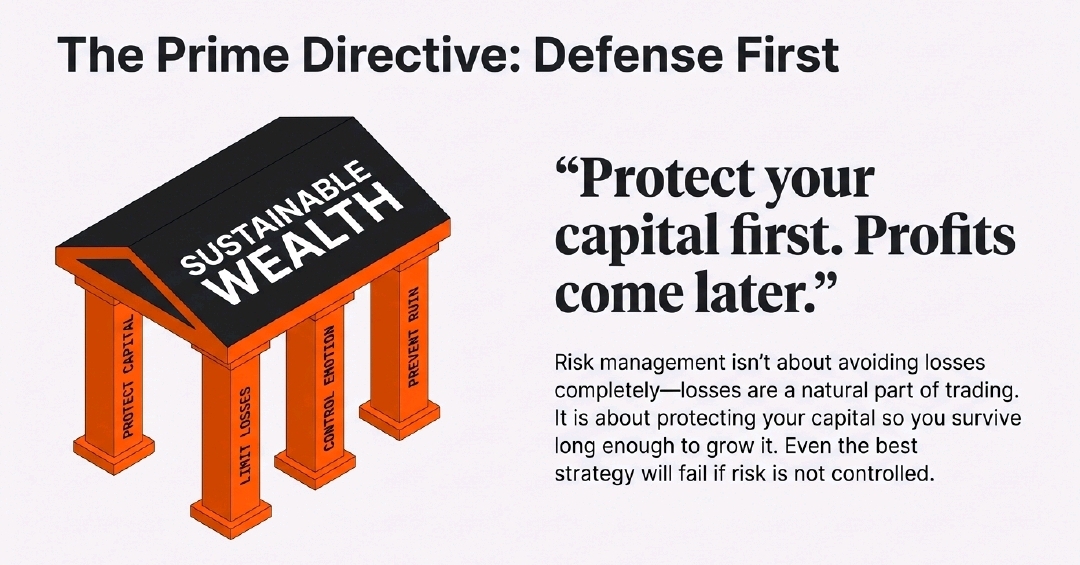
Risk management is not about avoiding losses completely. Losses are part of investing and trading. Risk management is about protecting your money so you can survive long enough to grow it.
1. What Is Risk Management in Crypto?
Risk management means:
Protecting your capital (money)
Limiting losses when trades go wrong
Avoiding emotional decisions
Making sure one bad trade does not destroy your account
In crypto, risk management is more important than strategy. Even the best strategy will fail if risk is not controlled.M
any professional traders say:
“Protect your capital first. Profits come later.”
2. Why Crypto Is Riskier Than Traditional Markets
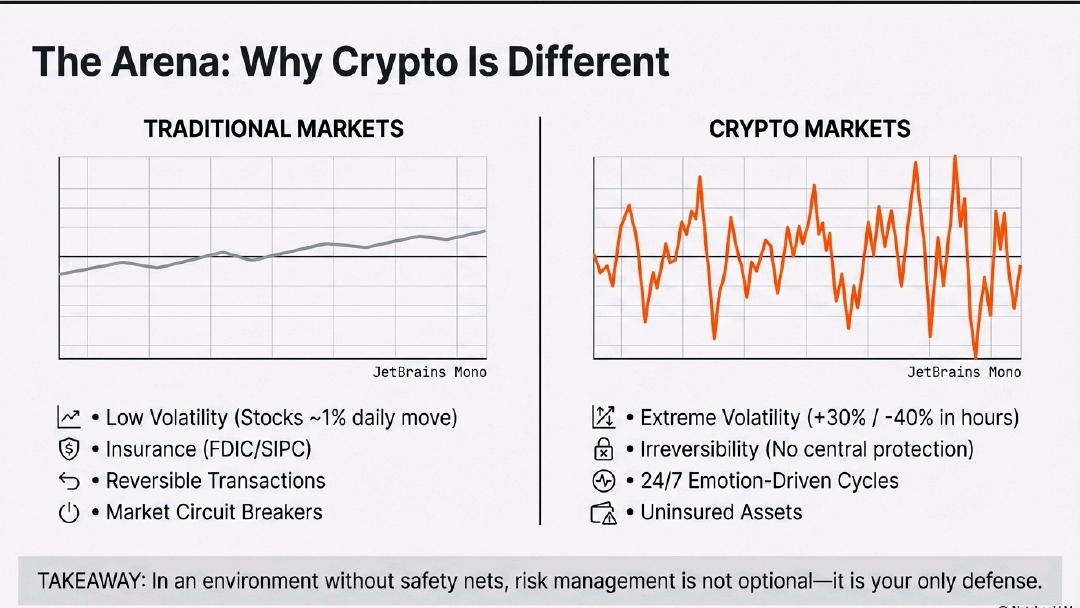
Crypto markets are more dangerous because:
🔹 High Volatility
Bitcoin and altcoins can move very fast. A coin can:
Go up 30% in one day
Drop 40% in a few hours
🔹 No Central Protection
Unlike banks, crypto transactions:
Cannot be reversed
Are not insured in most cases
🔹 Emotional Market
Crypto markets are driven by:
Fear
Greed
News
Social media hype
Because of this, risk management is not optional in crypto it is necessary.
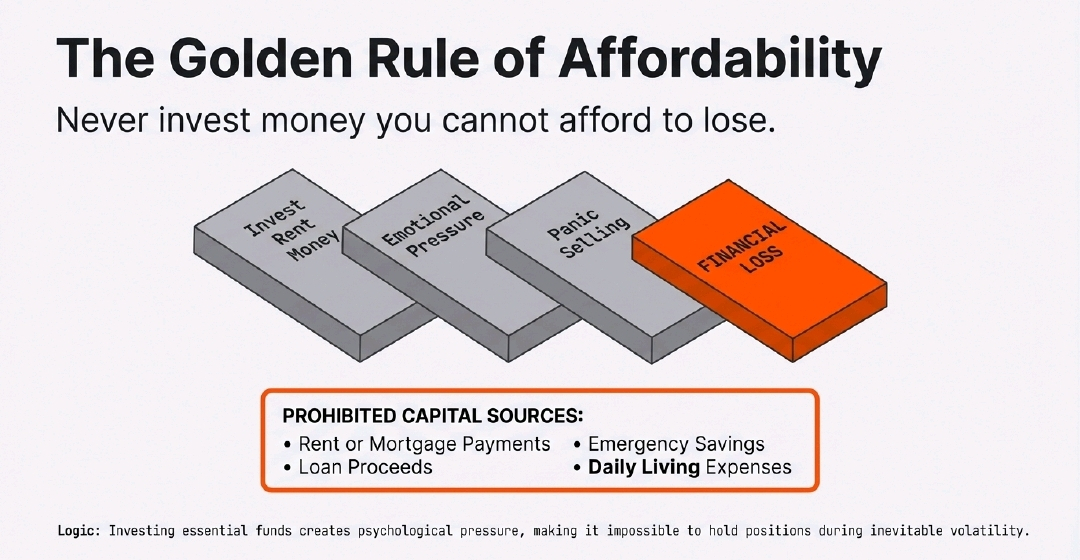
3. The Golden Rule: Never Invest Money You Can’t Afford to Lose
This is the most important rule.
You should never invest:
Rent money
Loan money
Emergency savings
Daily living expenses
Why?
Because emotional pressure leads to:
Panic selling
Bad decisions
Overtrading
Crypto should be treated as high-risk investment, not guaranteed income.
4. Position Sizing: Don’t Put All Your Money in One Trade
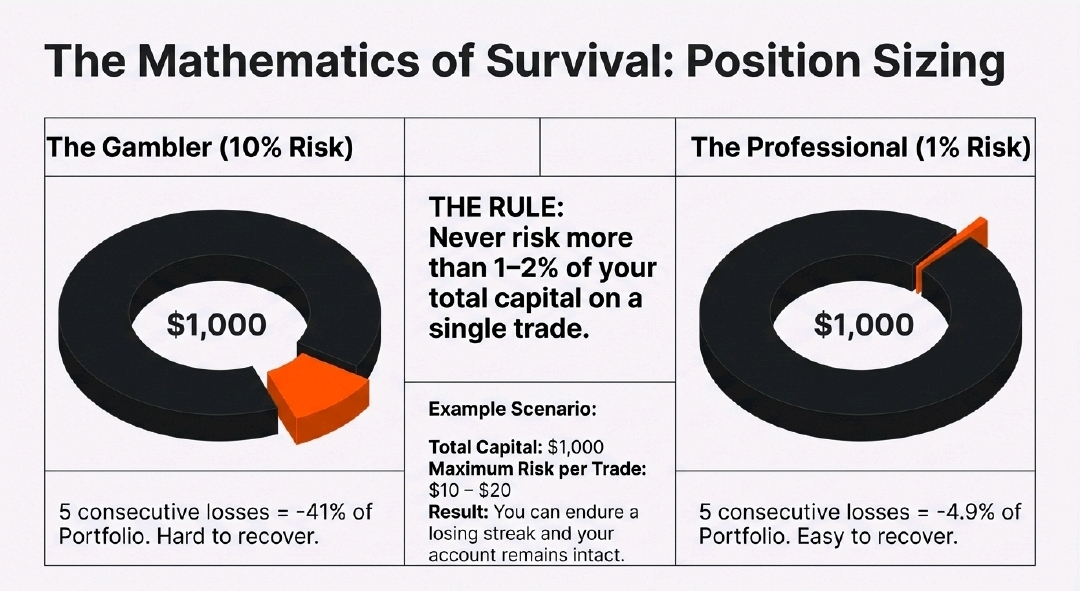
Position sizing means how much money you use in one trade.
A Simple Rule:
Never risk more than 1–2% of your total capital on one trade
Example:
If you have $1,000:
Maximum risk per trade = $10 to $20
 This way:
You can lose multiple trades
Your account still survives
Many beginners lose money because they go “all-in” on one coin.
5. Stop-Loss: Your Safety Net
A stop-loss is an order that automatically closes your trade if price goes against you.
Why Stop-Loss Is Important
Protects you from big losses
Removes emotional decision-making
Helps you sleep better
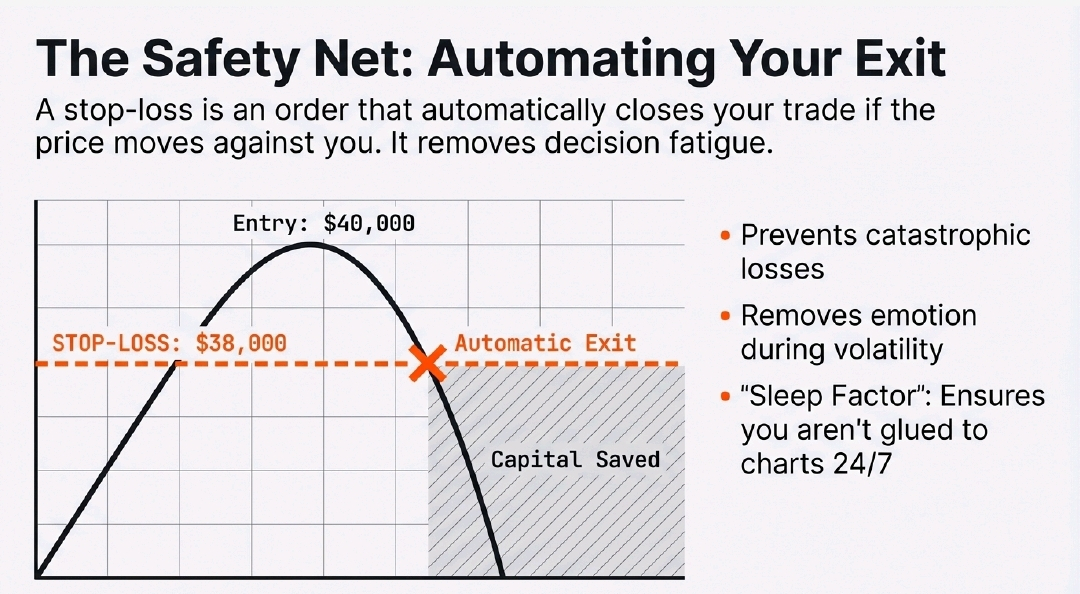
Example:
You buy Bitcoin at $40,000
You set stop-loss at $38,000
If price falls to $38,000:
Trade closes automatically
Loss is controlled
Without stop-loss, a small loss can become a huge one.
6. Risk–Reward Ratio: Think Before You Trade
Risk reward ratio compares:
How much you can lose
How much you can gain
Good Risk–Reward Example:
Risk: $100
Reward: $300
Ratio: 1:3
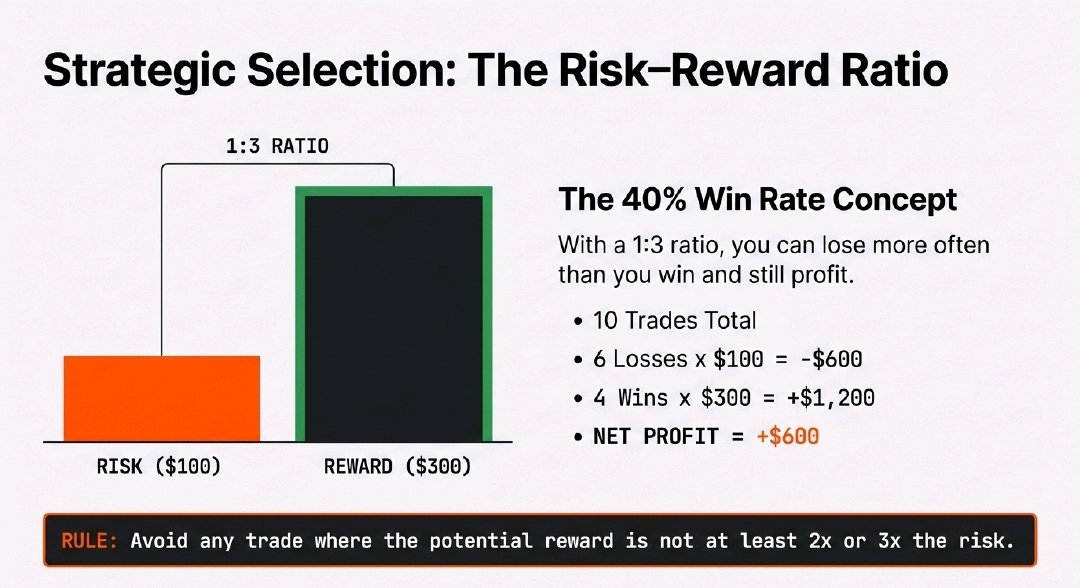
This means:
Even if you win only 4 trades out of 10
You can still be profitable
Avoid trades where:
Risk is bigger than reward
7. Diversification: Don’t Depend on One Coin
Putting all your money in one coin is dangerous.
Smart Diversification Means:
Large coins (BTC, ETH)
Some strong altcoins
Maybe stablecoins for safety
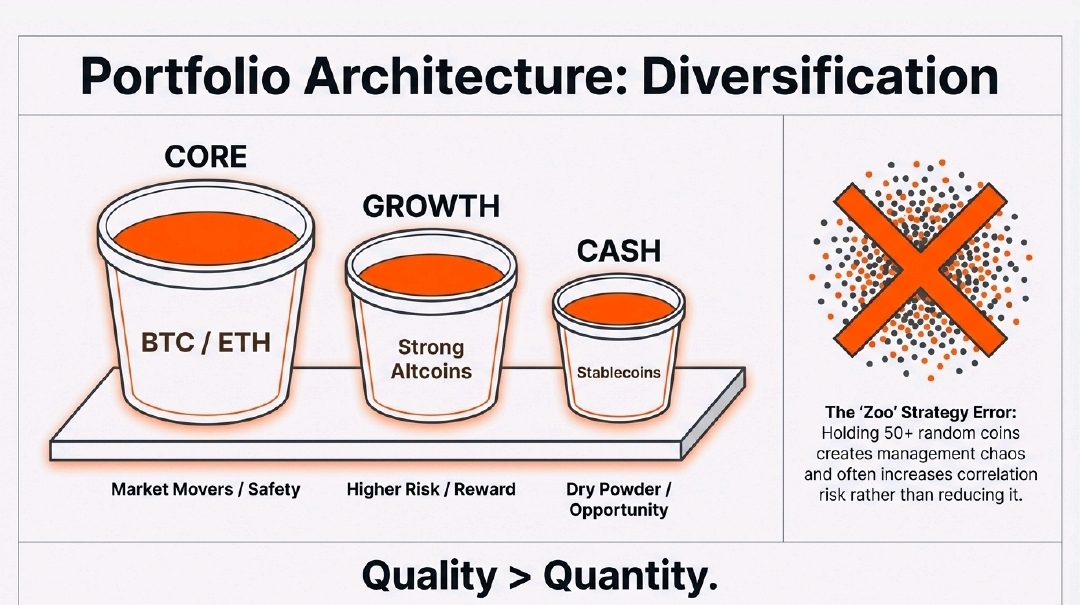
Avoid Over-Diversification
Owning 50 random coins:
Is hard to manage
Often increases risk
Quality is better than quantity.
8. Avoid High Leverage (Especially for Beginners)
Leverage allows you to trade with borrowed money.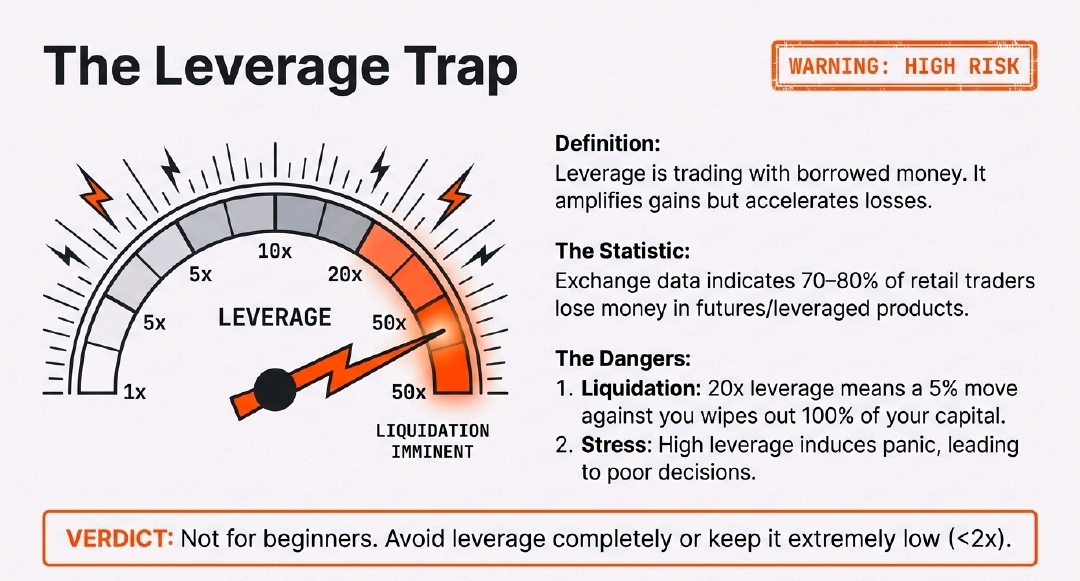
Example:
10x leverage means $100 controls $1,000
20x leverage can liquidate you in seconds
Data from exchanges shows:
Over 70–80% of retail traders lose money in futures trading
High leverage:
Increases stress
Increases liquidation risk
Is not beginner-friendly
If you are new, avoid leverage or use very low leverage.
9. Emotional Control: The Hidden Risk
Emotions are one of the biggest reasons people lose money.
Common Emotional Mistakes:
Fear of missing out (FOMO)
Panic selling
Revenge trading
Overconfidence after wins
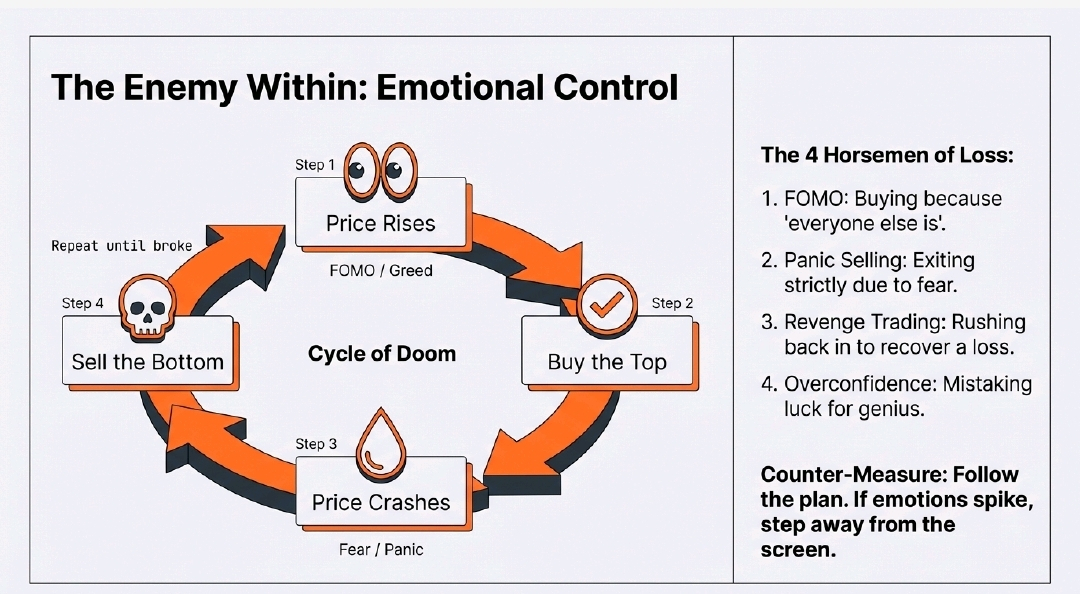
How to Control Emotions:
Follow a trading plan
Accept losses as part of the game
Take breaks after losses
Good traders manage emotions better than charts.
10. Security Risk: Protect Your Crypto from Theft
Risk management is not only about trading it is also about security.
Best Security Practices:
Use hardware wallets for long-term holding
Enable 2FA on exchanges
Never share private keys
Avoid unknown links and fake giveaways
Many people lose crypto not from trading, but from scams and hacks.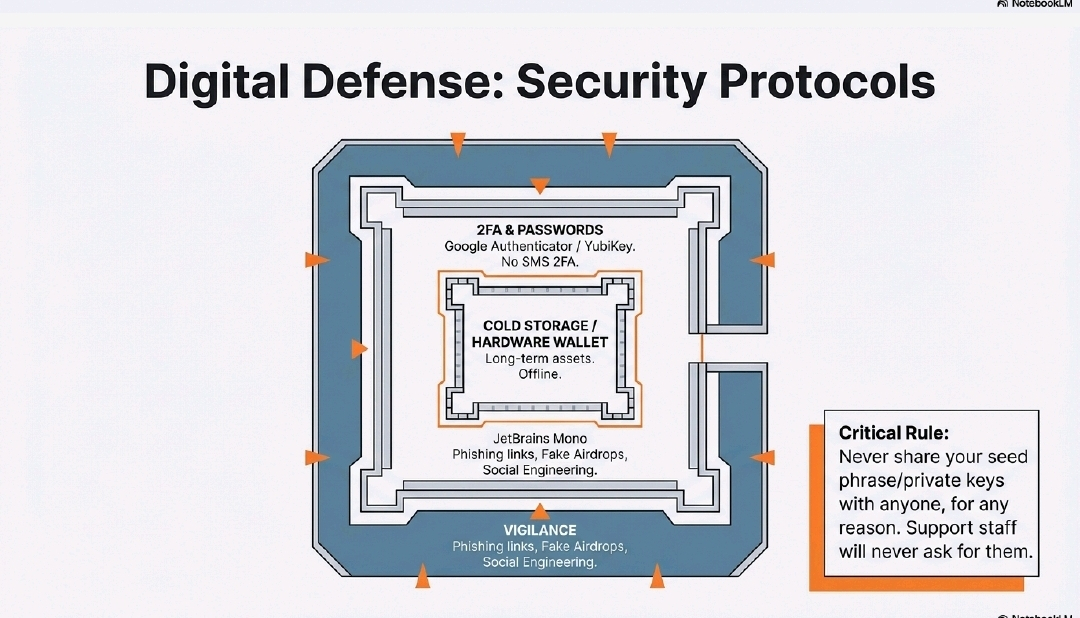
11. Have a Clear Plan (Before You Invest)
Before entering any trade, ask:
Why am I buying this?
Where will I exit in profit?
Where will I exit in loss?
How much am I risking?
If you cannot answer these questions, do not enter the trade.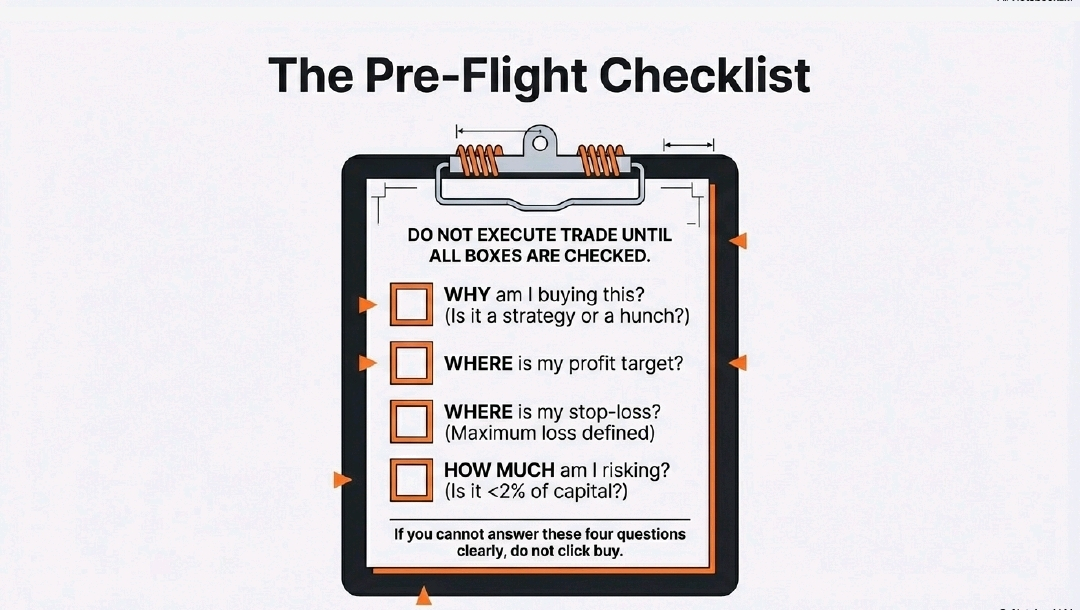
12. Long-Term Investors Also Need Risk Management
Even long-term holders should:
Avoid buying only at market tops
Use dollar-cost averaging (DCA)
Rebalance portfolio sometimes
Keep expectations realistic
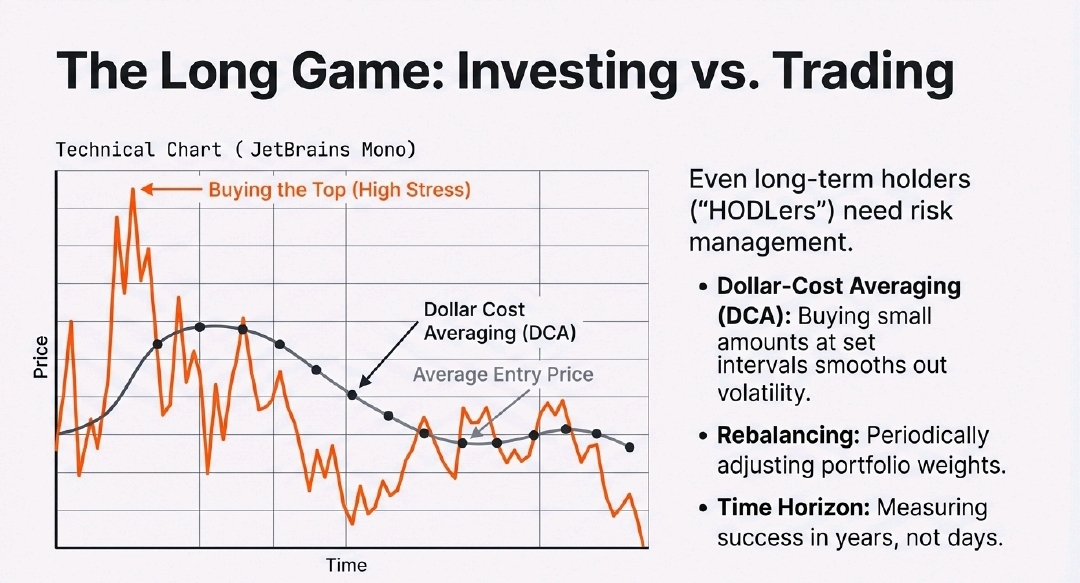
Long-term investing reduces stress, but risk still exists.
13. Common Risk Management Mistakes to Avoid
Trading without stop-loss
Overtrading
Copying others blindly
Believing “guaranteed profits”
Ignoring market conditions
If something sounds too good to be true, it usually is.
14. Final Thoughts
Crypto is not a get-rich-quick scheme. It is a high-risk, high-reward market. Those who survive long-term are not the smartest or luckiest but the ones who manage risk properly.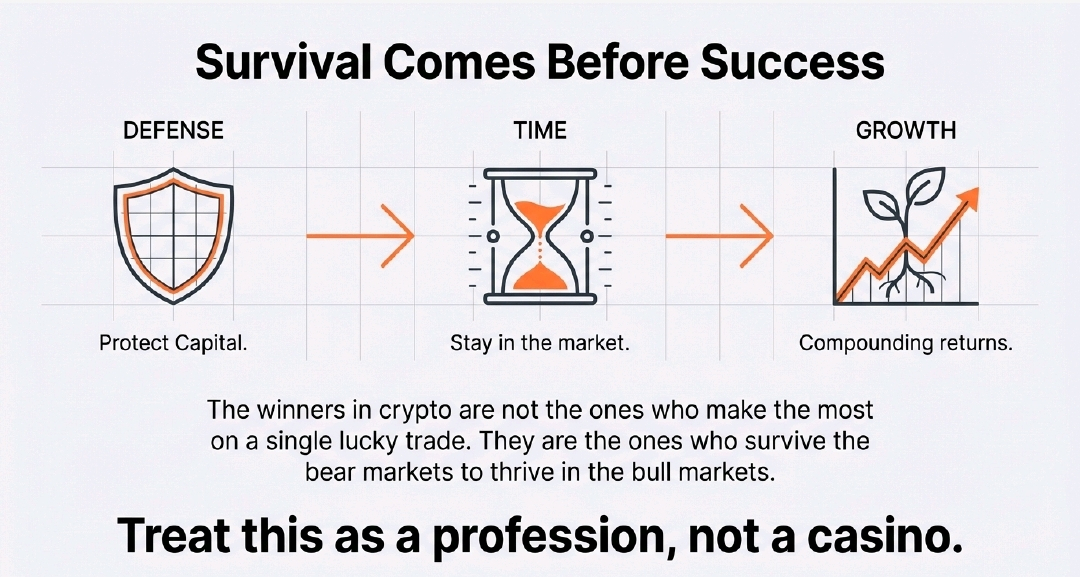
If you protect your money:
You stay in the market longer
You learn from mistakes
Profits eventually follow
In crypto, survival comes before success.