What is DUSK coin, and why are people slowly starting to talk about it more seriously?
DUSK coin is the native utility asset of the Dusk Network, a blockchain designed with one clear priority: privacy for real-world finance. In a space filled with fast chains, loud narratives, and short-term hype, Dusk takes a quieter but more fundamental approach. It asks a simple question that many projects avoid. Can blockchain truly support financial systems if privacy is treated as an afterthought?
Why is privacy such a critical issue in blockchain today?
Most public blockchains are transparent by default. Every transaction, wallet balance, and smart contract interaction can be viewed by anyone. While this openness helps with trust and verification, it creates serious problems when applied to real financial use cases. Would a company want its payroll visible? Would an institution expose investment flows to competitors? Would individuals want their entire financial history permanently public? Dusk exists because, for most people and businesses, the answer is no.
So how does Dusk Network solve this problem differently?
Dusk uses zero-knowledge cryptography to verify transactions without revealing sensitive data. Instead of exposing transaction details, the network proves that a transaction is valid without showing the underlying information. This allows privacy and trust to coexist. The blockchain remains verifiable and secure, but users retain confidentiality. This is not about hiding activity. It is about protecting necessary information.
Is Dusk just another privacy chain focused on anonymity?
That is a common misunderstanding. Dusk is not built for total anonymity. It is built for selective disclosure. This means data stays private by default but can be revealed when legally or contractually required. This design choice makes Dusk suitable for regulated environments such as tokenized securities, compliant DeFi, and enterprise finance. Instead of fighting regulation, Dusk aligns with it.
Where does DUSK coin fit into the ecosystem?
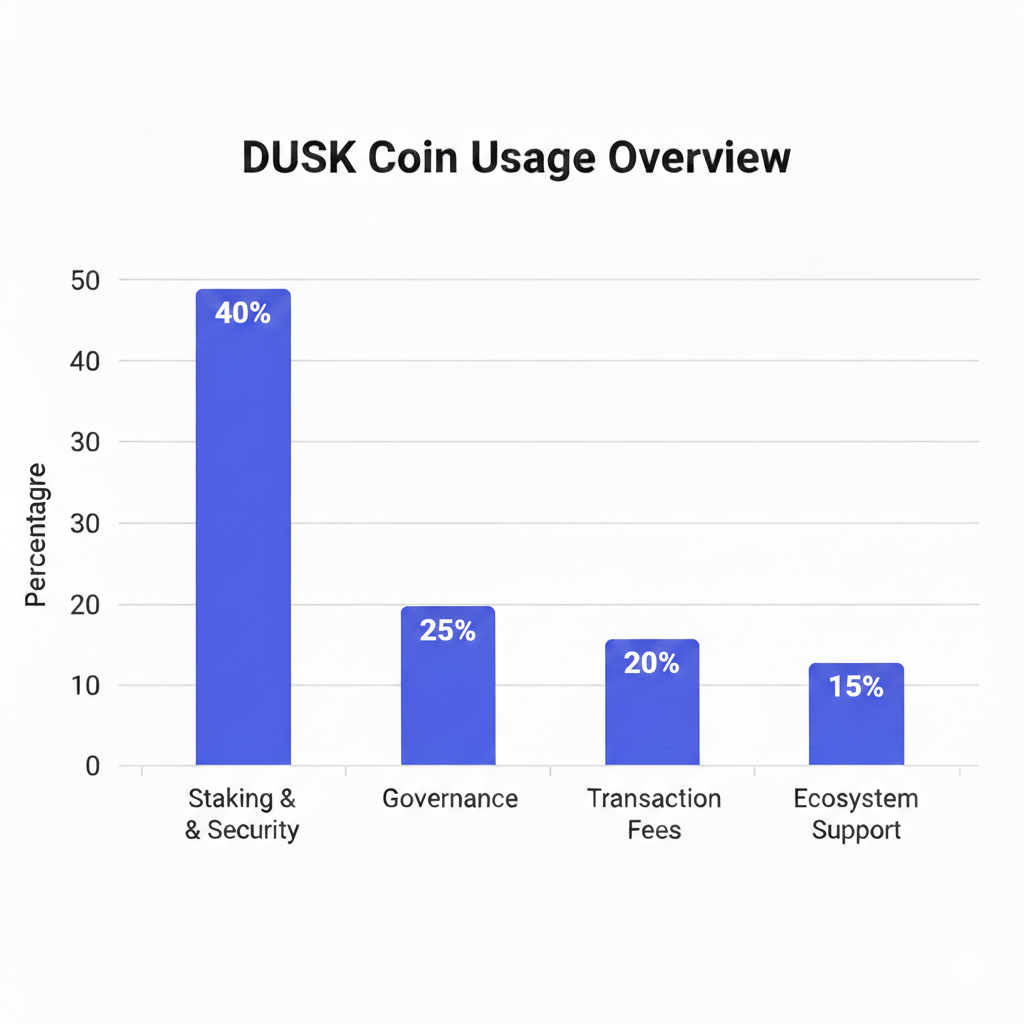
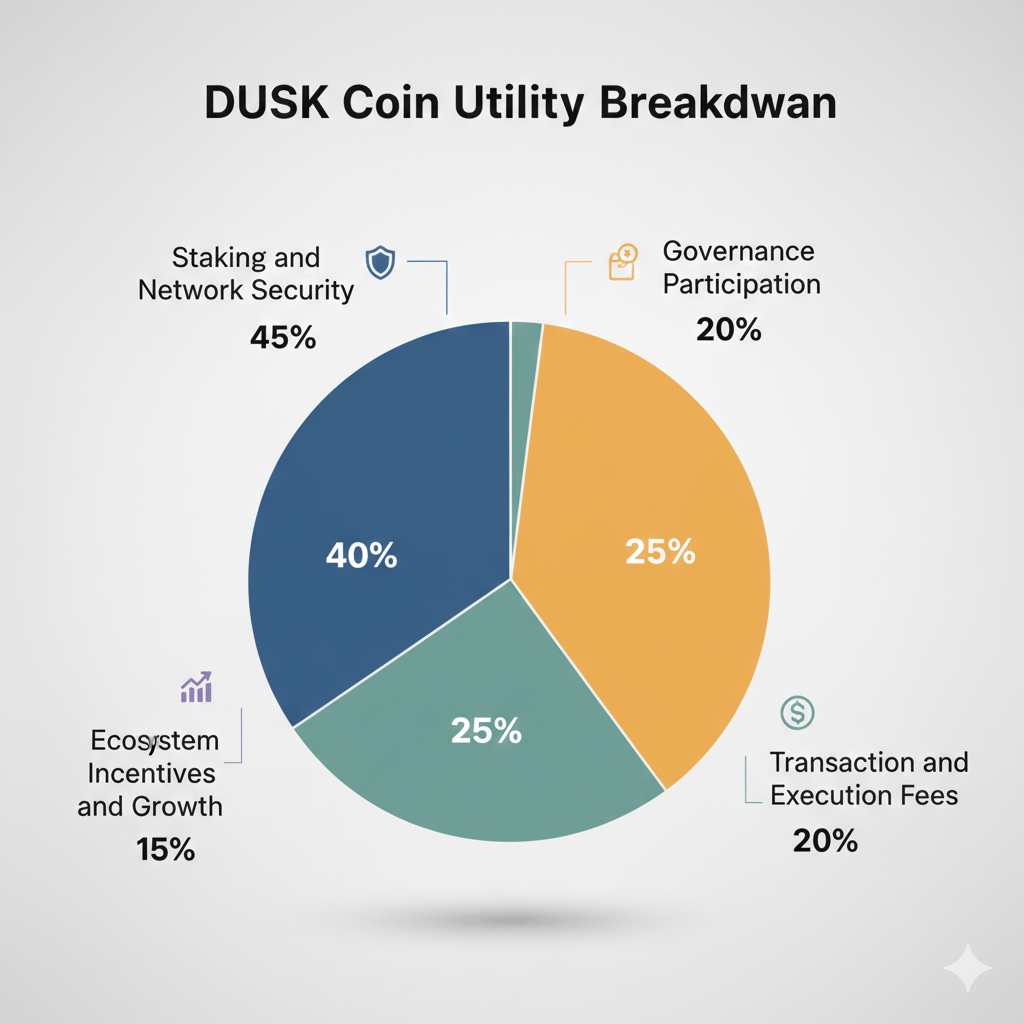
DUSK coin is central to how the network functions. Validators stake DUSK to participate in consensus and secure the blockchain. Transaction fees are paid in DUSK, and governance decisions rely on DUSK holders. This ensures that the token is tied directly to network activity. As adoption grows, the demand for DUSK grows naturally through usage, not just speculation.
Can a privacy-focused blockchain remain decentralized and secure?
This is one of the most important questions. Dusk addresses it through a privacy-preserving Proof-of-Stake mechanism. Validators do not need to access private transaction data to confirm validity. They verify cryptographic proofs instead. This allows the network to remain decentralized while maintaining confidentiality. It is a careful balance, but one that Dusk is intentionally designed to maintain.
Is Dusk Network built for experimentation or real-world adoption?
Dusk is clearly aimed at real-world use. Its infrastructure supports confidential smart contracts, identity-aware assets, and tokenized financial instruments. These are not experimental ideas. They are real problems faced by institutions that want to use blockchain technology without exposing sensitive data. Dusk positions itself as financial infrastructure rather than a speculative trend.
Does this make DUSK a long-term project?
That depends on how the market values privacy in the future. However, as regulations tighten and institutions move toward blockchain-based solutions, privacy is likely to shift from being optional to essential. Dusk is building for that future, even if it means slower recognition today.@Dusk #dusk $DUSK