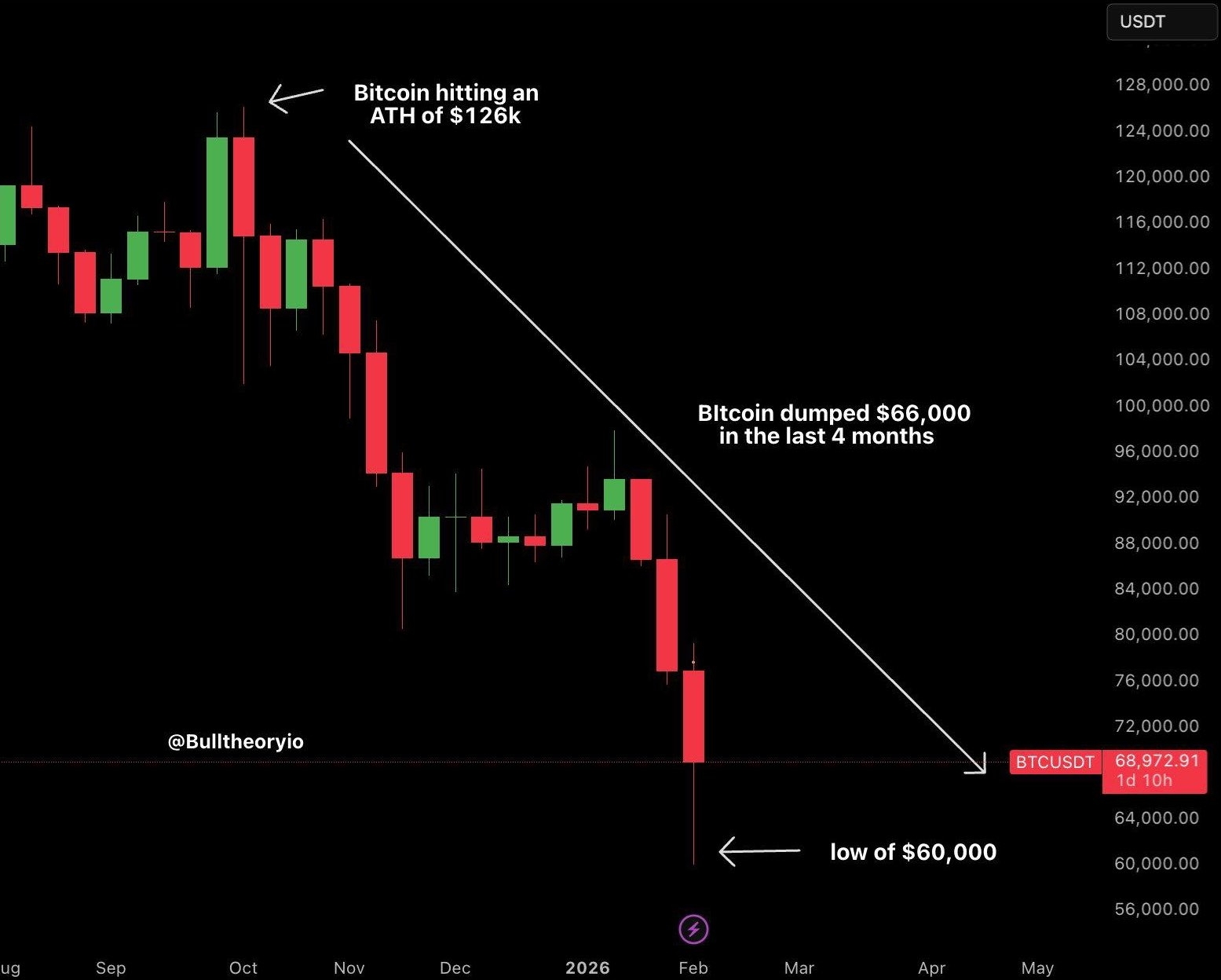
@Bitcoin is down ~53% in just four months — and that kind of move without a single shock event isn’t normal.
Yes, macro pressure matters, but it’s not the full story. The bigger driver is how Bitcoin’s price is discovered today. Markets are no longer dominated by pure spot buying and selling. A huge share of activity now flows through synthetic exposure — futures, perps, options, ETFs, lending desks, wrapped $BTC , and structured products.
This means price can fall even without real coins being sold. Heavy short positioning, long liquidations, funding flips, and open-interest flushes can all push price lower on their own. That’s why recent sell-offs look controlled and technical, not emotional — liquidation cascades are doing the work.
At the same time, broader forces are adding pressure:
• Global risk-off across stocks and commodities
• Rising geopolitical uncertainty
• Shifting expectations around future Fed liquidity
• Weakening economic data and recession fears
Crypto sits at the far end of the risk curve, so it reacts harder when capital pulls back.
What we’re seeing isn’t retail panic — it’s structured de-risking. Large players unwinding exposure tends to cap bounces and delay strong recoveries.
Bottom line:
Bitcoin’s supply cap hasn’t changed, but effective tradable pressure has expanded through leverage and derivatives. Until positioning stabilizes and macro conditions ease, rallies can happen — but sustained upside will remain difficult.