The Dollar You Can Finally Move Freely: Plasma and the Quiet Revolution in Stablecoin Money
There’s a strange little heartbreak baked into today’s “internet money.” You can hold a perfectly stable digital dollar on your phone—sometimes the safest thing you own in a shaky economy—and yet the moment you try to send it, you’re hit with a blunt reminder that the rails weren’t built for real people. You need a separate token just to pay a fee. You need to understand gas, networks, confirmations, and failure cases. You need to be calm while your money hovers in limbo for seconds—or minutes—when what you really need is certainty, now.
For someone paying rent, sending money home, topping up a friend, or settling a supplier invoice, that friction isn’t “crypto learning curve.” It’s stress. It’s embarrassment at the counter. It’s a missed payment window. It’s that ugly feeling of watching a number leave your wallet… and not knowing when it will arrive.
Plasma begins with a very human premise: stablecoins are already money for millions of people, so the experience should stop feeling like a science project. It treats stablecoin settlement the way payment networks treat settlement—fast, dependable, and designed around what people actually do all day: send value. Not trade memes. Not chase volatility. Just move “dollars” from one place to another without a lecture.
That’s why Plasma’s choice to stay fully EVM compatible matters more than it sounds. It’s not only a developer convenience; it’s a bridge between worlds. Ethereum’s ecosystem is the largest familiar language in this space: wallets, contracts, tools, and integrations already speak it. Plasma doesn’t ask builders to abandon that gravity. It keeps the Ethereum shape—using an Ethereum execution client like Reth—so the builders who already know how to ship products can show up and start building without rewriting their whole universe. This is a subtle kind of kindness: it reduces the time between an idea and something people can actually use.
But the real emotional difference is what happens after you press “send.”
Most blockchains make you wait with that tiny knot in your stomach: “Is it final? Should I refresh? What if it fails?” Plasma leans toward sub-second finality with a BFT-style consensus approach (PlasmaBFT, based on Fast HotStuff concepts) because settlement isn’t a game. The whole point of money is confidence. In retail payments, every second of uncertainty feels like a lifetime. In business, uncertainty turns into risk, and risk turns into overhead, paperwork, and hesitation. Plasma is trying to remove that hesitation and replace it with the simple feeling people expect from modern money: when it’s sent, it’s settled.
Then it tackles the biggest everyday pain point in stablecoins—the small indignity that has quietly scared away countless normal users: the gas token problem. You have dollars, but you can’t move dollars without buying some other asset first. It’s like having cash but being told you need a special coupon to hand it to someone.
Plasma’s answer is emotionally obvious, even if the engineering is not: basic stablecoin transfers shouldn’t punish you for not holding a separate token. The idea of gasless USDT transfers is more than a feature; it’s an apology to every person who has ever downloaded a wallet, received stablecoins, and then got stuck—unable to send the money they already owned. It’s Plasma saying, “No, you shouldn’t have to be a trader to move dollars.”
And for the moments when fees do exist, Plasma’s stablecoin-first gas concept tries to keep you in the currency you actually care about. People don’t budget their lives in “fractions of a volatile token.” They budget in stable value. This shift is small but psychologically enormous: it makes costs legible. It makes the network feel predictable. It turns “blockchain fees” from a mysterious tax into a straightforward price you can understand in your own terms.
There’s also a quieter kind of pain Plasma seems to recognize: the cost of being watched. Transparency is powerful, but it can be brutal in real life. Businesses don’t want payroll broadcast to the world. Families don’t want private support payments to become public artifacts. Treasuries don’t want their entire operational heartbeat visible to competitors. Plasma’s direction toward confidentiality features—privacy with the option for disclosure when necessary—speaks to the reality that money isn’t just math. Money is relationships, dignity, security, and sometimes survival. People need the ability to move value without turning their lives into a public dataset.
And then there’s the question people don’t ask out loud until something goes wrong: who can stop this? Who can lean on the rails?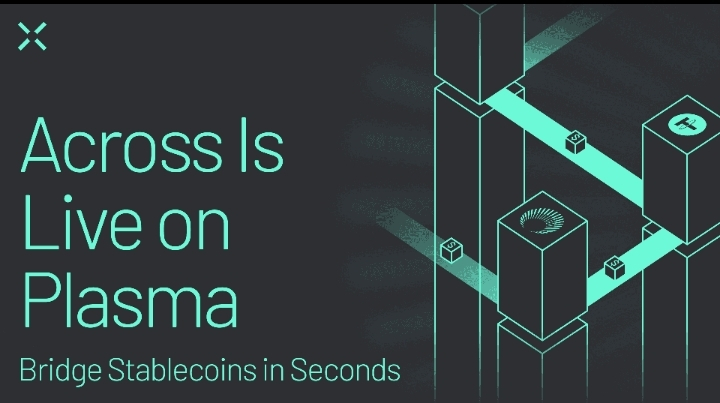
Plasma’s “Bitcoin-anchored” security narrative reaches for something deeper than throughput charts. Bitcoin is not simply a chain; it’s a symbol of neutrality—the idea that no one gets to rewrite the rules on a whim. By tying its story to Bitcoin’s credibility—through BTC integration and the broader anchoring concept—Plasma is trying to say: “These rails aren’t built to be steered by whoever shouts the loudest. They’re built to last when politics, platforms, or payment providers change their minds.”
That kind of neutrality matters most in the places where stablecoins matter most. In high-adoption markets, stablecoins aren’t a hobby—they’re a lifeline. A way to store value when local currency bleeds. A way to get paid when banking rails are slow, expensive, or exclusionary. A way to move money across borders without losing a day’s wages to fees. The people using stablecoins in those contexts don’t want a philosophy lecture. They want a guarantee that the rails will work tomorrow the way they worked today.
For institutions, the emotional trigger looks different, but it’s still emotional: fear of uncertainty. Banks, fintechs, payment processors, and large treasuries don’t adopt “interesting.” They adopt reliable. They want fast finality so settlement risk doesn’t haunt every transaction. They want predictable fees because unpredictability kills margins. They want privacy because operational transparency is a liability. They want neutrality because being dependent on a single gatekeeper is a strategic weakness. Plasma is positioning itself to meet those instincts head-on.
None of this means Plasma is automatically “the answer.” The truth is, this category is unforgiving. Gasless transfers are beautiful but can attract abuse if not tightly constrained. Bridges unlock liquidity but widen the attack surface. Fast finality is compelling, but decentralization and validator distribution must mature to keep security assumptions honest. And stablecoin rails live under the shadow of regulation—constantly shifting, different in every jurisdiction, and often shaped by events outside the industry’s control.
But Plasma’s vision has a clarity that’s hard to ignore: it’s trying to make stablecoins feel like money you can actually use—without turning every transfer into a technical hurdle, without making people buy a second asset just to move the first, without forcing everyone to wait in anxious uncertainty, and without quietly handing control to whoever has the best relationships with gatekeepers.
In a world where millions already treat stablecoins as their practical dollar, the most radical thing Plasma is trying to do is also the simplest: make sending stable value feel normal. Not heroic. Not complicated. Just… human.
If you tell me who the audience is—retail users, institutional decision-makers, or crypto-native developers—I can keep this same emotional tone but tailor the vocabulary and examples so it hits even harder for that exact reader.