
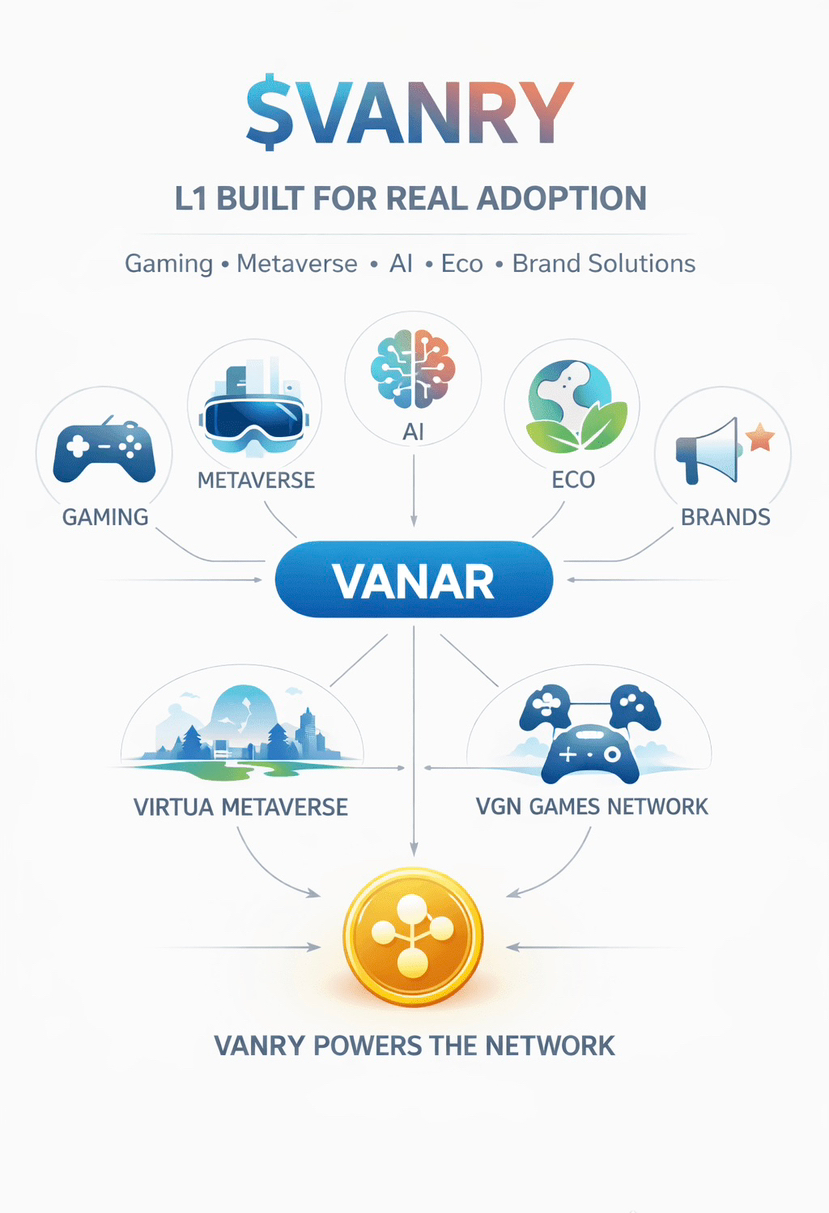
Vanar Chain is entering 2026 with a gaming strategy that feels unusually grounded for Web3. Instead of chasing speculative hype, the project is assembling a network of long-term partners that bring real players, real brands, and real production pipelines into the VGN Network. What stands out to me is how these partnerships are not treated as logos on a slide deck, but as distribution engines that convert existing Web2 demand into on-chain activity powered by $VANRY. The result is a gaming stack designed to scale toward tens of millions of active users while keeping blockchain friction almost invisible.
Viva Games Studios: Mass-Market Gaming Meets True Digital Ownership
The partnership with Viva Games Studios sits at the heart of Vanar Chain’s gaming expansion. With more than 700 million downloads across mobile titles tied to major entertainment brands, Viva provides something most blockchain projects never achieve: immediate access to a global, casual gaming audience. Instead of forcing these players to learn wallets or seed phrases, Vanar integrates ownership directly into familiar user flows. Players log in with standard accounts, complete in-game challenges, and earn assets that are quietly minted and settled on-chain.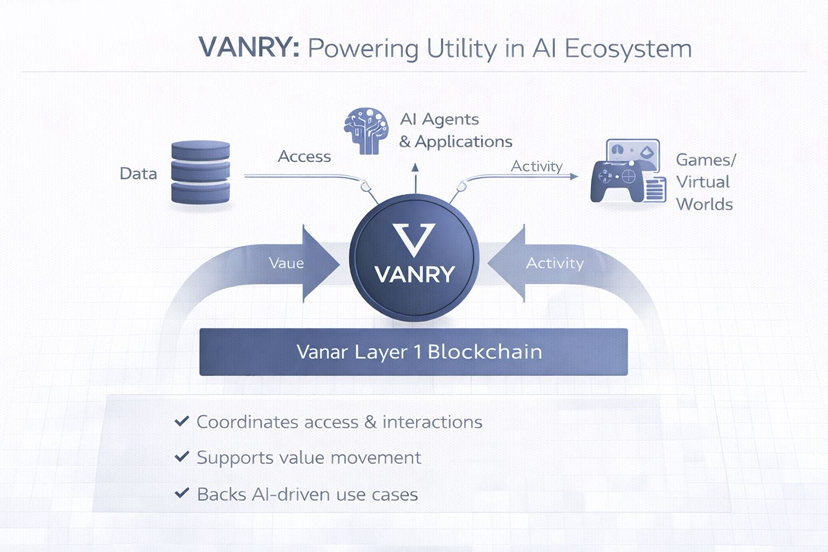
This collaboration has already reshaped the growth curve of Jetpack Hyperleague, where competitive gameplay blends with permanent progression. Every upgrade, cosmetic, or achievement is recorded through Neutron Seeds, meaning that a player’s progress is no longer locked inside a single game server. That history travels with the asset across the wider VGN ecosystem. Fixed micro-fees ensure that frequent actions never feel punitive, which is critical for mobile players accustomed to rapid, low-cost interactions. From my perspective, Viva acts as the bridge that finally connects everyday mobile gamers to Web3 ownership without asking them to change behavior.
NVIDIA Inception: Visual Fidelity as an Adoption Catalyst
Vanar Chain’s inclusion in NVIDIA’s Inception Program adds another dimension to its gaming roadmap. High-quality visuals remain a barrier for blockchain games competing with traditional mobile and PC titles, and NVIDIA’s tooling directly addresses this gap. Developers building on VGN gain access to advanced rendering and AI-driven content pipelines that allow environments to adapt dynamically based on player behavior.
In practice, this means worlds that feel alive rather than scripted. Procedural environments evolve as communities interact, and personalization becomes a native feature rather than a design afterthought. Shelbyverse is a clear example, where racing environments reflect real-world physics and lighting while remaining accessible on consumer hardware. By lowering the cost of producing visually competitive experiences, this partnership helps VGN attract studios that would otherwise dismiss blockchain as technically limiting.
Shelbyverse: Brands, Provenance, and Interactive IP
The Shelby American collaboration demonstrates how traditional brands can transition into blockchain-powered entertainment without sacrificing control or authenticity. Physical car ownership is mirrored digitally through assets whose provenance is cryptographically anchored, allowing collectors to race, trade, and showcase vehicles across VGN titles. What makes this compelling is not just the novelty, but the operational simplicity. Licensing rules, royalties, and revenue splits are enforced automatically, removing the need for manual reconciliation.
For players, the experience feels like a premium racing game enhanced with real-world meaning. For brands, it provides a controlled environment where intellectual property can generate ongoing engagement rather than one-off NFT drops. I see this as a template for how other industries, from sports to fashion, could adopt similar models on Vanar Chain.
ChainSafe: Lowering the Barrier for Game Studios
ChainSafe’s role in the ecosystem focuses on sustainability rather than spectacle. Many Web3 games fail because their economies are poorly designed, inflating rewards until value collapses. By supporting studios with tokenomic design, security practices, and deployment tooling, ChainSafe helps ensure that VGN titles launch with long-term viability in mind.
This support structure shortens development cycles and reduces the technical risk for teams transitioning from Web2. Instead of rebuilding everything from scratch, studios can focus on gameplay while relying on proven frameworks for ownership and value exchange. The rapid increase in active developers on VGN suggests this approach is resonating, especially with mid-sized studios that lack the resources to experiment endlessly.
DeQuest: Turning Play into Discovery
User acquisition remains one of the hardest problems in gaming, and DeQuest adds an interesting layer to Vanar Chain’s strategy. By embedding quest-based discovery into the ecosystem, new titles gain instant visibility through shared challenges and rewards. Players move between games organically, earning assets that introduce them to new experiences without traditional marketing spend.
This system also benefits players by giving progression a broader context. Achievements in one game unlock opportunities in another, reinforcing the idea that time spent playing has lasting value. From what I’m seeing, this approach turns the VGN Network into a connected entertainment universe rather than a collection of isolated titles.
Security and Trust at Scale
As the ecosystem grows, security becomes non-negotiable. Vanar Chain’s partnerships emphasize protection not only for developers, but for everyday players who may be interacting with on-chain assets for the first time. Continuous monitoring, fraud detection, and wallet abstraction work together to create an environment where high-value tournaments and branded assets can operate without exposing users to unnecessary risk.
This focus on trust is essential if VGN is to scale beyond crypto-native audiences. Casual players are unforgiving when systems fail, and enterprise partners demand reliability that matches traditional platforms. The emphasis on proactive security reflects an understanding that mass adoption depends on stability as much as innovation.
No-Code Tools and the Expansion of Branded Economies
The introduction of no-code tokenization tools through partners like Kaizen accelerates onboarding for non-technical teams. Entertainment brands can launch interactive economies without deep blockchain expertise, relying on predefined templates that integrate seamlessly with existing payment flows. This dramatically reduces time-to-market and lowers the cost of experimentation, encouraging more studios to test on-chain ownership models.
From a strategic standpoint, this widens the funnel. Instead of courting only blockchain-savvy developers, Vanar Chain positions itself as infrastructure that any entertainment company can adopt incrementally.
The Economic Flywheel Behind the Partnerships
What ties these partnerships together is a clear economic loop. Microtransactions generate steady on-chain activity, which feeds token burns and staking incentives. Premium experiences and branded events introduce higher-value flows, while governance mechanisms allow participants to shape future development. Rather than relying on speculative cycles, the ecosystem compounds through usage.
I find this particularly important in a market where many gaming tokens struggle to maintain relevance once initial excitement fades. By anchoring value to recurring entertainment demand, Vanar Chain gives $VANRY a role that extends beyond trading narratives.
A Quiet Shift Toward Mainstream Web3 Gaming
Taken together, Vanar Chain’s 2026 gaming partnerships suggest a shift in how blockchain gaming might actually scale. Instead of asking millions of players to adapt to crypto, the technology adapts to them. Familiar interfaces, predictable costs, and portable ownership create an environment where blockchain feels like a feature rather than a hurdle.
As VGN Network continues to absorb players from established gaming franchises, the bigger question becomes less about whether Web3 gaming will grow, and more about which platforms will make that growth feel natural. If invisible ownership becomes the standard, Vanar Chain’s partnership-driven approach may end up defining how entertainment economies evolve over the next decade.
