
Stablecoins are supposed to feel straightforward. You send dollars, someone receives dollars, end of story. But anyone who’s tried to use them outside of trading knows the routine gets messy fast: you need a separate token for fees, you’re guessing gas, and you’re waiting while the transaction sits in that awkward space between “confirmed” and “I’m comfortable calling this settled.” Plasma is basically saying: why are we making normal people do all that?
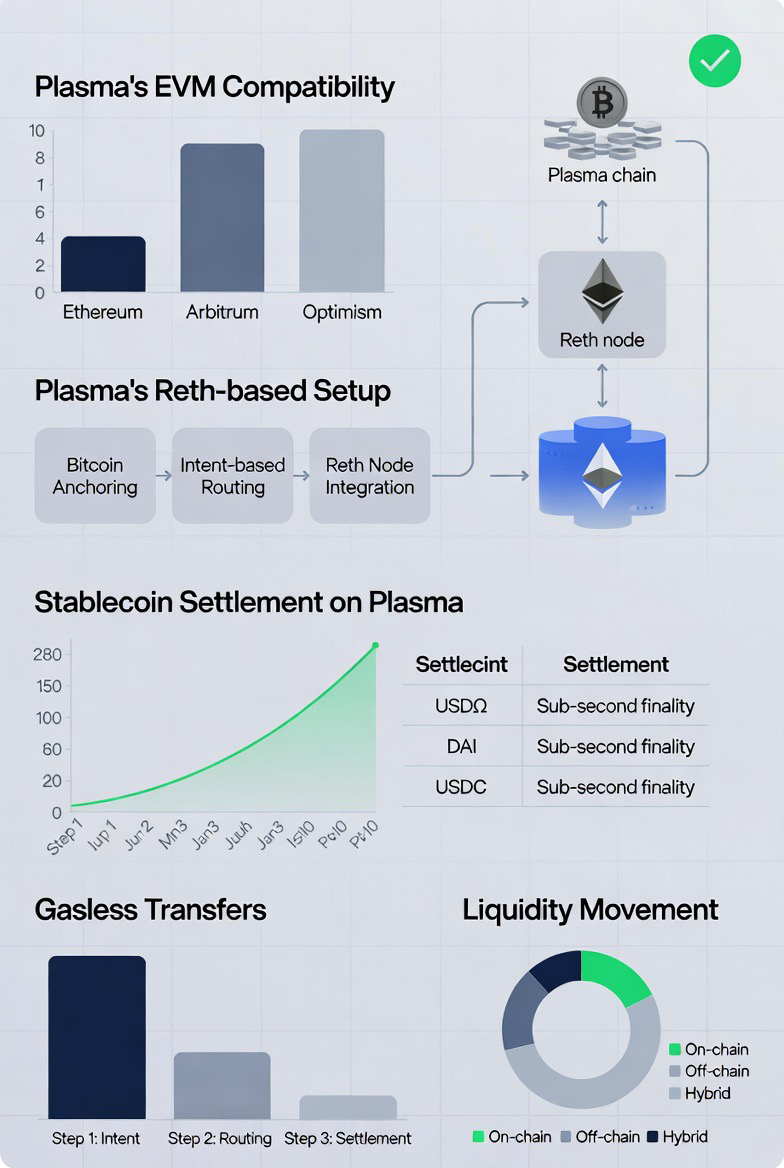
The way it stays friendly to builders is simple. It’s fully EVM compatible and uses a Reth-based setup, so developers don’t have to toss out their existing tools or habits. The apps can look and feel familiar, but the chain under them is tuned for stablecoin settlement instead of general-purpose everything.
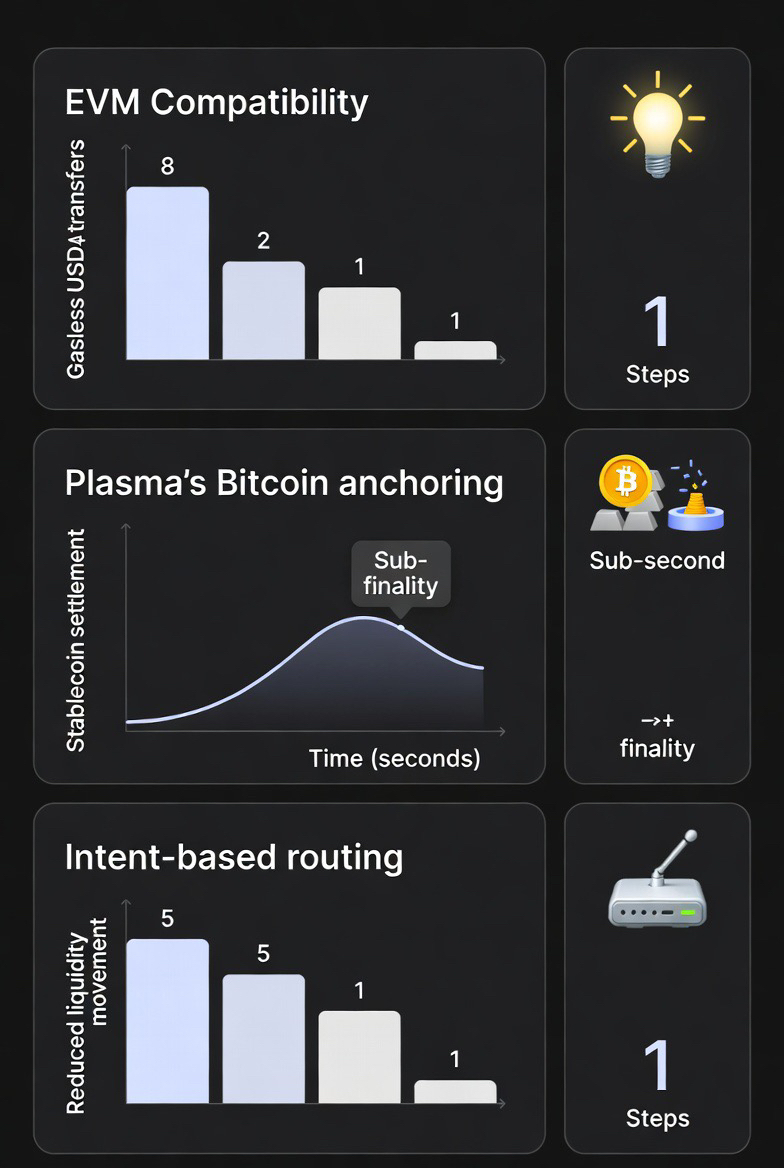
Where Plasma tries to feel different for users is finality. With PlasmaBFT aiming for sub-second finality, the goal is that a transfer stops feeling like a maybe. For merchants, that’s the difference between releasing an order right away versus waiting “just in case.” For payment teams, it’s the difference between clean bookkeeping and a pile of transactions labeled pending because nobody wants to be the first person to assume it’s done.
Then there’s the part that makes the biggest difference day to day: fees. Gasless USD₮ transfers and stablecoin-first gas are about removing the annoying step where you have to buy another token just to move your stablecoin. It’s like being allowed to pay a delivery fee in the same currency you’re already holding, instead of being told to go buy coupons first.
Plasma also leans on Bitcoin anchoring for the trust side of things. That’s aimed at keeping the system more neutral and harder to censor, which matters more as stablecoins become real payment rails and not just a crypto thing. Institutions care about that story too, because they need settlement they can defend, not just settlement that’s fast.
Recent updates in the ecosystem are also hinting at where this is going: fewer manual steps when moving liquidity across chains, more intent-based routing where you tell the system what you want and it figures out the path behind the scenes. That’s the kind of progress that makes stablecoins feel less like a specialist tool and more like something everyday users can rely on.
If Plasma gets this right, it won’t feel like you’re “using a blockchain.” It’ll feel like sending money should have felt all along: quick, clear, and not full of extra chores.