
Artificial intelligence is rapidly becoming the dominant narrative in blockchain infrastructure. While early Layer-1 blockchains focused on decentralization, security, and scalability, AI was never part of their core design. It arrived later as an external layer, powered by off-chain computation, oracles, and centralized data pipelines. Today, a new generation of blockchains is emerging with a different vision—one where intelligence is native to the protocol itself.
Vanar Chain represents this shift. Rather than being a general-purpose blockchain that simply supports AI applications, Vanar is an AI-first Layer-1 built specifically for AI workloads. This design choice sets it apart from existing networks and redefines how AI can function in a decentralized environment.
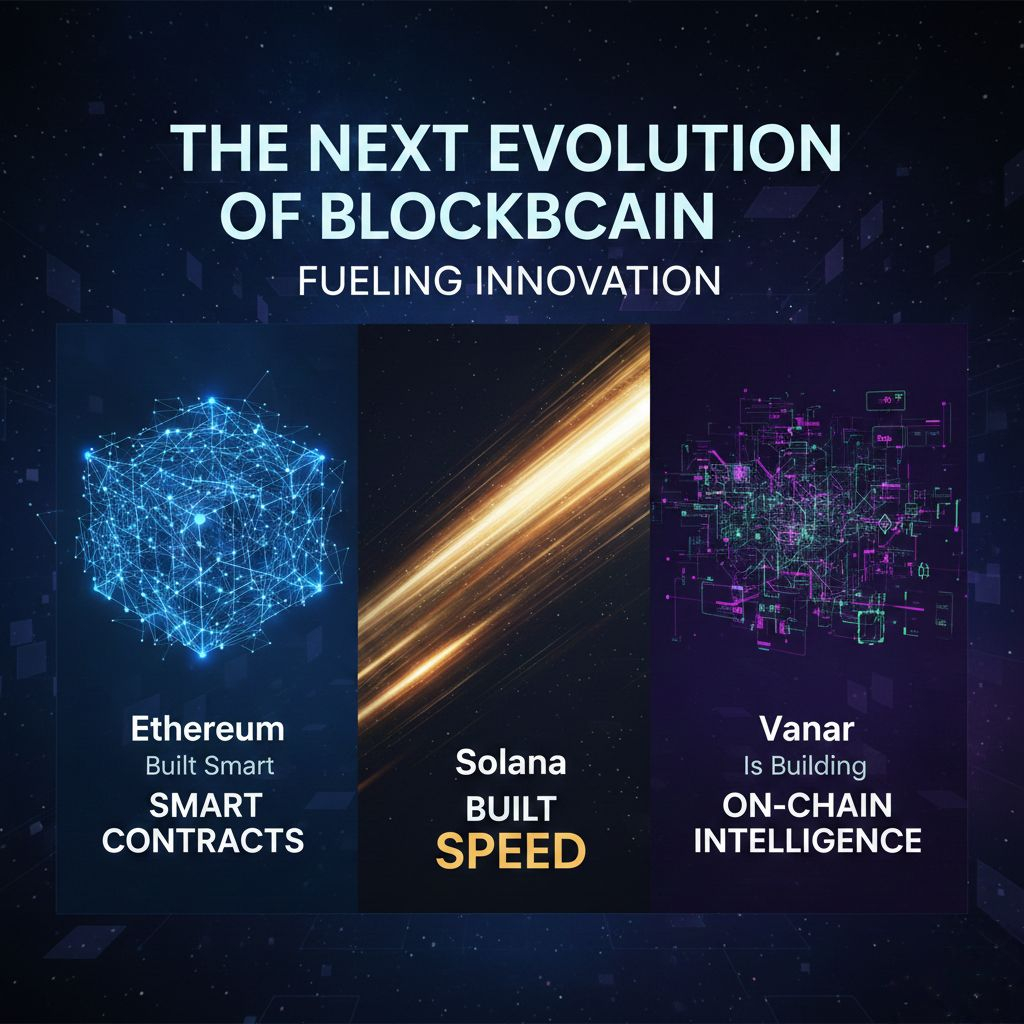
Ethereum remains the backbone of the smart contract world and the default home for decentralized AI experimentation. Its vast ecosystem, liquidity, and developer tooling make it the natural launchpad for innovation. However, Ethereum’s architecture was never intended for AI-heavy computation or data-intensive processes. Storage and execution costs push most AI logic off-chain, which limits transparency and makes true on-chain intelligence difficult to achieve.
Solana addresses a different problem. By prioritizing speed and low transaction costs, it enables high-frequency interactions and real-time automation, making it attractive for AI-driven applications. Yet, despite its performance advantages, Solana still depends on off-chain AI models, external storage, and oracle-based integrations. The intelligence lives outside the blockchain, with the chain acting primarily as a coordination and settlement layer.
Vanar introduces a fundamentally different design philosophy. Instead of treating AI as an external service, it embeds AI directly into the blockchain’s core infrastructure. AI models and autonomous agents can run on-chain, where their logic is transparent, auditable, and governed through smart contracts. This allows intelligence to be triggered, updated, and verified directly within the network, without relying on opaque off-chain systems.
Vanar is not trying to outscale Ethereum or outpace Solana in general-purpose activity. Its goal is more focused and arguably more disruptive: to define what an AI-native Layer-1 should look like. As AI agents, autonomous systems, and intelligent Web3 applications accelerate, blockchains designed specifically for on-chain intelligence may become critical infrastructure.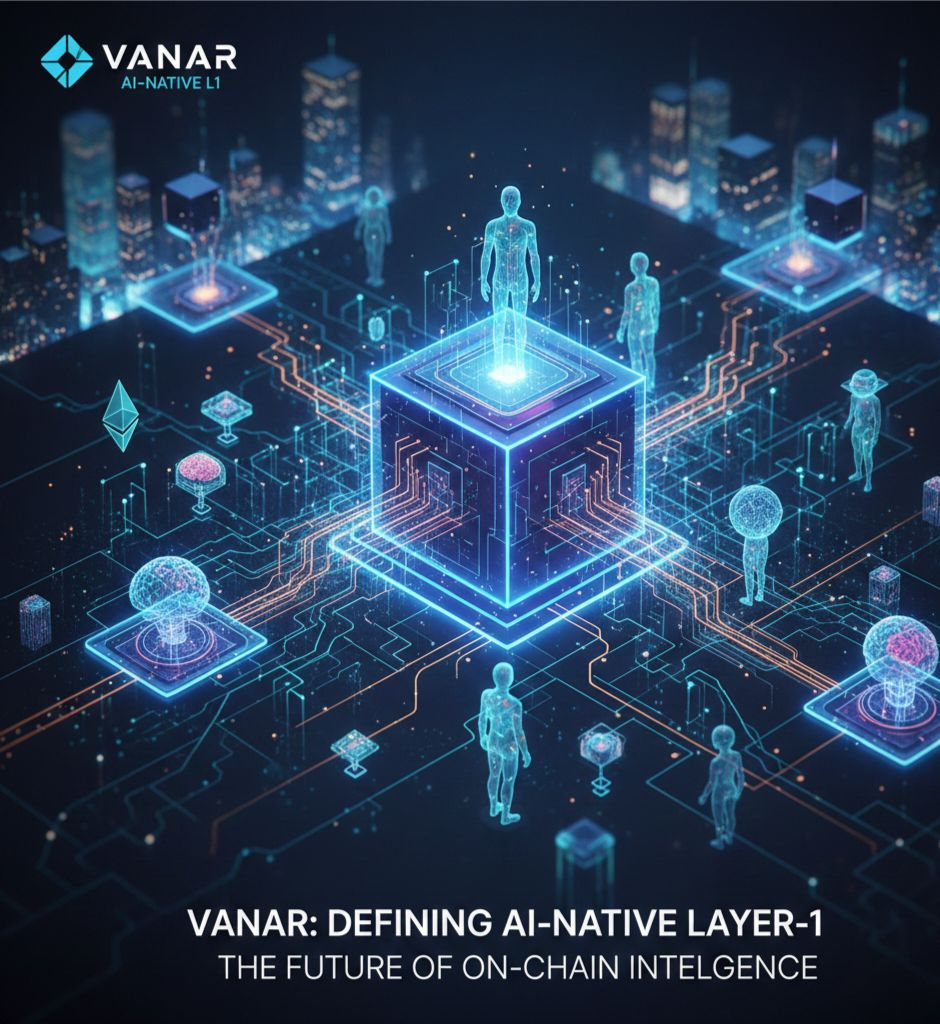
The next phase of Web3 isn’t just about faster transactions or more complex contracts. It’s about decentralized intelligence. And Vanar is positioning itself at the center of that future.