
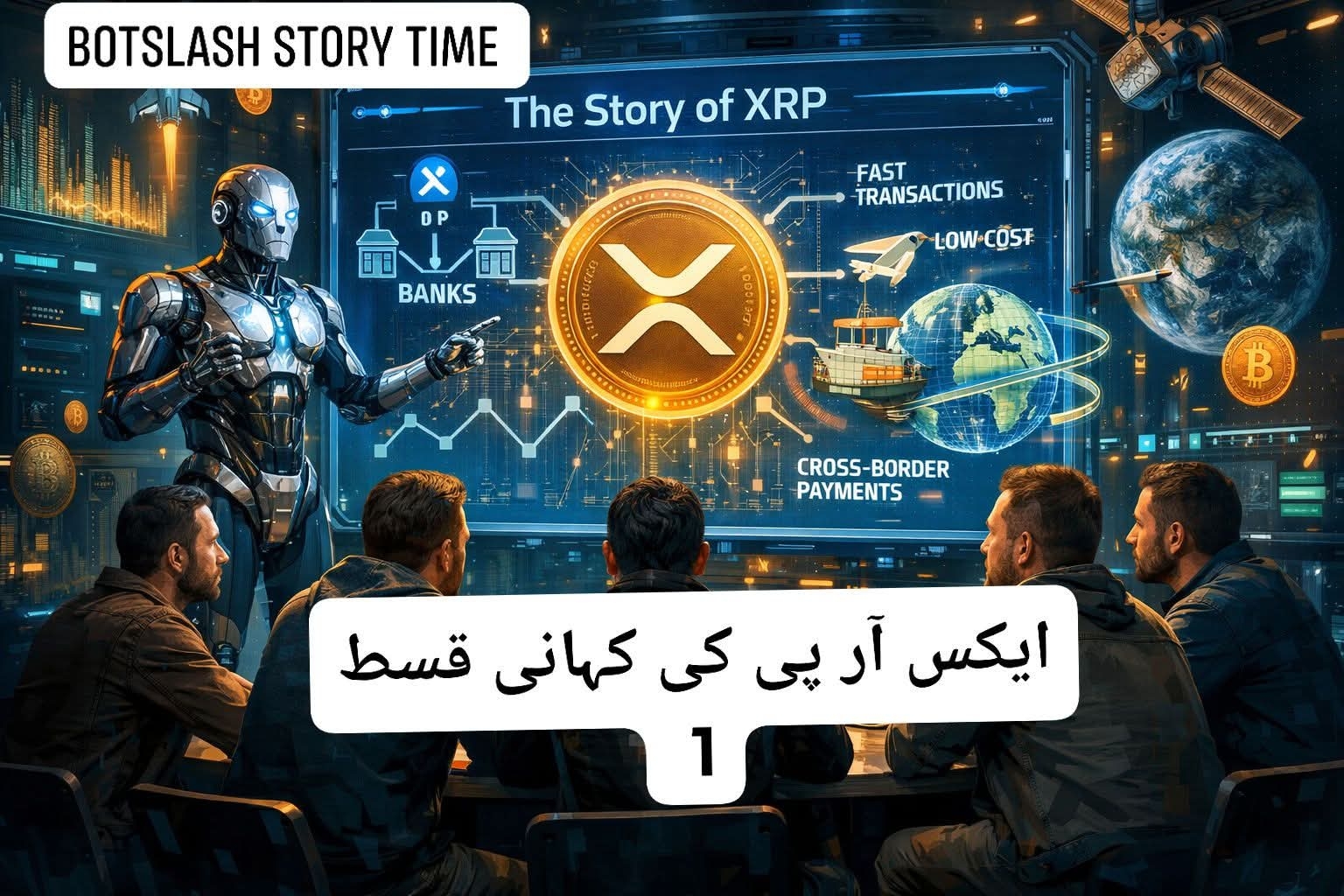
 XRP: The Bridge for Global Payments
In the world of crypto, some projects are not limited to price fluctuations alone; they claim to transform the entire financial system. XRP is one of those projects. It is not an ordinary crypto asset, but a digital system specifically designed to make cross-border payments faster, cheaper, and more efficient.
XRP is the native digital asset of the XRP Ledger. This ledger is based on an open-source, distributed, and automated system that operates through independent servers spread across the globe. Its core purpose is to act as a bridge between different currencies, enabling seamless international money transfers to be completed within seconds.
In traditional banking systems, international payments are expensive, slow, and complex. XRP was introduced to solve this very problem by enabling instant transactions between different fiat currencies. This is why it is often referred to as a bridge currency—a currency that connects two separate financial systems.
One of the standout features of the XRP Ledger is its transaction settlement speed, which typically completes within three to five seconds. In contrast, the same process can take several days in conventional systems. Moreover, the network can handle thousands of transactions per second, making it suitable for global-scale payments.
The XRP Ledger is not limited to a single currency. It can also represent various assets such as fiat currencies, gold, or other digital assets. Its built-in decentralized exchange allows users to trade directly on the ledger itself, without relying on any third party.
Another important characteristic of XRP is its environmental friendliness. Since it does not operate on a proof-of-work mechanism, its energy consumption is extremely low. This makes it far more sustainable compared to systems like Bitcoin.
The total supply of XRP was fixed at 100 billion tokens from the very beginning, and no additional XRP can ever be created. Over time, transaction fees paid on the ledger are burned, which gradually reduces the available supply. This aspect makes XRP economically unique.
This is the foundation on which the story of XRP stands:
high speed, low cost, global reach, and a system built for the future of payments.
In the next episode, we will take a detailed look at how the XRP Ledger’s consensus mechanism works and how it differs from other blockchain networks.