Scrolling through a game launch announcement late at night, I realized how often the tech behind it felt like a separate universe. The excitement was there, but connecting it to the way we actually live shopping, socializing, paying for things felt tenuous. Vanar is trying to bridge that gap. It’s a Layer 1 blockchain built from the ground up not just to exist, but to make sense for real-world users. The team isn’t coming from abstract crypto theory; they’ve spent years in games, entertainment, and working with brands that people already know. That experience shows, because the network isn’t asking anyone to reinvent themselves to fit into it.
Vanar’s approach is thoughtful. The goal is to bring the next 3 billion consumers into Web3, and that’s ambitious, but they focus on the details that make adoption realistic. It’s not flashy slogans; it’s about products that intersect with things people already do. Virtua Metaverse, for example, is less about showing off technology and more about offering spaces where people can play, socialize, and interact with brands in ways that feel natural. The VGN games network does something similar, giving players experiences that align with the games they already enjoy, but layered on blockchain features that feel seamless rather than forced.
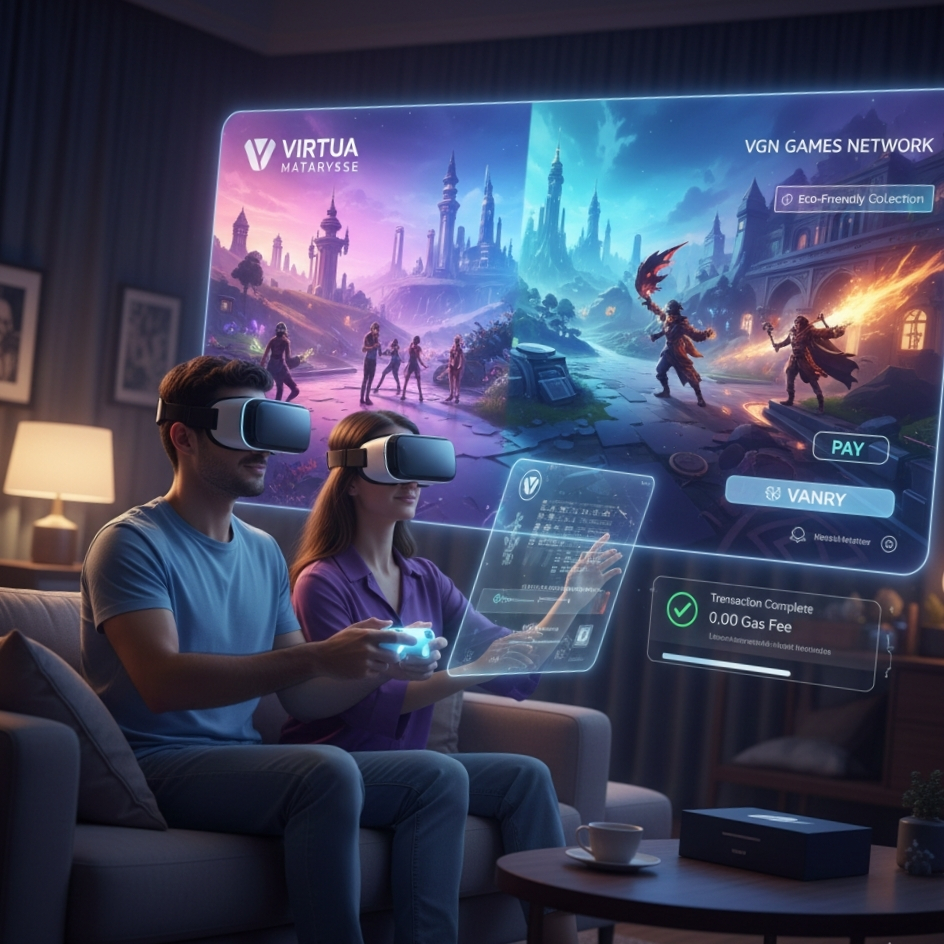
Part of what makes Vanar interesting is how it spans multiple verticals without feeling scattered. Gaming, AI, metaverse experiences, eco and brand solutions all of these are on the same network, underpinned by the VANRY token. That token isn’t just a speculative asset; it’s a tool to interact with the ecosystem, settle transactions, and access experiences. Paying with VANRY in a metaverse environment or using it to unlock certain features in games is meant to feel as normal as buying a digital skin or topping up a mobile game account. I like that it keeps the focus on utility first.
There’s a simplicity in how the technology works behind the scenes. You don’t have to know every technical specification to use it. You can jump into Virtua Metaverse or a VGN game and the blockchain mechanics fade into the background. It’s easy to forget you’re even using a decentralized system. That’s not an accident it’s design geared toward users who want the experience first, and the blockchain as a quiet facilitator second. It reminds me of when I first used contactless payments; I didn’t care how it worked, I just noticed how fast and frictionless it was.
Binance is a place where attention tends to gather for projects like this. Seeing VANRY listed and traded there draws in curiosity, and for those following gaming or metaverse trends, it’s a touchpoint that validates that Vanar is being noticed without being overhyped. For casual users, it’s a reminder that blockchain can touch everyday interactions in ways that feel grounded, not experimental.
That said, there are limitations. A network designed for mass adoption has to balance ambition with practical realities. Cross-vertical integration is exciting, but it also introduces complexity. Ensuring that gaming, metaverse, AI tools, and brand interactions all work smoothly on the same chain is a challenge, especially as the ecosystem grows. There’s also the risk that scaling to billions of users could strain the system or slow down experiences. It’s not a dealbreaker, but it’s a mature reality to acknowledge. Technology alone doesn’t guarantee adoption; user experience and reliability matter just as much.
One of the subtle strengths of Vanar is its grounding in real-world use rather than pure speculation. The team’s experience with brands means they understand what people actually want to do online play, socialize, interact, spend time. That approach carries over to the blockchain itself. VANRY is a tool to make those interactions smoother rather than a standalone collectible or a token with no immediate purpose. It gives the ecosystem a practical heartbeat.
I find it refreshing that Vanar doesn’t pretend to be a universal solution. It doesn’t try to claim it will replace all gaming networks or all metaverses. Instead, it creates a space where familiar experiences can exist in new ways, layered with blockchain functionality that feels natural. That’s why products like Virtua Metaverse and VGN games network are more intriguing than flashy announcements they prioritize experience first. Users can play, interact, and transact without constantly thinking about wallets or gas fees.
Another human angle is the way Vanar acknowledges the learning curve of Web3. Jumping into crypto or blockchain-enabled gaming can feel intimidating, especially if the interface is clunky or confusing. Vanar smooths that transition by letting people engage in spaces they already understand, with blockchain acting in the background rather than as the main spectacle. It’s a small touch, but it makes a big difference for adoption.
In practice, using Vanar is like stepping into a world that is slightly ahead of what most people experience daily, but not so far that it feels alien. Payments, rewards, game interactions, brand experiences they all move with the rhythm of normal life, only enhanced. There’s excitement in that subtlety, the kind that comes from noticing a small improvement in how you interact with digital spaces without needing a headline to announce it.
Vanar is quietly experimenting with how real-world adoption might look. It isn’t perfect, and it probably won’t revolutionize everything overnight. But for users, brands, and developers interested in bridging traditional digital experiences with blockchain in ways that feel sensible, it’s a project that respects the practical side of innovation. You can see the care in the design choices, the prioritization of familiarity, and the willingness to integrate multiple verticals without losing coherence. That kind of measured thinking is rare, and it’s one of the reasons watching Vanar evolve is genuinely interesting.