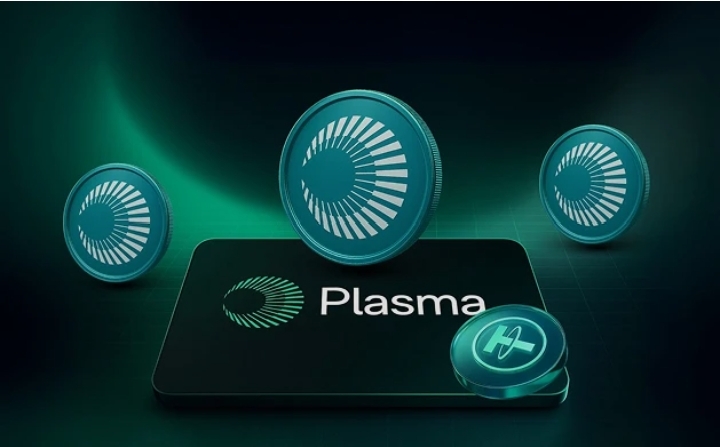
The Plasma coin chain refers to a blockchain ecosystem built around the concept of Plasma, a scalability framework originally proposed to help blockchains handle a much larger number of transactions without sacrificing security or decentralization. At its core, Plasma is designed to reduce congestion on a main blockchain by moving large volumes of transactions to secondary chains, often called child chains, while still anchoring their security to the main network. A Plasma coin chain typically uses this structure to deliver faster performance and lower transaction costs.
One of the biggest challenges in blockchain technology is scalability. As user activity grows, networks can become slow and expensive, limiting their real-world usefulness. The Plasma coin chain addresses this issue by processing transactions off the main chain and periodically submitting proofs or summaries back to it. This approach significantly reduces the computational load on the base layer, allowing the network to support more users and applications at the same time. For everyday use cases such as payments, gaming, and decentralized finance, this efficiency is essential.
Plasma coins usually serve as the native utility token of the chain. They are used to pay transaction fees, transfer value, and interact with decentralized applications built on the network. In many Plasma-based ecosystems, the coin also plays a role in staking, where users lock up tokens to help secure the network or validate transactions in return for rewards. This staking mechanism encourages participation and helps maintain the integrity of the system.
Another important function of the Plasma coin is governance. Token holders may be able to vote on protocol upgrades, fee structures, or ecosystem funding decisions. This creates a more decentralized decision-making process, allowing the community to shape the future of the network. Governance features are especially valuable in rapidly evolving ecosystems, where adaptability and user input can drive long-term success.
Security is a key consideration for any Plasma coin chain. While transactions are processed off-chain, the underlying design allows users to exit back to the main chain if something goes wrong on a child chain. This exit mechanism helps protect funds and maintain trust in the system. Although Plasma solutions can be more complex than single-layer blockchains, their security models are built to balance efficiency with user protection.
Plasma coin chains are well suited for decentralized finance applications, where high transaction throughput and low fees are critical. Activities such as trading, lending, yield farming, and micro-payments benefit greatly from Plasma’s scalable design. Beyond DeFi, these chains are also useful for gaming, NFT platforms, and digital marketplaces, where frequent interactions would be impractical on slower, more expensive networks.
The long-term value of a Plasma coin chain depends on adoption, real utility, and ecosystem growth. Strong developer support, clear use cases, and reliable infrastructure are essential for attracting users and projects. While Plasma is just one of several scaling approaches in the blockchain space, it remains an important concept that continues to influence how modern networks are designed.
Overall, the Plasma coin chain represents an effort to make blockchain technology more efficient and usable at scale. By combining off-chain processing with on-chain security, it aims to support a wide range of applications while preserving the core principles of decentralization and trustless operation.#Plasma