
Vanar is easiest to understand if you stop thinking of a blockchain as a ledger and start thinking of it as a city. Most chains are cities built for engineers. Streets make sense only if you already know the map. Signs are written in a language that assumes you grew up there. Vanar is trying to build something different. A city designed for ordinary movement. Payments that do not surprise you. Identity that does not exhaust you. Data that does not vanish the moment you need proof.
At its core Vanar presents itself as a Layer 1 made for real world adoption.
The design goal is not only speed or low fees. The goal is reducing the hidden friction that makes mainstream users quit. The kind of friction that does not show up in benchmarks. The moment a user sees a confusing wallet step. The moment a fee changes wildly between clicks. The moment a brand team cannot explain custody or compliance in normal language. Vanar aims to make those moments rarer.
One of Vanar’s most distinctive choices is how it treats fees. Instead of accepting that network costs must swing with token price emotion it tries to keep the user experience stable. The idea is simple in spirit. People can tolerate paying a small amount. People struggle to trust a system when the same action costs different amounts every day without warning. Vanar’s approach is built around a stable fee logic that references token pricing and updates regularly so that the cost of typical activity stays predictable. This is not just economics. It is psychology. Predictability is a feature that builds calm.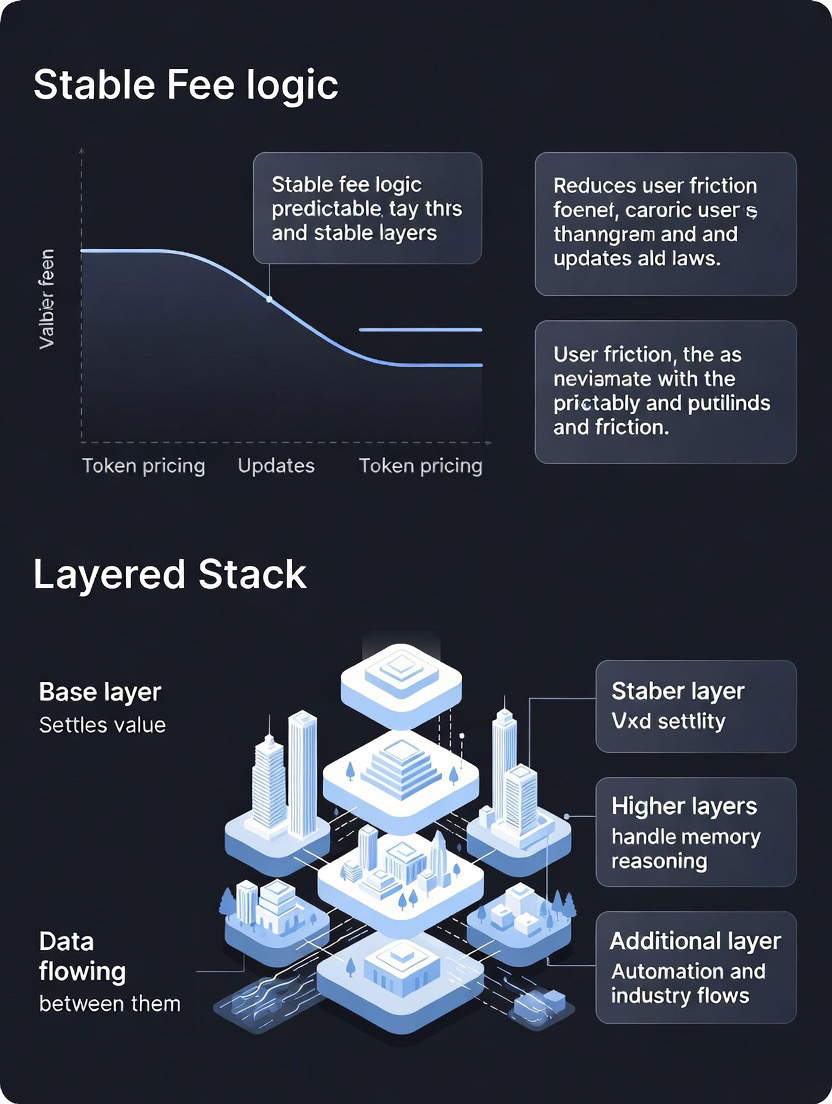
But the deeper shift inside Vanar is not the fee model.
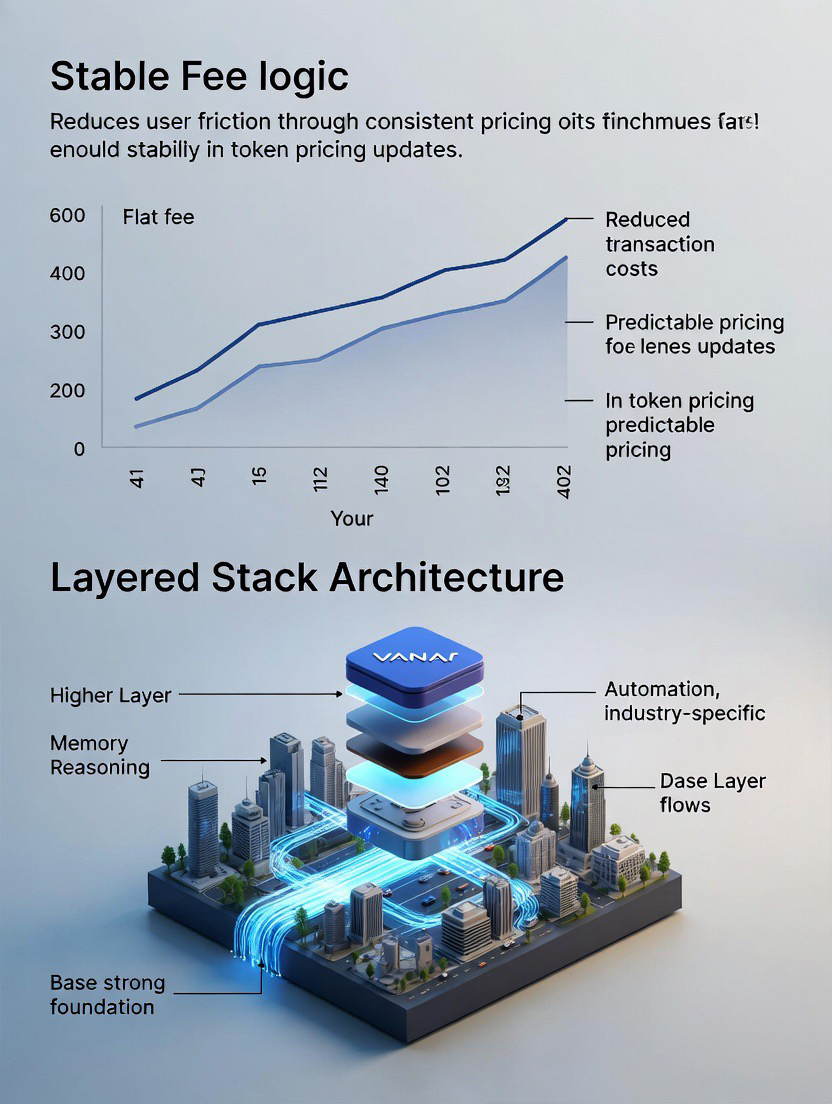
It is the belief that the next era of Web3 will be shaped by intelligence systems as much as by finance. Vanar frames itself as more than a chain. It describes a layered stack where the base layer settles value while higher layers handle memory and reasoning and eventually automation and application flows. In plain words Vanar is trying to evolve from execution to understanding.
That is where Neutron comes in. Neutron is described as a semantic memory layer that turns messy information into structured units often referred to as Seeds. A Seed is meant to be small enough to move fast and smart enough to be searchable by meaning. The model is hybrid by design. Storage can live offchain by default for speed and cost efficiency while anchoring to the chain can be used when you want verification ownership timestamps and auditability. The promise here is practical. You can keep data private and still prove integrity. You can move quickly and still have receipts that stand up later.
This matters because modern digital life is not short of data. It is short of reliable context. People do not just need storage. They need memory that can be searched like a mind searches. By meaning by time by relationship by relevance. Vanar positions Neutron as that missing piece. Not a warehouse but a living index.
Then comes Kayon which Vanar describes as a reasoning layer. The point is not to bolt a chatbot onto a blockchain. The point is to make the system capable of interpreting intent and context so that applications can feel less like rigid vending machines and more like adaptive services. In that world a transaction is not only a state change. It is part of a story. Who asked for it. Why they asked. What data supports it. What rules must apply. What proof needs to remain.
Vanar also stages additional layers for automation and industry flows. Even without naming every future module the direction is clear. Memory leads to reasoning. Reasoning leads to action. Action leads to products that feel like normal software while the chain quietly guarantees trust underneath.
This is why Vanar’s consumer roots matter.
The team emphasizes experience in games entertainment and brands and it shows in the ecosystem posture. Products like Virtua Metaverse and the VGN games network are not just accessories. They function like reality checks. Entertainment is where friction gets punished instantly. Players do not tolerate awkward onboarding. Fans do not forgive confusing steps. Brands do not gamble on unclear ownership. If Vanar can support consumer style experiences without making users feel like they are doing homework then the infrastructure thesis becomes more credible.
Vanar also takes a particular approach to network reliability and validator participation. It describes a model that begins with a more curated validator set and expands participation through reputation and staking mechanisms over time. Philosophically this is a choice to prioritize consistent performance early while designing a path toward broader participation as the network matures. It is the difference between opening every door on day one and building the building to withstand crowds first.
The VANRY token sits inside this system as fuel and coordination rather than pure narrative. Vanar describes a capped maximum supply and ongoing issuance via network rewards. The token is positioned to support network operations including validator incentives staking and the economic plumbing of the ecosystem. When you combine that with the push for predictable fee experience you get a clear design intent. Make the token feel like network oxygen rather than a mood ring.
So what is the real bet here
Vanar is betting that the next wave of adoption will not come from people learning how blockchains work. It will come from blockchains learning how people work.
People want consistency. They want interfaces that do not punish curiosity. They want ownership they can explain to a friend. They want memory that does not disappear. They want systems that can prove what happened without exposing everything about them. They want to feel safe moving through digital spaces.
If Vanar succeeds it will not be because it shouted louder than other chains. It will be because it removed the invisible thorns that make users pull their hand away. It will feel less like crypto and more like infrastructure. Quiet. Reliable. Almost unremarkable.