

现在我看Layer 1都不爱吹TPS、白皮书、炒作了,就一个问题:这玩意儿我敢不敢直接塞给完全没碰过钱包的普通人,还不怕他骂街跑路?
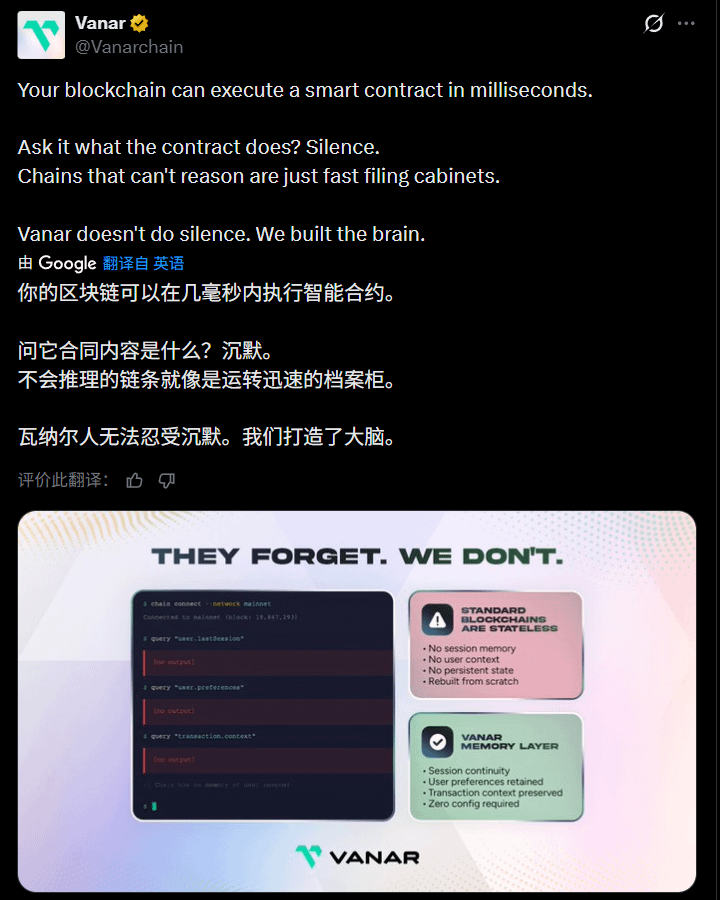
@Vanarchain 每次都过关,牛!
大部分链子是码农给自己玩的:一堆术语、钱包gas先学半年才能摸到乐子,adoption?后妈养的。Vanar反着来,先管游戏、娱乐、品牌、真用户爽不爽,链子自己躲后台当工具人。
这不是小修UX,是整套思路:VGN游戏生态压根不卖“Web3游戏”,就卖正常游戏!简单进、零摩擦、不逼你当小币商,玩家就玩儿就行。别人让你一边打游戏一边炒币,Vanar直接说“别闹,玩你的去”——这在圈里算革命了好吗。
还有Virtua这元宇宙,不是PPT货,是真拿来测链子的:直播市场、动态NFT、品牌联动,普通人一用就知道链子行不行。卡顿、mint失败、费用暴涨?直接劝退。Virtua稳稳跑着,说明Vanar不是纸上谈兵,是真扛得住日常人用。
Neutron AI层也低调狠:不是整花里胡哨的AI agent,而是把文件压缩成轻量、可验证的“Seeds”,意思还在、链上能查。游戏、品牌、数字身份、合规全能用,真价值不是空喊。
$VANRY 更不是moon币,它就是生态小发动机:gas、staking、验证、治理、跨ETH/Polygon啥的。供给透明、合约可查、链上活动实打实,不靠炒作活。
当然有取舍:DPoS+基金会节点,稳字当头,去中心化没拉满。但对品牌、创作者、普通人来说,稳>纯,靠谱比教条重要多了。
Vanar最戳的是它真在为“大规模上车”设计,不是嘴上说说。历史上最好的科技都隐身:刷剧谁懂TCP/IP,发朋友圈谁研究分布式?#Vanar 要是成了,也不是因为大家爱它共识,而是大家玩游戏、收东西、跟品牌玩得开心,根本没注意到后面有条链在跑。
圈里天天大故事大叙事,Vanar这股“让普通人用着舒服就行”的味儿,真的清流。😂😂
这不是又一条Layer 1,是给咱们这些非nerd的区块链。
--------------------------------------------------
Now, I see Layer 1 developers no longer hyping up TPS, white papers, or marketing. They just have one question: Would I dare hand this thing out to an average person with no experience with wallets, without worrying they'd complain and run away with the money?
Vanar always passes the test, impressive!
Most blockchains are just for programmers to play with: a bunch of jargon, wallet gas fees—you have to learn for six months before you can even get the hang of it. Adoption? Like an unwanted stepchild. Vanar does the opposite. It prioritizes games, entertainment, branding, and ensuring genuine user satisfaction, while the blockchain itself remains in the background as a tool.
This isn't just a minor UX tweak; it's the whole strategy: the VGN gaming ecosystem doesn't sell "Web3 games" at all, only normal games! Simple entry, zero friction, no pressure to become a small-time cryptocurrency trader—players can just play. While others try to make you trade cryptocurrencies while playing games, Vanar simply says, "Don't be silly, go do your own thing"—that's revolutionary in the industry.
Then there's Virtua, this metaverse isn't just a PowerPoint presentation; it's a genuine test of blockchain technology: live marketplaces, dynamic NFTs, brand collaborations—ordinary users can immediately tell if a blockchain is viable. Lag, mint failures, skyrocketing fees? Those are enough to deter anyone. Virtua runs steadily, proving Vanar isn't just theoretical; it's truly capable of handling everyday use.
Neurtron's AI layer is also understated yet powerful: it doesn't rely on fancy AI agents, but rather compresses files into lightweight, verifiable "Seeds"—the functionality remains, and they're traceable on-chain. It's usable for games, brands, digital identities, and compliance—its real value isn't just empty talk.
$VANRY isn't just a moon coin; it's the ecosystem's engine: gas, staking, verification, governance, cross-ETH/Polygon, etc. Supply is transparent, contracts are verifiable, and on-chain activities are real—it doesn't rely on hype.
Of course, there are trade-offs: DPoS + foundation nodes prioritize stability, but decentralization isn't fully realized. But for brands, creators, and ordinary people, stability is more important than purity; reliability is far more crucial than dogma.
What's most compelling about Vanar is that it's genuinely designed for mass adoption, not just talk. The best technologies in history have been largely hidden: who understands TCP/IP when watching TV shows, who studies distributed systems when posting on social media? If Vanar succeeds, it won't be because people love its consensus mechanism, but because everyone is having fun playing games, collecting items, and interacting with brands, completely unaware that a blockchain is running behind the scenes.
In a world full of grand stories and narratives, Vanar's focus on "making it comfortable for ordinary users" is truly refreshing.
This isn't just another Layer 1 blockchain; it's a blockchain for us non-nerds.